



Petya Biolcheva
University of National and Word Economy, Sofia, Bulgaria
https://doi.org/10.53656/igc-2025.14

Pages 161-172
Abstract. Environmental sustainability is key, both for the development of the economy and for the future state of the planet. Its strategic importance requires the search for different mechanisms for assessing and setting priorities for recovery and development. This paper presents the author’s model for intelligent assessment of the impact of the circular economy on environmental sustainability at the regional level (IMAICEESrl). It is based on key indices of the circular economy with a relationship to environmental sustainability, measured using various artificial intelligence tools. The model is a basis for comparisons and analyses, both at the regional, national and global levels. On its basis, one can both monitor progress in environmental sustainability and lay strategic foundations for long-term development.
Keywords: environmental sustainability; indicators; circularity; sharing economy
JEL: O10, O25, O32
Introduction
The ecological sustainability is an object on reinforced interest, as from point of view point on normative regulation and business, as well as from different scientists and researchers. According to Lythouse (2022)1 through her is carries out ability on ecosystems yes support basic you functions and processes in the long term plan, as at this guarantee health and sustainability on the natural environment. At the same time Callicott time (2018) puts accent on economic effects, such as it emphasizes that human economy is part of the natural economy and we need yes is models by her example. This means that economic subjects are indivisible, part from ecological sustainability and from behavior on everyone one from them depends the sustainable progress and development. The significance on sustainability connects with everyone ecosystems on Earth, which they work jointly for regulation on the planet2. By this one reason and Liu (2009) states that sustainability must yes is defined as life within on own ecological opportunities, and this is related with aspiration for bigger neutrality on economy and aspiration to circular development. A general conclusion is that environmental protection is a key value (Pavlov & Kurshumov, 2025).
By attitude on the normative regulation the legislative organ realizes the key character on the ecological sustainability and emphasizes on her in a row key documents for development (table 1).
Table 1. Normative base regulating the ecological sustainability
| Level | Document | Year | Main highlights |
| International | Rio declaration for surrounding environment and development | 1992 | Principles on sustainable development , protective principle , intergenerational justice |
| International | Convention for the biological diversity | 1992 | Sustainable use and conservation on ecosystems |
| International | Parisian agreement | 2015 | Restriction on the global heating and air conditioning actions |
| International | The goals for sustainable development of the UN (SDGs) | 2015 | Goal 13 ( Climate Action) actions ), Goal 15 ( Life on the land ) |
| International | Declaration of IUCN for the ecological law | 2017 | Law on nature , ecological integrity |
| European | Green deal of the EU (European Green Deal) | 2019 | Strategy for climate neutrality by 2050 |
| European | Directive for water (Water Framework Directive) | 2000 | Sustainable management on aquatic resources |
| European | Strategy for biodiversity of the EU | 2020 | Recovery on ecosystems , conservation on nature |
The purpose of this paper is to develop a set of indicators and a measurement model to assess the impact of the circular economy on environmental sustainability at the regional level. The main research question is related to which circular economy indicators can be used to create an intelligent model for measuring environmental sustainability. The research hypothesis states that the implementation of circular economy practices leads to a significant improvement in environmental sustainability, which can be measured through specific indicators reflecting the efficiency of resource management, waste reduction and carbon footprint. In order to answer the research question and verify the thesis, the following sections sequentially present: a literature review relating to the state of environmental sustainability and its relationship with the circular economy. On its basis, the author has identified indicators and indices for the circular economy with an impact on environmental sustainability. With their help, a result has been achieved in the form of a methodology for implementing an intelligent model for assessing the impact of the circular economy on environmental sustainability at the regional level.
Literature review
In this paper, the literature review aims to establish the state of environmental sustainability and its relationship with individual measures of the circular economy. A study by Marshadi and his team from 2025 shows that the state of environmental sustainability is outside the stable norms, leading to the degradation of ecosystems and threatening the sustainability of life on Earth. The study is based on data from 146 countries and indicates that the depletion of natural resources and financial development in some regions significantly worsen environmental indicators, and the high ecological footprint indicates serious global unsustainability. Another study (Tennakoon et al., 2024), based on a literature review of 351 scientific publications (in the period 2010 – 2023), tracks trends in environmental sustainability. The main conclusion from it is that reaching sustainable environmental norms can only be talked about after achieving intersectoral cooperation and adaptive management. Hence the need to link environmental sustainability and the circular economy. The main goal of the circular economy is to achieve economic prosperity, followed by high environmental quality and its impact on social equality and future generations (Jayakodi at al. 2024). Objectively speaking, the circular economy (CE) is a model that aims to reduce waste and improve resource efficiency by closing them in a circular cycle including recycling and reuse. CE stimulates green industrial development based on ecological integrity (Hysa, et al., 2020). Achieving environmental sustainability requires reducing the ecological footprint, pollution and preserving biodiversity (Balinov at al. 2019). Therefore, the circular economy is an effective tool for achieving environmental sustainability. For the better understanding and measurement on circularity , as well as for taking on informed solutions and implementation on more sustainable practices, a number of indicators are used (Lee at al., 2024). The main categories of indicators can be grouped into the following categories (Ellen MacArthur Foundation, 2021):
– Material flows and efficiency;
– Recyclability and reuse;
– Production and business models;
– Socio-economic indicators;
– Macroeconomic indicators.
The indicator database offers a large number, but in order to develop the model in this scientific paper, it is necessary to identify and select appropriate ones among them, relevant to environmental sustainability. After a thorough author’s selection, seven key indicators were reached, presented in Table 2.
Table 2. Indicators on CE with impact on ecological sustainability
| Indicator | Characteristics |
| Percentage of recycled materials (RCM) | Reflects the degree of reuse of raw materials and reduces the need for new extraction |
| Material intensity of GDP (MI) | Indicates the amount of materials needed per unit of economic output (lower values indicate sustainability) |
| Index for repeated use (REI) | Reflects deeds on products passed secondary vital cycle |
| Index for ecological imprint (EF) | Evaluates impact on ecosystems , including CO₂, land use , water |
| Volume on industrial waste used repeated (%) | Measures efficiency on industrial symbiosis and limitation on waste |
| Index on platforms for shared economy | Affects on reduction on consumption and extension on life on the products |
| Circular Resource Efficiency (CRE) Index | Aggregated indicator combining reuse, recycling and bio-based raw materials |
Percentage of Recycled Materials (RCM) measures the proportion of recycled materials used in a product, process, or organization relative to the total amount of materials. This includes both pre-consumer and post-consumer waste3.
The formula by which it can be calculated is as follows:
RCM (%) 
Where: MRM is Mass of recycled materials,
TPW – Total product weight
Equation 1 . Percentage of Recycled Materials
Material intensity (MI) measures the amount of materials used to generate a unit of GDP. It shows the efficiency of the economy in terms of the use of natural resources. This indicator shows the resource intensity of the economy. Higher values indicate greater environmental impact, while lower values indicate more efficient use of resources and therefore greater environmental sustainability (United Nations, 2007).
The indicator can be calculated using the following formula:
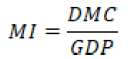
Where: DMC is Domestic Material Consumption,
GDP – Gross Domestic Product
Equation 2. Material intensity
Reuse Index REI (Reuse Index) is an integrated measure that assesses the reusability of an asset. It combines structural and non-structural characteristics, such as: complexity; maintainability and adaptability; historical reuse (Ampatzoglou at al., 2018). This index assesses the potential for reducing environmental impact through recycling, repair, reuse (Betts at al., 2022).
It is calculated using the formula:

Where: M₁…M ₙ are metrics as maintainability , adaptability , documentation quality and etc.
w₁…w ₙ are weight coefficients determined through empirical research .
Equation 3. Reuse Index
The ecological footprint (EF) measures the amount of biologically productive land and water area needed to: produce the resources that a given population or activity consumes; absorb waste, especially carbon emissions; and provide space for infrastructure. It is measured in global hectares (gha), accounting for land productivity on a global scale (Wackernagel & Rees, 1996).
It is calculated by estimating consumption in the components: Fuels (carbon footprint); Food; Housing; Goods and services; Waste; Recycling. It is then converted into the area needed to support this consumption4.
Volume of industrial waste reused (%) (VIWR) indicates the percentage of industrial waste that is not disposed of or incinerated but is reused—either through direct reuse, remanufacturing, or recycling within the production process (UNECE, 2007) .
The calculation formula is as follows:
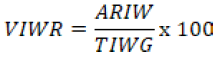
Where:
ARIW is amount of reused industrial waste
TIWG – Total industrial waste generated
Equation 4. Volume on industrial waste used again
Sharing Economy Platform Index (SEPI) is an innovative index showing the number of functioning sharing economy platforms in a given region or country. This index shows the presence of digital platforms that allow sharing of resources, services or space between users (Awli & Lau, 2023).
It is calculated using the following formula:
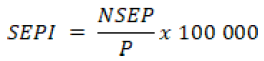
Where:
NSEP e Number of sharing economy platforms (All active digital platforms that offer peer-to-peer services (accommodation, transportation, tasks, sharing items, etc.)
P – Population (The total number of inhabitants in a given country or region)
100,000 – Number of platforms per 100,000 people
Equation 5. Index on platforms for shared economy
Circular Resource Efficiency (CRE) Index. CRE measures the proportion of resources that are reused, recycled or recovered relative to the total resource consumption in an economic system. It combines indicators of resource efficiency and circularity to provide a comprehensive assessment of sustainable materials management.
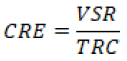
Where:
VSR is volume of secondary resources (recycled, reused, recovered)
TRC – Total resource consumption
Equation 6. Index for circular use on the resources
Regarding the availability of different models for assessing the circular impact on environmental sustainability at the regional level, the literature analysis shows a variety of models. Some of them use quantitative indicators, systemic approaches including ecodesign, reuse, resource efficiency and socio-economic factors. AI-based models are also available. Shah et al. (2025) present a framework for using AI in the biocircular economy, including regional applications, through waste analysis and resource efficiency. Tongyodkaew & Songmuang (2025) develop AI-based regional models for optimizing recycling and reuse. Pimenow et al. (2025) investigate how AI supports the sustainability of regional ecosystems through intelligent resource and waste management. These and other studies provide the author with grounds to develop this direction.
Research methodology
The purpose of the methodological part of this paper is to present the basis for forming the author’s intelligent model for assessing the impact of the circular economy on environmental sustainability at the regional level (IMAICEESrl). It is based on the circular economy indices discussed above with regard to environmental sustainability, measured using various artificial intelligence tools.
The scope of IMAICEESrl aims to cover the main pillars: circularity (through the RCM, REI, CRE indicators); material efficiency (through the indicators MI and REI); ecological footprint (EF) and sharing economy (SEPI).
The selection of these indicators is based on the systematic tracking of material flows, resource efficiency and environmental pressures, taking into account both the industrial and consumer roles in the circular economy. Their analysis allows for a quantitative assessment of sustainability by measuring recycling, reuse, ecological footprint and new models such as the sharing economy.
The purpose of adding intelligent tools to the model is to support the process and conduct it in an automated manner, reflecting real-time updates of the results to reflect any changes in a given region. In this way, both progress at the regional level and its reflection in the national index can be impartially assessed.
Results and discussion
The results in this paper are realized by visualizing the individual steps of implementing the intelligent model for assessing the impact of the circular economy on environmental sustainability at the regional level. For easier perception, the model is illustrated in Figure 1.
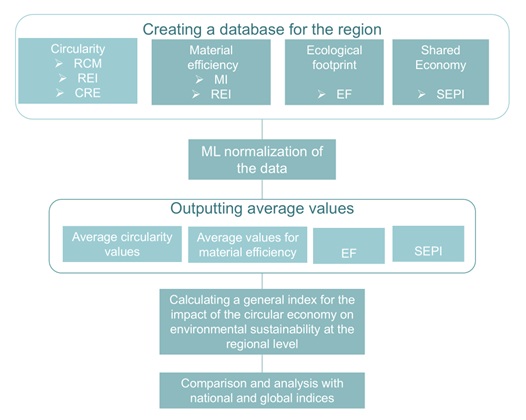
Figure 1. Methodology for application on IMAICEESrl
The application of IMAICEESrl changes through five main steps:
- IMAICEESrl started by providing data on the main pillars for the region: circularity (through the indicators RCM, REI, CRE); material efficiency (through the indicators MI and REI); ecological footprint (EF) and sharing economy (SEPI). The role of artificial intelligence tools here is reduced to providing information with statistical data on individual indicators in real time and forming it in a common database. Official reports and links to statistical databases are used as sources, such as national statistical institutes and local administrations, which publish detailed data on individual pillars, for example „Energy Balances“ (NSI)5, Agency for Sustainable Energy Development (AUER) publishing annual energy efficiency analyses6. At the European level, Eurostat is the main source for RCM and REI and their database in the section „Circular Economy Indicators“ (Eurostat)7. Of essential importance are specifics for the region, such as industrial production, population characteristics, etc. The identification of all industrial enterprises and their level in the individual pillars is mandatory, as well as the innovations that have been introduced in environmental terms, as well as negative events such as various accidents.
- At the next stage, it should be borne in mind that individual indicators are measured in different quantities, i.e., to obtain the overall index, data normalization of individual indicators is necessary. Therefore, they are converted into a common scale from 0 to 1 (where 0 is the worst result, and 1 is the best). Normalization is carried out using data processing and machine learning tools that allow standardization, transformation and analysis of environmental and resource indicators. Example tools here are: Python with libraries such as Pandas and Scikit-learn, allowing normalization using Min-Max Scaling, Z- score, etc.
- The application of the model continues with the unification between the indicators by group and calculations of the average in the group. For example, when calculating circularity, the average between RCM, REI, CRE is sought, again between 0 and 1.
- The index itself can then be calculated using a geometric mean, reflecting the balance between the averages, using the following formula:
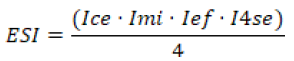
where:
this e aggregate value for circularity
mi – aggregate value for material efficiency
I am – normalized ecological footprint value
I se – normalized value for sharing economy
Equation 7 . General index for the impact of the circular economy on environmental sustainability at the regional level
Several smart tools facilitate the process: data fusion and analysis, machine learning, and visualization. Specifically, Python (NumPy, Pandas, SciPy) can be used here.
- The functionality for comparison with global indices allows for a number of comparisons and analyses. First, it allows for monitoring progress in the region, with any change in the behavior of individual entities (businesses and local authorities, NGOs, even individuals). Second, it tracks the region’s position relative to the national level and reflects the overall progress, as well as the speed of progress. Next, it conducts analyses and forecasts relative to similar geographical regions outside the national level. It also conducts the analysis relative to the fine index. These analyses provide a valuable resource for analyses and forecasts, planning strategic and business priorities leading to progress in environmental sustainability.
Conclusion
The efforts to develop scientific knowledge related to obtaining an objective assessment of environmental sustainability contribute to making objective decisions for the development of the economy. The result obtained in this paper is a good alternative aimed at both regional managers and macro-level managers and analysts. Moreover, the IMAICEESrl model is intelligent, and thanks to AI its functionalities, the information is updated in real time with each change that occurs. Another advantage is associated with the impartiality of the assessment, which eliminates the subjective opinion of the human factor. The combination of the presented indicators provides a solid basis for reliable analyses and forecasts and links progress in the circular economy with environmental sustainability. In summary, the calculation of the general index reveals the challenges that we need to deal with in the short term. As the literature shows, the state of environmental sustainability requires a series of effective measures to be taken. This requires the scientific community to conduct additional research in these areas, since these issues are among the most influential topics both in economic terms and for the survival of society.
Acknowledgement
This article was financially supported by the UNWE Science Fund (contract No. 6/2025A).
NOTES
- https://www.lythouse.com/blog
- What is ecological sustainability? – https://www.themomentum.com/articles/what-is-ecological-sustainability
- The ultimate guide to leveraging recycled content metrics for building material circularity – https://2050-materials.com/blog/the-ultimate-guide-to-leveraging-recycled-content-metrics-for-building-material-circularity/
- Ecological footprint – https://www.footprintnetwork.org/our-work/ecological-footprint/
- Energy balances 2020 – https://www.nsi.bg/publications/energiini-balansi-2020-2136
- Analysis on energy efficiency in Bulgaria for 2022 – https://seea.government.bg/documents/Analiz_EE_za2022.pdf
- Circular Economy Indicators – https://ec.europa.eu/eurostat/web/circular-economy
REFERENCE
Ampatzoglou, A., Bibi, S., Chatzigeorgiou , A., Avgeriou , P., & Stamelos , I. (2018). Reusability Index: A measure for assessing software assets reusability. In R. Capilla, B. Gallina, & C. Cetina (Eds.) New Opportunities for Software Reuse, (pp. 43 – 58). Springer.
Awli , O., & Lau , E. (2023). Digital and sharing economy for sustainable development: A bibliometric and systematic review. Economies, 11(4), 105. https://doi.org/10.3390/economies11040105.
Balinov, B., Panicharova, M., & Madzhirov, N. (2019). Sustainable development in the context of a circular economy in smart cities. Journal of Management and Sustainable Development, 76(3). https://www.jmsd.bg/files/articles/76/76-03_B_Balinov_Panicharova_paper_2019.pdf .
Betts, K., Gutierrez-Franco, E., & Ponce-Cueto, E. (2022). Key metrics this measure the performance and impact of reusable packaging in circular supply chains. Frontiers in Sustainability, 3. https://doi.org/10.3389/frsus.2022.910215.
Callicott, J. B. (2018). Ecological sustainability. In S. Sarkar, B. A. Minteer (Eds.), A Sustainable Philosophy-The Work of Bryan Norton, (pp. 27 – 47), Springer. https://doi.org/10.1007/978-3-319-92597-4_3.
Ellen MacArthur Foundation. (2021, May 21). Completing the picture: How the circular economy tackles climate change. Ellen MacArthur Foundation. https://www.ellenmacarthurfoundation.org/completing-the-picture.
Hysa, E., Kruja, A., Rehman, N. U., & Laurenti, R. (2020). Circular economy innovation and environmental sustainability impact on economic growth: An integrated model for sustainable development. Sustainability, 12(12), 4831. https://doi.org/10.3390/su12124831.
Jayakodi, S., Senaratne, S., Perera, S., & Bamdad, K. (2024). Circular economy assessment using project-level and organization-level indicators for construction organizations: A systematic review. Sustainable Production and Consumption, 48, 324 – 338. https://doi.org/10.1016/j.spc.2024.05.025.
Lee, Y., Hu , J., & Lim, MK (2024). Revisiting circular economy indicators: A circular supply chain perspective. Journal of Purchasing and Supply Management, 30(4), 100941. https://doi.org/10.1016/j.pursup.2024.100941.
Liu, L. (2009). Sustainability: Living within one’s own ecological means. Sustainability, 1(4), 1412 – 1431. https://doi.org/10.3390/su1041412.
Marshadi, A. H. A. L., Aslam, M., & Janjua, A. A. (2025). Ecological footprints, global sustainability, and the roles of natural resources, financial development, and economy growth. Plos One, 20(5), e0323701. https://doi.org/10.1371/journal.pone.0317664.
Pavlov, P. & Kurshumov, V. (2025). Eco-innovation and circular economy development. Industrial Growth Conference 2024, 136 – 145. https://doi.org/10.53656/igc-2024.07.
Pimenow, S., Pimenowa, O., Prus, P., & Niklas, A. (2025). The impact of artificial intelligence on the sustainability of regional ecosystems: Current challenges and future prospects. Sustainability, 17(11), 4795. https://doi.org/10.3390/su17114795.
Shah, M., Wever, M., & Espig, M. (2025). A framework for assessing the potential of artificial intelligence in the circular bioeconomy. Sustainability, 17(8), 3535. https://doi.org/10.3390/su17083535.
Tennakoon, W. D. N. M. S., Janadari, M. P. N., & Wattuhewa, I. D. (2024). Environmental sustainability practices: A systematic literature review. European Journal of Sustainable Development Research, 8(3), em0259. https://doi.org/10.29333/ejosdr/14604.
Tongyodkaew, P., & Songmuang, P. (2025). AI implementations on circular economy: A systematic literature review. In J. Kertesz, B. Li, T. Supnithi, & A. Takhom (Eds.), Computational Data and Social Networks (pp. 411 – 419).
United Nations. (2007). Material intensity of the economy: Consumption and material consumption. https://www.un.org/esa/sustdev/natlinfo/indicators/methodology_sheets/consumption_production/material_intensity.pdf.
United Nations Economic Commission for Europe (UNECE). (2007). I-3: Waste reuse and recycling. https://unece.org/DAM/env/europe/monitoring/Indicators/I-3-en-final.pdf.
Wackernagel, M., & Rees, W. (1996). Our ecological footprint: Reducing human impact him/her the Earth. New Society Publishers.
Assoc. Prof. Petya Biolcheva, PhD
ORCID iD: 0000-0001-9430-773X
Department: Industrial Business
University of National and World Economy
19, December 8th St.
1700 Sofia, Bulgaria
E-mail: p.biolceva@unwe.bg

Свързани статии:
 Implementation of Sustainable Indicators for Effective Evaluation and Monitoring of Transport Projects
TECHNOLOGICAL INNOVATIONS AND SUSTAINABLE DEVELOPMENT OF EUROPEAN SMALL AND MEDIUM-SIZED ENTERPRISES IN THE FOOD INDUSTRY
PUBLIC ADMINISTRATION THROUGH THE AGES: HISTORICAL MODELS, INSTITUTIONAL TRANSFORMATIONS, AND CONTEMPORARY PARADIGMS
INTEGRATING LEAN PRINCIPLES WITH DIGITAL TECHNOLOGIES FOR THE IMPROVEMENT OF PRODUCTION MANAGEMENT
