


Ralitsa Veleva
University of National and World Economy
https://doi.org/10.53656/his2025-6s-6-sta
Abstract. In the framework of this study, the issue of Bulgaria’s state capacity is viewed as a long-term process of institutional consolidation, administrative professionalisation, and economic modernisation. The main objective is to rebuild the historical interdependence between bureaucratic impartiality, regime stability, and development performance from 1878 to 2024. The analysis argues that state capabilities are not only an administrative attribute, but also a strategic determinant of sustainable growth and institutional resilience. The methodological approach is descriptive and historical, combining empirical indicators with interpretative analysis. Data are extracted from internationally recognised sources, including Varieties of Democracy (V-Dem), Political Economy IV, and Gapminder, and supplemented by national statistics and historical documents. The conceptual model incorporates three analytical dimensions: administrative competence, political stability, and economic sustainability, representing real income per capita. This concept allows the identification of structural dependencies and cyclical patterns in the co-evolution of governance quality and economic development. The novelty of this study lies in the interdisciplinarity of economic history, political economy, and public administration theory. By integrating quantitative data with historical narrative, it reveals how Bulgaria’s administrative capacity has evolved through successive systemic transformations, from constitutional monarchy and socialist centralisation to the democratic and Europeanized governance model of the contemporary era. Empirical findings show that periods of administrative consolidation and bureaucratic competence coincide with periods of economic expansion and democratic predictability, while political instability, authoritarian centralisation, and frequent cabinet turnover undermine institutional effectiveness and political coherence. Evidence supports the conclusion that Bulgaria’s development path depends less on formal regime types and more on the administrative capacity to ensure predictable, impartial, and statutory governance. Finally, the study establishes that the convergence of democratic accountability, bureaucratic professionalism, and economic adaptability is a structural mechanism that underpins Bulgaria’s modernisation and sustainable development.
Keywords: Public administration; state capacity; political stability; institutional quality; economic development
Introduction
The historical evolution of Bulgaria’s public administrative capacity reflects a diverse process of state formation and institutional transformation, shaped by alternating political regimes and far-reaching socioeconomic transformations. Since the Liberation of Bulgaria in 1878, the state has experienced successive phases of institutional consolidation ranging from its early configuration as a constitutional monarchy with limited bureaucratic autonomy, through periods of authoritarian centralism and a socialist model of administrative planning, and ultimately to a contemporary democratic and Europeanized governance framework. Each of these stages left a distinctive imprint on the administrative capacity, influencing it not only as an organisational apparatus but also as an embodiment of bureaucratic professionalism, normative coherence, and rational governance.
In recent decades, research in the fields of political economy and public administration has increasingly highlighted the role of state capacity as a fundamental determinant of economic performance and social cohesion. For the purposes of this analysis, state capacity is defined as the ability of public institutions to formulate, implement, and enforce policies characterised by legality, impartiality, and efficient allocation of resources. From this perspective, the quality of public administration is directly related to the long-term trajectory of economic development. Persistent political instability and frequent government turnover undermine institutional continuity and policy predictability, while an impartial and competent bureaucracy facilitates democratic consolidation and stimulates economic modernisation.
In the Bulgarian context, these interdependencies are apparent, as periods characterised by administrative professionalisation and bureaucratic strengthening have often coincided with episodes of economic expansion and political stabilisation. In contrast, cycles of authoritarian monopolisation of power and political fragmentation have weakened state capacity and decelerated economic growth. The purpose of the present study is to reconstruct the long-term relationship between administrative capacity, regime stability, and financial performance in Bulgaria from 1878 to 2024 by following these historical patterns.
Research is structured around a conceptual model that links three interrelated dimensions: first, the impartiality and professionalism of the public administration; second, the nature and stability of the political regime; and third, economic sustainability, as measured by real income per capita. The methodological approach is descriptive and historical, with the aim not of establishing statistical causality but of interpreting long-term structural interdependencies. This analysis combines empirical data from international datasets (V-Dem, Polity IV, Gapminder) with secondary historical sources and national economic records, enabling a diachronic comparison of governance quality and development outcomes. The article adopts an interdisciplinary perspective that bridges economic history and public administration, viewing Bulgaria’s bureaucracy not only as a technical implementer of policy decisions, but as a strategic determinant of national development. By integrating historical evidence with empirical data, the study contributes to the broader scholarly debate on how variations in state capacity have shaped patterns of economic growth and underdevelopment in Eastern Europe.
Historiographical Context
The theoretical framework of this study is based on a rich body of research concerning the role of institutions in shaping economic performance and state development. A central premise, articulated by Douglass North (1990), posits that the establishment of predictable ‘game rules’, including the protection of property rights, the rule of law and constraints on arbitrary power, creates the institutional foundations necessary for economic exchange and growth. Within this conceptual tradition, state capacity is regarded as a key component of institutional quality (the overall standard of governance), one that determines how effectively governments formulate and implement policies.
Modern research distinguishes between inclusive and extractive institutions (Acemoglu & Robinson 2012), where the former enable broad economic participation and innovation, while the latter concentrate power and constrain development. The efficiency of public administration, understood as an impartial and professional bureaucracy, is integral to the establishment of inclusive institutions. In contrast, excessive bureaucratization or politicisation can transform the state apparatus into an obstacle to growth, resonating with Ludwig von Mises’ (1944) classic critique of bureaucratic rigidity and inefficiency. From a sociological perspective, Max Weber (1947) conceptualised bureaucracy as the rational form of modern governance, a form indispensable for the functioning of the state, yet one inherently at risk of degenerating into an ‘iron cage’ of proceduralism. Later institutionalist approaches expanded on this duality, as they treated bureaucracies both as pillars of predictability and as potential sources of inertia.
Political stability constitutes another fundamental factor in explaining the divergence in development. Empirical research, notably that of Robert Barro (1991), demonstrates that frequent government changes, coups, or executive disruptions correlate negatively with long-term economic growth. Arezki and Fetzer (2019) further confirm that policy uncertainty resulting from frequent cabinet turnover suppresses investment and undermines institutional trust, especially in developing or transition economies. A resilient and impartial state administration can mitigate such effects by ensuring policy continuity even amid unstable political conditions (Acemoglu, Johnson & Robinson 2005).
The literature also emphasises the impact of external shocks (wars, financial crises, and systemic transitions) on institutional trajectories. Paul Collier (2007) characterises civil conflict as a ‘trap’ that impedes wealth accumulation and perpetuates poverty. Historical data for Europe show that both World Wars led to sharp contractions in output, followed by uneven reconstruction depending on postwar policy choices (Lampe 1986). Similarly, major economic disruptions, such as hyperinflation and abrupt transitions, have a long-term impact on human capital and social trust.
In the Bulgarian case, the post-communist transformation of the 1990s provides a striking illustration of these dynamics. Real GDP per capita fell by approximately 30% between 1989 and 1993, while inequality and poverty rose sharply (Milanovic 1998). The gradual recovery after 1997 coincided with the stabilisation of the public administration and the adoption of market-oriented institutions. Avramov (2001) and Rangelova (2013) note that the state’s capacity to manage reforms, rather than the specific design of those reforms, determined the pace of economic adjustment.
Viewed from a long-term historical perspective, Bulgarian state-building reveals a recurrent tension between bureaucratic expansion and administrative autonomy. The early decades after the Liberation (1878) were characterised by politicized patronage and weak professionalisation; the socialist era (1945-1989) achieved a high level of technical competence but at the cost of institutional neutrality; and the democratic period after 1990 introduced modern administrative standards under the influence of the European Union integration. Recent studies, such as Vukov (2024), suggest that Bulgaria’s experience reflects a broader regional pattern in which state capacity, political stability, and economic modernisation evolve interdependently.
In summary, existing research establishes a clear theoretical link between institutional quality and economic performance. However, the historical evolution of administrative capacity in Bulgaria remains unexplored. The coevolution of institutional capacity and economic culture is evident across multiple historical epochs. For example, in the period of the Revival, Rusev links changes in commercial mentality with institutional diffusion: ‘Protestant ethics and the ‘spirit of capitalism’ influenced some segments of Bulgarian society during the Revival, acting as a catalyst for entrepreneurial and accounting practices’ (Rusev 2006). This cultural-institutional nexus suggests that changes in governance and economic structure cannot be fully understood without accounting for the evolving normative and cognitive frameworks. By integrating quantitative indicators with historical narrative, the article aims to bridge this gap, positioning Bulgaria’s institutional development within the broader European discourse on economic development and underdevelopment.
Historical institutionalist perspectives further deepen this analytical framework by emphasising path-dependent sequences and critical junctures in state development. The Bulgarian case illustrates how turning points such as 1878, 1944, 1989 and 2007 produced durable institutional legacies that shaped administrative norms and governance capacities across generations. These moments of structural realignment created self-reinforcing patterns that conditioned the pace and direction of subsequent reforms.
Furthermore, comparative studies of state capacity in Eastern Europe show that Bulgaria’s trajectory reflects broader regional tendencies: rapid formal institutional alignment after 1990 combined with slower improvements in enforcement, bureaucratic autonomy, and public sector professionalisation. Research on Poland, Romania, the Czech Republic, and the Baltic states identifies similar tensions between modernisation efforts and the persistence of informal constraints. Situating Bulgaria within this regional context enhances the analysis’s contemporary relevance and clarifies the shared structural challenges faced by post-socialist administrations.
Methodology
The study uses an analytical framework to systematise the relationship between public administrative capacity and the larger context of political stability and economic development in Bulgaria during the period 1878 – 2024. State capacity (or administrative capacity) is defined here as the ability of the public administration to formulate, implement, and oversee public policies with professionalism, legal consistency, and autonomy from political interference (Veleva 2024). It reflects not only the functional competence of administrative structures, but also their capacity for coordination, adaptability, and resilience in the face of regime change.
The analysis focusses on three primary and interrelated dimensions, each quantified by an internationally recognised indicator. First, administrative impartiality and effectiveness are measured by the Rigorous and Impartial Public Administration Index from the Varieties of Democracy (V-Dem) dataset. This index ranges from 0 (indicating no impartiality or adherence to the rule of law) to 4 (indicating full impartiality and adherence to the rule of law), with higher values corresponding to a more professional bureaucracy. Second, political regime characteristics are captured by the Polity2 score (Polity IV project), which ranges from -10 (full autocracy) to +10 (full democracy) and reflects both institutional constraints on executive power and the regime’s overall openness. Third, economic performance is measured by real GDP per capita (in constant PPP dollars) from the Gapminder dataset, which represents long-term economic welfare. Furthermore, the study considers government turnover (the number of cabinet changes per year) as a contextual metric of political instability and policy discontinuity. Figure 1 schematically represents the analytical framework. Arrows indicate reciprocal links: administrative capacity influences political stability and economic performance, while both, in turn, affect the sustainability of bureaucratic development. The model interprets public administration as a structural determinant of governance quality rather than as a passive policy tool.
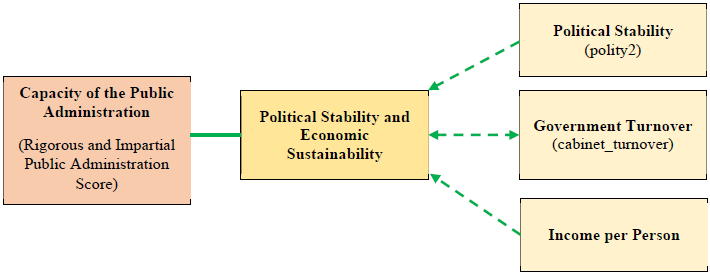
Figure 1. Conceptual model illustrating the relationship between administrative capacity, political stability, and economic development
Source: Author
In the present study, a longitudinal database comprising annual observations from 1878 to 2024 was constructed drawing on the aforementioned sources and supplementing them with national historical statistics to ensure consistency. Given the extensive historical period covered by the study, the integration of contemporary governance indicators with earlier historical data requires clarification. The V-Dem and Polity2 indices, as well as the Gapminder GDP series, do not provide complete or fully standardised observations for the entire timeframe, particularly for the pre-1945 decades. To ensure continuity in the longitudinal database, missing values were reconstructed using triangulation between archival administrative reports, historical economic records, and existing scholarly reconstructions. When annual statistical data were unavailable, the series was conservatively interpolated to reflect long-term structural trends rather than short-term fluctuations. This procedure allows backward extension of the modern indices while preserving their relative scaling properties. It must be noted, however, that such harmonisation entails methodological limitations: Contemporary indicators may capture institutional features more precisely in the modern period than in earlier historical contexts. Therefore, the quantitative trends presented in the analysis are interpreted in conjunction with historical narrative evidence. The methodological approach is primarily descriptive: instead of testing formal causality, it examines long-term associations among the variables. This design enables the identification of patterns and structural breakdowns in the governance and trajectory of economic development in distinct historical epochs.
Historical Trajectory (1878 – 2024)
The empirical analysis traces the evolution of Bulgaria’s state capacity, political stability, and economic performance from 1878 to the present day. By examining changes in bureaucratic impartiality, regime type, government turnover, and real income per capita, the study clarifies how institutional development unfolded under successive political and economic regimes. Figure 2 shows the time-series trends of the key indicators throughout the entire period.
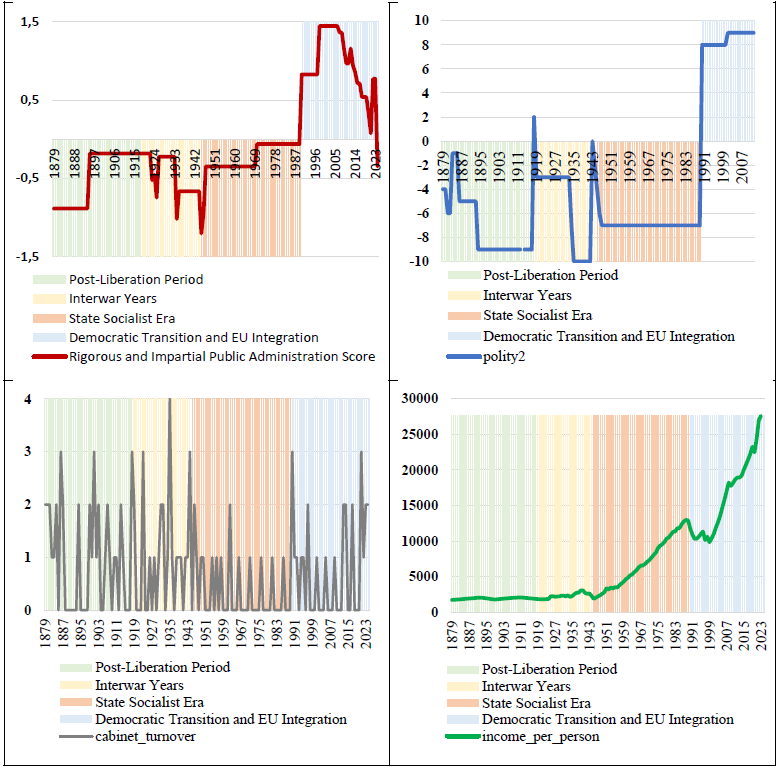
Figure 2. Long-term trends in state capacity, political regime, and income per capita (1878 – 2024)
Note: The indicators in Figure 2 are presented on their original scales. The Polity2 score ranges from -10 (full autocracy) to +10 (full democracy); the V-Dem index of impartial public administration ranges from 0 to 4; and the real GDP per capita is measured in constant PPP dollars. The figure aggregates data from multiple historical and contemporary datasets to enable dichronic comparison.
Source: based on data from Gapminder (2024), Marshall et al. (2013), V-Dem (2025), World Bank (2025), National Assembly of the Republic of Bulgaria (2025).
General Trends
Over nearly a century and a half of modern statehood, Bulgaria’s governance indicators have exhibited notable cyclical patterns. The Polity2 score averages approximately -4, reflecting the long predominance of authoritarian or semi-authoritarian regimes, though it sharply rises during democratic periods. Cabinet instability has generally been moderate (around 0,5 turnovers per year), with occasional spikes to as many as four governments in a single year during crises. Meanwhile, real income per person increased dramatically, from roughly $700 in the late 19th century to more than $ 27 000 in 2023 (in PPP terms), illustrating the country’s overall economic convergence with developed economies despite periodic setbacks. The V-Dem administrative capacity index also shows a significant long-term improvement: it begins with very low (negative) values in the late 19th and early 20th centuries and gradually climbs to positive levels by the early 21st century. These figures reveal a clear historical pattern: improvements in bureaucratic competence and political stability have often coincided with phases of accelerated socio-economic development, whereas periods of turmoil have correspondingly seen stagnation or regression.
Phases of Institutional Development
Post-Liberation Period (1878 – 1918). The early decades of Bulgarian statehood were marked by weak bureaucratic professionalisation and pervasive political patronage. Frequent changes in government and monarchical interference limited the autonomy and development of an impartial civil service. However, the gradual establishment of a merit-based bureaucracy and the codification of administrative procedures during this period initiated a slow process of institutional learning and capacity building.
Interwar Years (1919 – 1943). This period combined efforts for administrative rationalisation with extreme political volatility. Ambitious modernisation programs were undermined by recurrent coups, authoritarian interventions, and partisan conflicts, which disrupted the continuity of bureaucratic development. Economic policies shifted between liberalisation and protectionism, revealing the fragility of institutions amid unstable governance. Despite partial progress in professionalising the administration, the interwar state remained vulnerable to patronage and abrupt policy changes. Evidence drawn from Bulgarian archives further supports the expanding role of the state in economic coordination during the interwar period. Dimitrov (2014) observes that ‘in the years between the two World Wars, the Bulgarian state most intensively established economic institutions of the so-called ‘second echelon’, such as directorates and committees’, reflecting an administrative expansion that both increased organisational capacity and entrenched political dependence.
State Socialist Era (1944 – 1989). Under the single-party communist regime, the public administration achieved a high degree of technical capability and considerable organisational reach, yet it lost most of its institutional autonomy. Bureaucratic efficiency was subordinated to ideological objectives and centralised political control. The state’s capacity to mobilise resources and implement ambitious industrialisation policies proved significant in the short term, but it came at the expense of innovation and accountability. The lack of pluralism or external oversight meant that administrative institutions could not self-correct, resulting in an overextended and inflexible apparatus by the 1980s. As Paev (2023) notes, ‘the apparent lagging behind of the socialist economy in the late 1970s forced the government to take steps toward expanding the possibilities of exercising private initiative in various areas of the economy in the 1980s’. However, these late reforms remained limited in scope and impact: ‘By the end of 1986, about 20 per cent of the country’s population received additional income from private activities, but private trade, services, and retail manufacturing employed only around 1% of the workforce’. This evidence illustrates that even in its most reformist phase, the capacity of the socialist state of Bulgaria remained constrained by ideological and structural rigidities that constrained genuine economic adaptation.
Democratic Transition and EU Integration (1990 – 2024). The transition to democracy in the 1990s brought a renewed emphasis on administrative reform, transparency, and the rule of law. However, the early years were characterised by institutional chaos and a severe economic collapse, as old administrative structures eroded faster than new ones could take shape. As Simeonova-Ganeva, Ganev and Ivanov (2024) argue, “the significant increase in nominal income during communism, matched by administrative price controls, led to artificially high real wages and purchasing power… The severe economic downturn and high inflation in the 1990s were inevitable”. This finding contextualises the economic contraction of the transition period as a structural correction of decades of administratively sustained distortions. From the late 1990s onwards, the consolidation of democratic institutions and the process of European Union accession (culminating in 2007) greatly enhanced bureaucratic quality, regulatory frameworks, and fiscal discipline. Public administration reforms, often guided by EU norms, professionalised the civil service and improved policy coordination. However, in recent years, recurring electoral deadlocks and political fragmentation (especially the 2021 – 2023 cycle of repeated elections) have once again tested the resilience and continuity of the administrative system.
The period after Bulgaria’s accession to the European Union in 2007 represents a distinct phase of externally anchored institutional development. EU conditionality, notably through the Cooperation and Verification Mechanism (CVM), the acquis harmonisation process and periodic Rule of Law assessments, contributed to measurable improvements in administrative procedures, regulatory standards, and fiscal coordination. These mechanisms strengthened the professionalisation of the civil service by promoting merit-based recruitment and limiting discretionary political intervention. At the same time, the mixed outcomes of judicial reforms and persistent governance vulnerabilities indicate that external incentives can accelerate institutional modernisation but cannot substitute for sustained domestic commitment to administrative autonomy and rule of law consolidation.
State Capacity, Stability, and Development. A cross-period comparison highlights a structural relationship between state capacity, political stability, and economic outcomes. Periods of high bureaucratic professionalism and low government turnover have generally coincided with accelerated growth and social development, notably during the early 1910s, the post-World War II modernization (until systemic rigidity set in), and the post-1997 recovery and early 2000s boom. On the contrary, phases of severe political turbulence or abrupt regime change, such as the late 1910s, the mid-1940s, the early 1990s and the early 2020s, corresponded with declines in administrative effectiveness and episodes of economic stagnation or crisis. This evidence supports the hypothesis that an impartial, competent bureaucracy, and institutional continuity are prerequisites for sustainable development. A ‘strong’ state lacking true administrative autonomy (as in authoritarian regimes) may achieve short-term policy successes, but fails to secure long-term prosperity. On the contrary, democratic governance, when coupled with robust administrative institutions, tends to exhibit greater adaptability, policy consistency, and capacity to absorb shocks.
Throughout its history, Bulgaria’s trajectory demonstrates cyclical patterns of institutional strengthening and erosion. Periods of administrative consolidation and predictable governance supported economic modernisation, whereas episodes of instability eroded bureaucratic integrity and impeded growth. These cycles underscore that effective public administration has not only been a consequence of favourable conditions, but a key factor in Bulgaria’s path of development.
Conclusion
Historical evidence presented in this study demonstrates a persistent interdependence between administrative capacity, political stability, and economic performance in Bulgaria between 1878 to 2024. Periods of bureaucratic consolidation and policy continuity have repeatedly coincided with phases of economic modernisation, while episodes of political turbulence and institutional fragmentation have consistently undermined state effectiveness and stifled growth.
Empirical data confirm that higher levels of administrative impartiality and professionalisation are associated with stronger democratic institutions and better economic outcomes. In contrast, frequent cabinet changes and authoritarian concentrations of power have tended to erode bureaucratic competence and policy coherence. This long-term pattern suggests that Bulgaria’s development trajectory has depended less on the formal regime structure and more on the ability of state institutions to sustain predictable, rules-based governance.
Authoritarian regimes in Bulgaria occasionally achieved short-term administrative efficiency (for example, by centralising authority and mobilizing resources rapidly), but their lack of institutional autonomy and accountability prevented enduring prosperity. Democratic governance since 1990 has offered greater potential for modernisation, provided that political pluralism is matched by administrative professionalism. Indeed, the most significant improvements in living standards occurred when governance combined political predictability with an impartial and competent public administration (such as during the 2000s and the post-EU-accession decade).
In a broader comparative context, Bulgaria exemplifies the logic of ‘state capacity convergence’ observed in East-Central Europe: sustainable economic development emerges where democratic institutions and bureaucratic integrity reinforce each other over time. The recent cycle of political fragmentation (2021-2023) illustrates how fragile this equilibrium can be, as recurring elections and executive turnover have strained the continuity of public policy. Ultimately, this study demonstrates that the quality of governance, rather than the form of government, has been the decisive factor in the modernisation of Bulgaria. The balance of democracy, administrative competence, and institutional resilience emerges not only as a key historical lesson but also as a prerequisite for the country’s future economic and social sustainability.
Placed in a broader regional perspective, Bulgaria’s trajectory illustrates a pattern of ‘constrained convergence’ typical for Eastern Europe, where improvements in institutional design have often outpaced progress in administrative autonomy and enforcement. Comparative data show that challenges related to political fragmentation, regulatory inconsistency, and limited bureaucratic insulation are shared across the region, especially in countries undergoing repeated cycles of executive instability. This situates Bulgaria’s experience within a broader context of post-socialist state-building and underscores the structural nature of its governance constraints.
These long-term findings also suggest several policy-relevant implications. Strengthening meritocratic recruitment, ensuring the stability of administrative mandates, and improving transparency in regulatory processes appear essential for maintaining institutional continuity across political cycles. Enhancing judicial independence and modernising administrative data systems would further strengthen the state’s ability to deliver predictable, impartial policy outcomes. Such measures are critical to align Bulgaria’s administrative performance with broader European standards for governance modernization.
Acknowledgеments
This article presents results from project No. КП-06-ПН85/17 ‘Research and assessment of the capacity of the state administration in Bulgaria and guidelines for good governance’, funded by the Bulgarian National Science Fund.
REFERENCES
ACEMOGLU, D. & ROBINSON, J.A., 2012. Why Nations Fail: The Origins of Power, Prosperity, and Poverty. London: Profile Books. eISBN 978-0-307-71923-2.
ACEMOGLU, D., JOHNSON, S. & ROBINSON, J.A., 2005. Institutions as a fundamental cause of long-run growth. Handbook of Economic Growth, no. 1, pp. 385 – 472. ISSN 1574-0684.
ACEMOGLU, D., NAIDU, S., RESTREPO, P. & ROBINSON, J.A., 2019. Democracy does cause growth. Journal of Political Economy, vol. 127, no. 1, pp. 47 – 100. ISSN 0022-3808.
AREZKI, R. & FETZER, T., 2019. Executive Branch Turnover, Policy Uncertainty, and Growth. Working Paper. London: International Growth Centre, April 2019. Reference number: S-89326-CCN-1.
AVRAMOV, R., 2001. The Economic Twentieth Century of Bulgaria. Sofia: Center for Liberal Strategies. ISBN 9549671046 [in Bulgarian].
BARRO, R.J., 1991. Economic growth in a cross-section of countries. Quarterly Journal of Economics, vol. 106, no. 2, pp. 407 – 443. ISSN 0033-5533.
COLLIER, P., 2007. The Bottom Billion: Why the Poorest Countries Are Failing and What Can Be Done About It. Oxford: Oxford University Press. ISBN 0195374630.
DIMITROV, M., 2014. The State and the Economy in Bulgaria between the Two World Wars (1919 – 1939): Facts, Analyses, and Assessments of Economic. Sofia: Publishing Complex: University of National and World Economy. ISBN 978-954-644-543-8 [in Bulgarian].
EUROPEAN COMMISSION, 2023. Economic Forecast for Bulgaria – Autumn 2023. Brussels: Directorate-General for Economic and Financial Affairs. ISBN 978-92-68-04233-5. Available at: https://economy-finance.ec.europa.eu/economic-surveillance-eu-economies/bulgaria/economic-forecast-bulgaria_en [Accessed 10 Sept. 2025].
GAPMINDER, 2024. GDP per capita in constant PPP dollars (gd001). Gapminder Data Documentation. Available at: https://www.gapminder.org/data/documentation/gd001/ [Accessed 10 Sept. 2025].
HARDY, E., 2024. ‘Can Bulgaria break its political stalemate?’ The Parliament Magazine, 25 October 2024.
LAMPE, J.R., 1986. The Bulgarian Economy in the Twentieth Century. London: Croom Helm. ISBN 9781003564553.
MARSHALL, M.G., JAGGERS, K. & GURR, T.R., 2013. ‘Polity2 Index.’ Clio Infra. Available at: https://www.clio-infra.eu/Indicators/Polity2Index.html [Accessed 6 Aug. 2025].
MILANOVIC, B., 1998. Income, Inequality, and Poverty during the Transition from Planned to Market Economy. Washington, DC: World Bank. ISBN 0-8213-3994-X.
MISES, L. VON., 1944. Bureaucracy. New Haven, CT: Yale University Press.
NATIONAL ASSEMBLY OF THE REPUBLIC OF BULGARIA, 2025. Plenary Session Transcripts. Sofia: National Assembly. Available at: https://www.parliament.bg/bg/plenaryst [Accessed 1 Aug. 2025] [in Bulgarian].
NORTH, D.C., 1990. Institutions, Institutional Change and Economic Performance. Cambridge: Cambridge University Press. ISBN 9780511808678.
PAEV, K., 2023. Attempts to stimulate private business initiative in Bulgaria in the 1980s. Proceedings of the Centre for Economic History Research (CEHR), vol.8, pp. 186 – 196. ISSN 2534-9244 [in Bulgarian].
RANGELOVA, R., 2015. Structural Changes and Economic Growth in the European Union Countries. Sofia: Bulgarian Academy of Sciences, Institute of Economics. ISBN 978-954-9313-92-5 [in Bulgarian].
RUSEV, I., 2006. Protestant ethics and the spirit of capitalism” through the lens of the Bulgarian National Revival. Accounting Policy, vol. 5 – 6, pp. 42 – 53. ISSN 1312-2142 [in Bulgarian].
SIMEONOVA-GANEVA, R. ; GANEV, K. & IVANOV, M., 2024. Real prices, real incomes, and purchasing power during communism, transition and EU integration: Evidence from Bulgaria. Proceedings of CEHR, vol.9, pp. 26 – 45. DOI: 10.61836/WGZQ536327. ISSN 2534-9244
V-DEM., 2025. Rigorous and impartial public administration – V-Dem [dataset]. In: Democracy Report v15, processed by Our World in Data, 17 March 2025. Available at: https://ourworldindata.org/grapher/rigorous-and-impartial-public-administration-score [Accessed 10 Sept. 2025].
VELEVA, R., 2024. Proactive Public Policies for Poverty Reduction. Sofia: Publishing Complex: UNWE. ISBN 978-619-232-800-9 [in Bulgarian]. Available at: https://www.ceeol.com/search/book-detail?id=1246815
VUKOV, V., 2024. Strengthening state capacity: Lessons for the EU’s next enlargement. European Policy Analysis, vol. 19. Stockholm: SIEPS. ISSN:2380-6567.
WEBER, M., 1947. The Theory of Social and Economic Organization. New York: Free Press.
WORLD BANK., 2025. GDP per capita, PPP (current international $). World Bank Open Data. Available at: https://data.worldbank.org/indicator/NY.GDP.PCAP.PP.CD [Accessed 5 Aug. 2025].
Dr. Ralitsa Veleva – Assoc. Prof.
WoS Researcher ID: AAB-7876-2022
University of National and World Economy
1700 Sofia, Bulgaria
E-mail: ralitsa.veleva@unwe.bg
>> Download the article as a PDF file <<

Свързани статии:
 Exploring Entrepreneurial Readiness among University Students: Insights from a Preliminary Study
A Look of the Bulgarians through the Prism of a Textbook from the Beginning of 20th Century – “Pictures from the General Geography” by Ivan Hoic
Individual Competencies of Teachers in the Process of Digitalization in Higher Education
The Issue About the Merge and Separation
of the Liberals and The People's Liberals in 1899
Exploring Entrepreneurial Readiness among University Students: Insights from a Preliminary Study
A Look of the Bulgarians through the Prism of a Textbook from the Beginning of 20th Century – “Pictures from the General Geography” by Ivan Hoic
Individual Competencies of Teachers in the Process of Digitalization in Higher Education
The Issue About the Merge and Separation
of the Liberals and The People's Liberals in 1899