



Illia Syvolovskyi
Ukrainian State University of Railway Transport, Kharkiv, Ukraine
Volodymyr Lysechko, Maksym Surhai
Olena Lozko, Serhiy Kaduk, Oleksii Mohylnyi
Ivan Kozhedub Kharkov National University of Air Forces, Kharkiv, Ukraine
Galina Cherneva
Todor Kableshkov University of Transport, Sofia, Bulgaria
https://doi.org/10.53656/isct-2025.26

Pages 306-314
Abstract. The growing complexity of distributed telecommunication environments, particularly in the context of the Internet of Things (IoT), edge computing, and real-time analytics, demands more adaptive and scalable network architectures. Traditional flat or static topologies are insufficient to support the high level of dynamism, heterogeneity, and fault tolerance required by modern systems. This article proposes a structured approach to the design of telecommunication network topologies based on hierarchical cluster organization, with the goal of optimizing data flow management and ensuring operational stability under dynamic conditions.
The suggested model incorporates a three-level architecture—Edge, Fog, and Cloud—each of which is responsible for distinct layers of data aggregation, processing, and transmission. Clusters within each layer are structured according to a star topology, enabling efficient coordination and minimizing the latency associated with inter-node communication. Central nodes within clusters manage subordinate nodes and serve as control points for load balancing and fault handling.
Special attention is given to the development of two key algorithms: one for the adaptive integration of new nodes based on metrics such as geographic proximity, task type, and cluster load; and another for automated topology reconfiguration in response to node failures or critical overloads. These algorithms include mechanisms for real-time monitoring, resource reservation, dynamic reassignment of tasks, and route optimization.
The proposed approach ensures enhanced fault tolerance, scalability, and adaptability of the network infrastructure. It is particularly suited for use in systems characterized by frequent structural changes and varying computational demands. The model has broad applicability in next-generation telecommunication systems, including distributed sensor networks, industrial IoT deployments, and intelligent infrastructure relying on Edge–Fog–Cloud paradigms.
Keywords: Telecommunication systems, cluster structure, load balancing traffic, data processing, optimization, distribution of data streams.
- Introduction
The rapid expansion of smart devices, real-time services, and data-intensive applications has fundamentally transformed the landscape of modern telecommunication networks. These changes place increasing demands on network infrastructures, which must now provide not only high throughput but also flexibility, low latency, and fault tolerance in highly dynamic environments.
Conventional flat or centralized architectures often struggle to meet these challenges, particularly in systems where data sources are widely distributed, such as Internet of Things (IoT) ecosystems [5, 3, 7]. As a result, researchers and engineers have increasingly turned to hierarchical and decentralized models that can better align with the spatial and computational diversity of such environments.
Among the various approaches, multi-tier architectures that separate responsibilities between Edge [4], Fog [6], and Cloud layers have shown considerable promise. These models aim to balance local responsiveness with centralized efficiency. However, the design and management of such systems require robust structural frameworks capable of handling continuous node additions, workload fluctuations, and unexpected failures.
This paper addresses these challenges by introducing a method for constructing hierarchical cluster-based topologies. Rather than focusing solely on architectural design, the study emphasizes adaptive algorithms that enable real-time integration of new nodes and resilient reconfiguration in the face of faults. The goal is to provide a practical and scalable solution for distributed telecommunication infrastructures operating under unpredictable and dynamic conditions.
- Hierarchical topology of clusters
In dynamic distributed telecommunication systems, a hierarchical network structure ensures stability, data transmission efficiency, and flexibility to changes. Localization of data transmission within clusters minimizes inter-cluster delays, and node redundancy guarantees system fault tolerance. The scalability of this structure makes it easy to add new nodes and clusters with minimal impact on the existing topology. At the same time, the hierarchical topology faces a number of challenges related to dynamic changes, load balancing, and fault tolerance. The main aspects of these challenges and possible solutions are summarized in Table 1.
Table 1. Challenges of hierarchical topology
| Challenges | Solution |
| Dynamic changes in the network | Adaptation to changes in real time: adding nodes, rebuilding clusters. |
| Uneven load balancing | Centralized management of master nodes in clusters, automatic task reassignment. |
| Fault tolerance | Resource reservation, task redirection between nodes, traffic redistribution. |
The proposed structure of the hierarchical cluster topology is based on the interaction of nodes within and between local clusters, which allows for effective traffic localization, increased fault tolerance, and flexibility to changes. The main levels of the hierarchy (Edge, Fog, Cloud) perform specific functions, each of which optimizes data processing and transmission within its area of responsibility. Fig. 1 shows a diagram of the hierarchical topology of clusters, which combines three main components: cluster structure, intercluster and interlevel interaction.
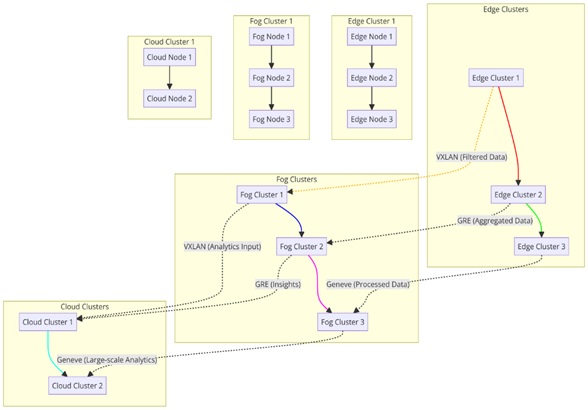
Fig. 1. Diagram of the hierarchical topology of clusters
- Structure of clusters. Each cluster is organized according to the „star“ principle:
– The master node (centroid) is responsible for traffic management and coordination of the work of the slave nodes;
– The subordinate nodes perform specific computing tasks, transmitting the results to the master node.
- Intercluster interaction:
– Clusters are connected through master nodes that form a star-to-star hierarchy.
– Traffic localization reduces the number of inter-cluster connections, reducing overhead.
- Cross-tier interaction.
– Edge clusters process data directly from IoT devices, performing filtering and aggregation.
– Fog clusters perform pre-processing, providing balancing and optimization before transferring to the Cloud.
– Cloud clusters perform in-depth analysis and storage of large amounts of data.
- Algorithm for adaptive addition of nodes to the system in the face of dynamic changes
To ensure the flexibility of the hierarchical topology, it is necessary to create a mechanism that allows you to effectively integrate new nodes into the existing system without affecting network performance [1, 2]. The algorithm for adaptive node addition includes stages.
Stage I. New node detection. When a new node is connected, the system registers its computing resources (CPU, RAM), power consumption, and communication channel bandwidth.
Stage II. Cluster compliance assessment. The most optimal cluster for the node is determined based on the following parameters: – geographical proximity; – cluster load; – type of tasks performed by the node.
Stage III. Checking the load balance. Before adding a node, the system evaluates the workload of the cluster head node. If the threshold value is exceeded, a decision is made to create a new cluster.
Stage IV. Topology update. After a node is added, the matrix of connections between nodes is updated, and data transmission routes are reconfigured.
V stage. System validation. The correctness of the node integration is checked, as well as the impact on the overall system performance. The block diagram of the algorithm is shown in Fig. 2.
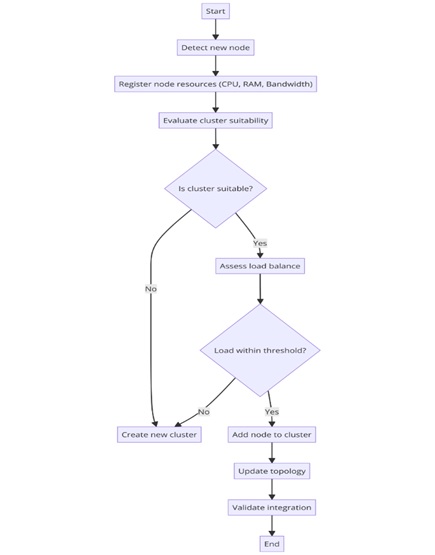
Fig. 2. Algorithm for adaptive addition of nodes to the system
- Algorithm for rebuilding the cluster structure during node failures or load surges
In case of node failure or a sharp increase in load, the system must adapt its topology to ensure stable operation [9]. The rebuilding algorithm includes (Fig. 3).
Stage I. Monitoring the state of nodes. The master nodes of clusters periodically check the status of the slave nodes (availability, resources).
Stage II. Identification of a problem situation. One of the critical situations is recorded: – failure of the master node; – failure of a slave node; – exceeding the permissible load.
Stage III. Reservation or reassignment of nodes. In case of failure of the master node, its functions are transferred to the backup node, which is automatically activated.
Stage IV. Redistribution of tasks. Tasks from the overloaded cluster are distributed among other clusters.
Stage V. Routing update. Routes between nodes are rebuilt to ensure efficient traffic.
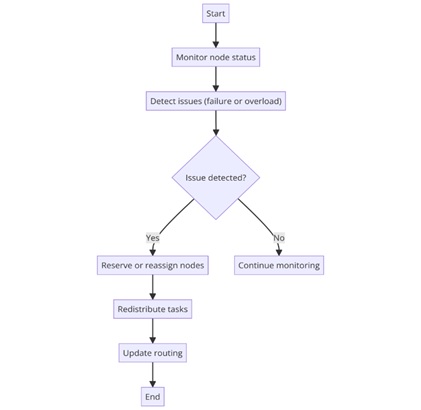
Fig. 3. Algorithm for rebuilding the cluster structure
Conclusions
This paper presents a comprehensive approach to the design and management of hierarchical cluster topologies in distributed telecommunication networks, addressing the pressing need for scalable, adaptive, and fault-tolerant infrastructures in dynamic environments. The proposed model is based on a three-level architecture comprising Edge, Fog, and Cloud layers, where each level is responsible for specific tasks related to data processing, routing, and aggregation, depending on its proximity to data sources and computational capacity.
The core of the model is the organization of network nodes into clusters with star topology, which facilitates effective traffic coordination, localizes data transmission, and enhances fault isolation. The hierarchical structure simplifies system scalability, allowing seamless integration of new nodes and clusters with minimal impact on the existing configuration. Furthermore, the interaction between clusters and across tiers ensures balanced distribution of computational loads and optimized data flow throughout the network.
To support real-time adaptability, two key algorithms were developed: one for the adaptive addition of nodes, and another for restructuring the topology in the event of node failures or traffic surges. These algorithms incorporate mechanisms such as real-time monitoring, resource reservation, reassignment of roles, and route optimization, thereby ensuring stable operation under fluctuating workloads and failure conditions.
The proposed approach is particularly applicable to modern telecommunication systems, including IoT infrastructures, sensor networks, and intelligent control systems, where performance, reliability, and responsiveness are critical [1, 2, 8]. Future research may focus on the integration of machine learning techniques for predictive load balancing, energy-aware routing, and autonomous cluster formation to further enhance system intelligence and self-management capabilities.
References
[1] ABDALLAH, W., VAL, T., Genetic-Voronoi algorithm for coverage of IoT data collection networks, 30th International Conference on Computer Theory and Applications (ICCTA), Alexandria, Egypt, 2020, рр. 16–22. doi: https://doi.org/10.48550/arXiv.2202.13735.
[2] GOUDARZI, M., ZAMANI, M., BUYYA, R., RANJAN, R., Distributed Decision Making for Efficient and Reliable Resource Management in Fog Computing Environments, IEEE Transactions on Computers, vol. 71, no. 1, pp. 141–155, 2022. https://doi.org/10.1109/TC.2021.3090918.
[3] DEB, K., ABOUHAWWASH, М., An optimality theory-based proximity measure for set-based multiobjective optimization, IEEE Transactions on Evolutionary Computation, 20(4), 2016, с. 515–528. doi:10.1109/TEVC.2015.2483590.
[4] SATYANARAYANAN, M., The Emergence of Edge Computing, Computer, vol. 50, no. 1, pp. 30–39, Jan. 2017. https://doi.org/10.1109/MC.2017.9.
[5] GUERRERO, C., LERA, I.,·JUIZ, C., Genetic algorithm for multi-objective optimization of container allocation in cloud architectures, Journal of Grid Computing, 2018, vol. 16, no. 1, pp. 113–135, ISSN 1570-7873. doi: 10.1007/s10723-017-9419-x.
[6] YI, S., QIN, Z., LI, Q., Security and Privacy Issues of Fog Computing: A Survey, International Conference on Wireless Algorithms, Systems, and Applications (WASA), 2015, pp. 685–695. doi: 10.1007/978-3-319-21837-3_63.
[7] SKARLAT, O., NARDELLI, M., SCHULTE, S., BORKOWSKI, M., LEITNER, P., Optimized IoT service placement in the fog. Special Issue Paper. Open access. SOCA. Volume 11, 2017, pages 427–443. https://doi.org/10.1007/s11761-017-0219-8.
[8] ZHANG, Q., ZHU, Q., BASAR, T., Distributed Fog Computing in IoT for Sustainable Smart Cities: A Game-Theoretic Perspective, IEEE Internet of Things Journal, 2019, vol. 6, no. 5, pp. 7635–7647, ISSN 2327-4662. DOI: 10.1109/JIOT.2019.2913733.
[9] TRIVEDI, K., SAHNER, R., SHARPE at the Age of Twenty Two. CM SIGMETRICS Performance Evaluation Review, 2009, vol. 36, no. 4, pp. 52–57. ISSN 0163-5999. doi: 10.1145/1530873.1530882.
Illia Syvolovskyi
ORCID iD: 0000-0002-4592-0965
Ukrainian State University of Railway Transport
E-mail: ilyasvl95@gmail.com
Volodymyr Lysechko, Dr. Sci., professor
ORCID iD: 0000-0002-1520-9515
Ivan Kozhedub Kharkov National University of Air Forces
Sumska str., 77/79, Kharkov, Ukraine
E-mail: lysechkov@ukr.net
Maksym Surhai, Ph. D.
ORCID iD: 0000-0002-3979-005X
Ivan Kozhedub Kharkov National University of Air Forces
Sumska str., 77/79, Kharkov, Ukraine
E-mail: maksimsurgaj@gmail.com
Olena Lozko
ORCID iD: 0000-0002-6442-019X
Ivan Kozhedub Kharkov National University of Air Forces
Sumska str., 77/79, Kharkov, Ukraine
E-mail: vladimirovnae952@gmail.com
Serhiy Kaduk
ORCID iD: 0000-0002-2932-7416
Ivan Kozhedub Kharkov National University of Air Forces
Sumska str., 77/79, Kharkov, Ukraine
E-mail: Kaskad434s@gmail.com
Oleksii Mohylnyi
ORCID iD: 0009-0009-0238-9084
Ivan Kozhedub Kharkov National University of Air Forces
Sumska str., 77/79, Ukraine
E-mail: alloexey@gmail.com
Galina Cherneva
ORCID iD: 0000-0001-7441-0270
Department of Electrical Engineering and Physics, Todor Kableshkov University of Transport
158 Geo Milev Str., 1574 Sofia, Bulgaria
E-mail: cherneva@vtu.bg

Свързани статии:
 The Place and Role of AI in Transport Systems Management
Implementation of Sustainable Indicators for Effective Evaluation and Monitoring of Transport Projects
Job Displacement Due to Favoritism: an Analysis of Challenges for the Employment
Project-based Approach to Risk Management of Transport Company Information Systems
The Place and Role of AI in Transport Systems Management
Implementation of Sustainable Indicators for Effective Evaluation and Monitoring of Transport Projects
Job Displacement Due to Favoritism: an Analysis of Challenges for the Employment
Project-based Approach to Risk Management of Transport Company Information Systems