



Liliya Elenkova
University of National and World Economy, Sofia, Bulgaria
https://doi.org/10.53656/igc-2025.16

Pages 183-192
Abstract. This report explores the impact of technology on workplace performance with a particular focus on Generation Z, the first digital-native cohort entering the labor market. The main objective of this report is to explain the impact of digital transformation on human nature, the possible benefits and challenges, and how this affects the professional interactions and employee performance. The report concludes that organizations must balance technological integration with strategies that strengthen human interaction, mental well-being, and cross-generational collaboration to fully harness the potential of Generation Z in the evolving world of work.
Keywords: impact of technology; Generation Z; workplace performance; mental well-being
JEL: O15, D23, I31
Introduction
In 2025 the World Economic Forum highlights digital transformation, climate change, demographic shifts, and economic uncertainty as the main forces reshaping the labor market and redefining skill demands. Employers increasingly value analytical thinking, resilience, flexibility, and technological expertise, while the importance of manual skills continues to decline. In response, the European Union has placed human capital development at the center of its strategy, launching initiatives such as the “Skills Union,” which fosters innovation, lifelong learning, and cross-sector collaboration to ensure sustainable growth.
Against this backdrop, the rise of the Internet and smartphones was initially welcomed with optimism, promising easier communication, stronger connections, and improved productivity. Yet their impact has been uneven, depending largely on the generation and life stage at which they were adopted. For Generation Z, adolescence coincided with the emergence of smartphones, a vulnerable period when autonomy, emotional control, and social responsibility are still developing. As Haidt (2025) observes, “Gen Z became the first generation in history to go through puberty with a portal in their pockets that pulled them away from the people nearby and into an attractive universe that was exciting, addictive, and unstable.”
This constant and unfiltered exposure provided access to adult environments without sufficient knowledge, skills, or guidance, undermining rather than accelerating maturity. Many young people struggled to develop the ability to assess risks, regulate emotions, and build meaningful relationships – skills essential for both personal well-being and professional growth. As a result, Generation Z increasingly operates in “defend mode,” characterized by anxiety, hypersensitivity to threats, and reduced capacity for conflict resolution and self-regulation.
This report aims to explain the impact of digital transformation on human nature, the possible benefits and challenges, and how this affects the professional interactions and employee performance. The report addresses the challenges facing Generation Z’s adaptability to the demands of the labor market, as well as the increasingly deepening mismatches between personal competencies and those required in job descriptions.
General Context of the future trends
The World Economic Forum (2025) points technological change, geo-economic fragmentation, economic uncertainty, the green transition, and demographic transformation as the principal forces driving structural shifts in the global labor market by 2030. Drawing on survey responses from more than 1,000 leading employers across 22 industry clusters, The Future of Jobs Report 2025 examines the ways in which these macro-level dynamics are reshaping occupational demand, altering skill requirements, and influencing organizational workforce strategies (Table 1). The report underscores the need for coordinated responses over the next five years, emphasizing strategies that balance innovation and resilience in order to ensure labor markets remain adaptive and inclusive in the face of accelerating change.
Table 1. Global Trends Identified in the Future of Jobs Report 2025
| Global Trend | Description | Implications for Skills & Jobs |
| Technological change | Advances in AI, automation, robotics, and digitalization are reshaping industries and task structures. | High demand for AI, data, and digital literacy skills. 39% of job skills expected to change by 2030. Hybrid human–machine task distribution creates both job displacement and job creation. |
| Geo-economic fragmentation | Rising geopolitical tensions, protectionism, industrial policy shifts, and supply-chain reconfigurations. | New demand for roles in risk management, compliance, and cybersecurity. Firms restructure supply chains (reshoring, nearshoring). Increased emphasis on resilience and adaptability in business models. |
| Economic uncertainty | Cost of living, inflation, and financial volatility continue to challenge firms and workers. | Some sectors slow job creation, others restructure. Employers emphasize adaptability and financial literacy. Roles supporting cost optimization and efficiency rise in importance. |
| Green transition | Global drive towards sustainability, net-zero, renewable energy, and environmental adaptation. | Growth in green jobs (renewables, EVs, climate adaptation, environmental stewardship). Environmental and sustainability skills increasingly integrated into business strategies. |
| Demographic change | Aging populations in high-income regions, growing youth populations in others. | Rising demand in healthcare, eldercare, and social services. Increased need for teachers, trainers, and workforce developers. Labor supply imbalances drive migration and reskilling needs. |
Source: World Economic Forum, 2025.
In terms of workforce competencies, analytical thinking continues to be the most highly valued core skill, with approximately 70% of employers identifying it as critical. This is followed by mental resilience, flexibility, agility, as well as leadership and social influence. The demand for technology-related skills is projected to remain on an upward trajectory. In addition, creative thinking, curiosity, and a commitment to lifelong learning are expected to grow in importance over the period 2025–2030. Conversely, skills associated with manual dexterity, endurance, and precision are anticipated to experience a net decline, with 24% of respondents forecasting a reduction in their significance. Consistent with prior trends, more than half of the current workforce will require upskilling and reskilling. Strategies for talent attraction and retention are expected to emphasize reskilling and upskilling initiatives, alongside comprehensive health and well-being support, a priority for 64% of surveyed employers.
Cedefop’s 2018 Skills Forecast provides projections up to 2030, highlighting significant shifts in the European labor market:
– Increased Demand for High-Skill Occupations: There is a growing need for workers with high-level qualifications, particularly in sectors like health, business administration, and legal professions.
– Decline in Routine and Manual Jobs: Occupations involving routine tasks, especially those requiring manual dexterity, are expected to decrease due to automation and technological advancements.
– Mismatch Between Skill Supply and Demand: While the supply of medium- and low-skilled workers is projected to exceed demand, there is a shortage of high-skilled professionals, indicating a potential skills mismatch in the labor market.
– Emphasis on Lifelong Learning: To address these shifts, there is a strong emphasis on lifelong learning and continuous skill development to ensure the workforce remains adaptable and competitive.
These trends require professionals who can make decisions, think creatively and shape the industry in the sector they work in, are autonomous and have a strong focus on processes and results.
A characteristic feature of the European Union’s policy orientation is the attempt to strike a balance between enhancing global competitiveness and safeguarding social cohesion. This dual focus reflects the recognition that long-term prosperity cannot be achieved solely through economic liberalization and market efficiency, but also requires the maintenance of solidarity, inclusion, and equitable opportunities within member states. Central to this approach is the strategic emphasis on people as the primary drivers of sustainable growth and economic progress. Human capital is thus conceptualized not merely as a factor of production, but as a foundation for innovation, resilience, and social stability. The Union of Skills is a flagship policy initiative launched by the European Commission (2025). It aims to build a comprehensive skills ecosystem, emphasizing lifelong learning, digital and green transition competencies, and the cross-border portability of qualifications. It goes beyond traditional education by fostering interconnectedness, mobility, and innovation.
Technology, changes and challenges in the workplace
Remote work reflects broader technological advancements, which play a central role in enabling this mode of work by providing new opportunities for communication and interaction through digital platforms (Iliev, 2022). The Covid pandemic has accelerated the practice of remote work, introducing social networks as a primary tool for interaction, connection and support between colleagues (Geshkov, 2024). Compared to the office environment, working from home requires employees to rely more heavily on their own computer literacy and problem-solving abilities, particularly when addressing minor technical issues. While such challenges may be resolved quickly in an office setting with the support of IT staff or colleagues, remote workers must often resolve them independently. These difficulties are not directly related to employees’ professional expertise, yet they can diminish the efficiency of highly qualified specialists and, in some cases, undermine their confidence or reputation within the team.
Employee performance can be defined as the extent to which individuals effectively utilize their competencies to fulfil the functions and tasks outlined in their job descriptions. It serves as a measure of the actual application of professional potential and reflects employees’ contributions toward achieving both individual and organizational goals (Iliev & Dimitrov, 2021). Although digital technologies ensure regular communication, they cannot fully replicate the informal interactions, such as conversations during lunch or short breaks, that are essential for building social ties in the workplace. These casual exchanges contribute significantly to employees’ sense of belonging, connectedness, and identification with their colleagues and the organization. This could also have implications for employees’ work performance.
A number of researchers (Mowday et al., 1979; Meyer & Allen, 1991) highlight the importance of organizational commitment and employee engagement as critical factors influencing job performance. Dimitrov (2023) expands on this by emphasizing that engagement is closely linked to employees’ psychological adjustment to the workplace and their willingness to contribute to organizational success. His findings demonstrate that “work motivation is significantly and positively related to employee’s engagement and satisfaction” and that “work motivation increased its influence on job satisfaction by mediating job involvement and organizational commitment” (Dimitrov, 2023, p. 11). In this regard, motivation functions as both a direct and indirect driver of performance outcomes.
Richard Walton (1985) further explains that organizational commitment is grounded in employees’ perceptions of themselves as integral members of the organization. This sense of belonging is not merely formal but is tied to the development of meaningful connections that foster loyalty and long-term engagement. Taken together, these perspectives suggest that the success of remote work depends not only on technology but also on organizations’ ability to sustain employee motivation, social integration, and commitment in a less traditional working environment.
Challenges with Generation Z
Dimitrov (2023) characterizes Generation Z as a distinctly digital and networked cohort, fundamentally different from preceding generations. For its members, the internet and digital tools are not external resources but rather naturalized aspects of everyday life, which implies that they require less explicit instruction and more guidance or navigation in the professional environment. Generation Z exhibits strengths: its members are capable of engaging in genuine and transparent conversations with colleagues, show higher levels of tolerance, display an entrepreneurial mindset, and are less strongly motivated by purely financial incentives. At the same time, this generation demonstrates certain challenges, such as difficulties with concentration, a tendency toward spontaneity, and a pronounced dependence on technology. Generation Z is technologically connected, analytical, and creative, socially engaged yet more vulnerable to stress and anxiety, requiring support and a clearly structured environment to learn and adapt effectively (Twenge, 2017).
It should be emphasized that the advent of the Internet and, subsequently, the smartphone was accompanied by a strong sense of optimism and a widespread belief in prosperity. These technologies were perceived as tools that would make life easier, more communicative, more enjoyable, and at the same time more productive. The assumption was that easier and faster connectivity would naturally lead to enhanced interaction and increased productivity. Yet, the impact of such technological advances cannot be understood in universal terms; rather, it varies significantly depending on the generation under consideration and the stage of personal development at which the constant availability of what may be described as a black hole of entertainment becomes a reality. This has a profound impact when young people are undergoing a transitional stage.
The transition from child to adult (between 10 and 20 years old) is associated with a transition from regulation to self-regulation, from dependence to autonomy. This implies the development of skills for managing behavior, emotions, taking responsibility, awareness of relationships and dependencies in a community, etc. Generation Z, when the smartphone appeared, were at the most vulnerable levels of development, puberty, when they were in a situation of transition. Additionally, the frontal cortex, which is responsible for self-control, delaying gratification, and resisting temptation, is fully developed by age 25. “Gen Z became the first generation in the history to go through puberty with a portal in their pockets that called the away from the people nearby and into an attractive universe that was exciting, addictive, unstable” (Haidt, 2025, p. 6). This opens up an extraordinary opportunity for adolescents, without having accumulated sufficient knowledge and skills, to have access to adult content, an adult environment, and interaction with all kinds of adults, without having the protection and support of the experienced people. There exists a common misconception that adolescents acquire experience more rapidly through this process, however, empirical evidence indicates that the opposite is true. They fail to understand risk in its real scope (video games have an important role to play in this), they do not learn how to manage their behavior and emotions when in contact with other living people, and they do not understand why in human society, maintaining relationships is important for both physical and mental health and well-being.
Haidt (2025) distinguishes (Table 1) the developmental consequences of adolescents who grow up with a phone and playing with other peers, which leads to a difference in the need for a person to invest in and maintain relationships with others (need to have someone to play with).
Table 2. Characteristics of different types of childhood
| Type | Characteristics |
| Play-based childhood | Embodied; synchronous; onе-to-one or one-to-several; in groups or communities (someone to play with) |
| Phone-based childhood | Disembodied; asynchronous; one-to-many; done either alone or in virtual groups (easy to join, easy to leave) |
Source: Haidt, 2025.
Members of a society enter through direct communication. This begins in the cradle, when a child looks for the reactions of his/her parents and thus understands whether he/she is in a safe or unsafe environment and absorb different emotions. These physical interactions, direct communication, perception of emotions, and learning of behaviors from the environment are key factors in human development. They impact mental health, motivation for action, as well as physical health. Including the smartphone as a mediator gives serious reasons to think about why mental health has been increasingly threatened (Figure 1) in recent years, and as a result, physical health and motivation.
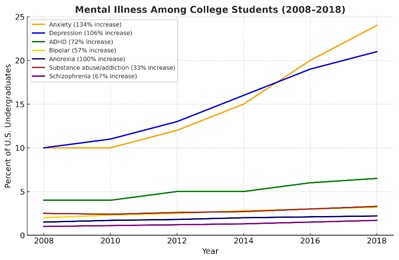
Figure 1. Percent of U.S. undergraduates diagnosed with selected mental illnesses, 2008–2018.
Source: Haidt, 2025.
As the data shows, there has been a serious increase in mental illness among students in U.S. since 2008. Anxiety and depression are the leading ones with 134% and 106% increase, and longitudinal studies have directly established that this began with the advent of the smartphone. The data shows that the situation with mental health with Gen Z in Canada and northern Europe is the same, i.e. this is not specific to U.S. These data seriously question the compatibility of human well-being and socialization with the increasing use of digital tools and virtual realities.
Some authors (Boyd & Richardson, 2025) define conformity and the sense of prestige as fundamental to human socialization. Conformity is an easy strategy for inclusion, especially in a new environment, whether it be an office, an organization, or a social circle. In social networks, it has been found that conformity is rewarded with likes and positive comments. Certain circles like what they think and exclude those who disagree. Henrich (2015) adds that the desire to be close to and emulate prestigious people, in addition to learning, is also related to the desire to be associated with them. The big question that arises here is what is defined as prestigious, in what domain a person wants to develop their excellence. Social networks determine that success is measured by the reaction to a given post – likes, shares, comments, etc. This also changes role models and what personal and organizational success means to a large extent. Hence, influencers can determine behavior, communication style, emotional expression, risk management, etc. This can be transferred to behavior in the family, among friends, the office, urban environment (transportation, parks), roads, and other real-life situations.
Considering how digital tools have influenced human development during the transition from child to adult, how they have greatly worsened human health and motivation to communicate with other living beings, it is easy to assume how the ability to adapt will be affected. To fully understand the environment, people must balance between two primary modes of adaptation (Figure 2): the exploratory mode (discover), characterized by curiosity, openness, and learning, and the defensive mode (defend), characterized by vigilance, risk aversion, and anxiety (Haidt, 2025). Both modes operate under the overarching adaptive mechanism, with transitions occurring dynamically depending on environmental demands and perceived threats.
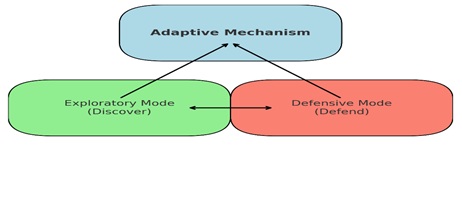
Figure 2. Adaptive mechanisms of human behavior
Source: Haidt, 2025.
Following Haidt’s framework, it has been proven that people who have interacted in a real environment and with real people have better developed their discovery mode of adaptation. This helps the inner desire for constant development and learning, as well as to feel calmer and happier. Haidt argues that individuals born after 1995 are more likely to operate in defend mode because they lack real-life social experiences which will help them develop skills for adequate social adaptation. This directly affects the skills sought by the market: resilience (mental), flexibility, agility, creative thinking, curiosity, lifelong learning. Additionally, video games with restart options create the feeling that everything can be fixed and corrected, starting over. This greatly undermines the skills of risk management and anticipating consequences. Growing up in a digital environment disrupts the sense of belonging, loyalty, connectedness, and long-term engagement with people and human organizations. Also, sought-after skills by employers. These data and findings provide grounds to establish that organizations will increasingly need to employ people management strategies by balancing technological integration with the enhancement of human communication and interaction.
Conclusion
Generation Z’s entrance into the labor market coincides with an unprecedented stage of technological saturation. Growing up during the rapid spread of smartphones and digital platforms, this cohort has developed distinctive strengths such as digital fluency, entrepreneurial thinking, and openness to diversity, but also faces critical challenges related to concentration, emotional regulation, and resilience. Constant exposure to digital environments has provided access to vast information and social networks, yet it has simultaneously limited real-world experiences, contributing to weaker interpersonal skills, higher levels of anxiety, and difficulties in managing risks and consequences.
For organizations, these dynamics create both opportunities and responsibilities. Technology can enhance flexibility, collaboration, and efficiency, but it cannot substitute for authentic human interaction, informal workplace ties, and the development of social and emotional competencies. Employers will therefore need to design strategies that balance digital integration with initiatives supporting mental well-being, social cohesion, and cross-generational learning. Only by fostering motivation, engagement, and adaptive skills can organizations fully harness Generation Z’s potential in an increasingly complex and uncertain world of work.
Acknowledgement
This work was financially supported by UNWE Research Programme (Research Grand No. 27/2025).
References
Boyd, R., & Richerson, P.J. (1985). Culture and the evolutionary process. University of Chicago Press.
Dimitrov, K. (2023). The impact of work motivation on job satisfaction with mediating effect of key work behaviour variables: A Bulgarian case of Generation Z employees. SHS Web of Conferences, 176, 04002. https://doi.org/10.1051/shsconf/202317604002.
European Centre for the Development of Vocational Training (Cedefop). (2018). Skills forecast: Trends and challenges to 2030. Publications Office of the European Union. https://www.cedefop.europa.eu/files/3077_en.pdf.
European Commission. (2025). Union of skills: Investing in people for a competitive European Union. https://commission.europa.eu/topics/eu-competitiveness/union-skills_en.
Geshkov, M. (2025). The application of social networks in contemporary human resources management. Industrial Growth Conference 2024, 290 – 299. https://doi.org/10.53656/igc-2024.34.
Haidt, J. (2025). The anxious generation: How the great rewiring of childhood is causing an epidemic of mental illness. Penguin Press.
Henrich, J. (2015). The secret of our success: How culture is driving human evolution, domesticating our species, and making us smarter. Princeton University Press.
Iliev, I. (2022). Promeni nalozheni ot digitalizaciata v mezhdulichnostnata kominikacia. Biznes posoki, 78 – 90. [In Bulgarian]
Iliev, Y., & Dimitrov, K. (2021). Upravlenie na choveshkite resursi. IK-UNSS. [In Bulgarian]
Meyer, J. P., & Allen, N. J. (1991). A three-component conceptualization of organizational commitment. Human Resource Management Review, 1(1), 61 – 89. https://doi.org/10.1016/1053-4822(91)90011-Z.
Mowday, R. T., Steers, R. M., & Porter, L. W. (1979). The measurement of organizational commitment. Journal of Vocational Behavior, 12(2), 224 – 247. https://doi.org/10.1016/0001-8791(79)90072-1.
Twenge, J. M. (2017). iGen: Why today’s super-connected kids are growing up less rebellious, more tolerant, less happy – and completely unprepared for adulthood. Atria.
Walton, R. (1985). From control to commitment in the workplace. Harvard Business Review, 63(4), 77 – 84.
World Economic Forum (2025, January 7) Future of Jobs Report 2025. https://www.weforum.org/publications/the-future-of-jobs-report-2025/.
Assist. Liliya Elenkova, PhD
University of National and World Economy
19, December 8th St.
1700 Sofia, Bulgaria
E-mail: liliya.elenkova@unwe.bg

Свързани статии:
 TECHNOLOGICAL INNOVATIONS AND SUSTAINABLE DEVELOPMENT OF EUROPEAN SMALL AND MEDIUM-SIZED ENTERPRISES IN THE FOOD INDUSTRY
PUBLIC ADMINISTRATION THROUGH THE AGES: HISTORICAL MODELS, INSTITUTIONAL TRANSFORMATIONS, AND CONTEMPORARY PARADIGMS
INTEGRATING LEAN PRINCIPLES WITH DIGITAL TECHNOLOGIES FOR THE IMPROVEMENT OF PRODUCTION MANAGEMENT
AGILE TALENT IN MODERN BUSINESS ORGANIZATIONS – A BIBLIOMETRIC ANALYSIS
