



Ivan Manchev, Dimitar Dimitrov
Todor Kableshkov University of Transport, Sofia, Bulgaria
https://doi.org/10.53656/isct-2025.03

Pages 31-40
Abstract. Recent advances in artificial intelligence (AI) have created many machine learning (ML) and AI applications for safer and more efficient transportation. Yet, knowledge exchange between transport modes remains limited. In traffic management, where security is crucial, challenges arise in protecting information and exchanging data between vehicles and infrastructure. Analytical methods in this area include statistical and econometric techniques, algorithmic approaches, classification, clustering, artificial neural networks (ANN), optimization, and dimension reduction. Interest is growing among transport researchers and practitioners in applying AI to crash prediction, incident detection, pattern identification, driver or operator assistance, and route optimization. The choice of analytical techniques depends on the specific safety analysis goals. This article reviews ML and AI methods used across road, rail, maritime, and aviation modes, focusing on their roles in system management and the unique safety and security challenges they pose.
Keywords: Artificial Intelligence (AI), Machine Learning (ML), Transportation safety, Internet of Things (IoT), Safety Management, Data-driven decision making
- Introduction
Artificial Intelligence (AI) is a subfield of computer science concerned with how to give computers the sophistication to act intelligently, and to do so across increasingly wide realms. It is the theory and development of computer systems capable of performing tasks that normally require human intelligence, such as reasoning, visual perception, speech recognition, automated learning and scheduling, decision-making, and language translation. AI leverages computers to mimic the problem-solving and decision-making capabilities of the human mind. Machine Learning (ML) is a branch of AI that develops algorithms that imitate the human learning process, learning from data and gradually improving prediction accuracy. Over the past decades, rapid technological progress has been witnessed, especially in telematics, Internet of Things (IoT), Internet of Vehicles (IoV), and Big Data (BD) analytics, also in the transportation domain. This, along with the increase in the information technologies’ penetration and use by drivers (e.g. smartphones), the technological advances in sensor devices (e.g. smartphones, autonomous vehicles (AV), vessel telematics, cameras), provide new potential for driver/ operator behavior monitoring, vehicles communication, surveillance and incident detection in all transport modes (road, rail, maritime, aviation) [6].
Advanced transportation systems (ATS) mark a significant evolution from traditional transportation modes by integrating cutting-edge technologies, innovative infrastructure, and progressive policies. These systems aim to improve the efficiency, safety, sustainability, and accessibility of transportation networks, addressing the growing demands of urbanization and environmental sustainability. Amid rising environmental concerns and technological advances, electrification has emerged as a pivotal element in this evolution.
Artificial intelligence (AI) has emerged as a key driver in the evolution of ATS. Machine learning (ML), a branch of AI, involves creating algorithms that enable computers to learn from data and make predictions. ML offers advanced solutions that overcome the limitations of traditional techniques, providing dynamic, data-driven, and adaptive approaches. ML-based methods have significantly improved predictive maintenance and energy management in ATS by enabling real-time monitoring, predictive analytics, dynamic optimization, and improved efficiency [14, 15].
There are several areas of transportation safety and security on which AI techniques are applied, including road safety, AV, maritime safety, rail safety, transportation infrastructure safety, traveler safety, transit safety, freight and commercial vehicle safety, disaster response and evacuation, wide-area alert, and hazardous material (hazmat) safety. The particularities of each field’s collision risk should be considered, such as that it is associated with different users (e.g., vehicle driver or airplane pilot) or it has different characteristics (e.g., increased when taking off or landing in aviation and proportional to distance traveled in road safety). Reviewed the ML and AI methods and approaches used in different transportation modes to solve safety problems that so far have been difficult to solve using classical mathematics [1, 2, 3].
- Technological consideration of problem types
More details on the specific methods used are presented in the following sub-sections, together with the types of problems addressed.
2.1. Road safety and accident prediction are significant components of Intelligent Transportation Systems that aim to prevent or mitigate the severity of traffic crashes, thereby increasing the chances of drivers’ and passengers’ survival, and to analyze and process the circumstances under which crashes occur. Factors causing road crashes include human factors, e.g., driving behavior, environmental or traffic conditions, and road conditions. To prevent them, it is crucial to process all data gathered by in-vehicle sensors and extract valuable insights proactively to handle situations where safety is compromised. The data sources most commonly used in the BD era of road safety and IoV are smartphones and sensors installed in AVs, connected vehicles, and ADAS systems. Intelligent systems and applications related to road safety and crash prediction found in recent research include systems for visual monitoring, accident modeling and analysis, determining the causes of an accident, driver fatigue detection, dangerous driving identification, automatic incident detection, and automated braking systems [4, 10, 13].
2.1.1. AV and advanced driver-assistance systems (ADAS) The scientific field of AV and ADAS is likely the one that relies most on AI capabilities among all other road transportation fields. Their functionality must use approaches that enable vehicles to understand the road environment and geometry, identify their surroundings, navigate to their destination, and teach themselves to drive safely, e.g., by respecting speed limits and highway code rules, maintaining safe headways, and adhering to lane discipline and control. The main topics of the relevant AV studies so far include sensors and perception, navigation and control, fault prevention, conceptual model and framework, human factors, fault forecasting, ethics and policies, and dependability and trust. It was also noted that a significant part of AV functionality is the detection of objects, road users, and, in general, the road environment. For instance, Dominguez-Sanchez et al. (2017) studied the recognition of pedestrian movement direction using Convolutional Neural Networks (CNN) and a total of more than 9,000 images from video recordings. The models achieved an accuracy of 84%. LSTM has also proved to perform well in pedestrian trajectory prediction. Based on this approach, a self-learning system for road user trajectory prediction at intersections with connected sensors was introduced, which learns intersection-specific pedestrian movement patterns [5, 7, 10].
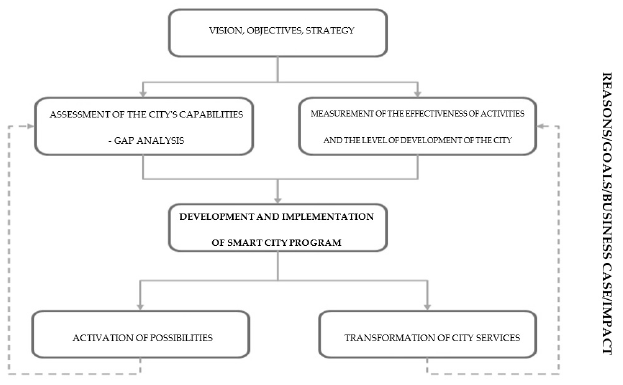
Fig. 1. Roadmap for the implementation of a smart city in
2.2. In railway systems, safety is a critical aspect of overall operations. This review found that AI techniques are primarily used for rail defect detection and rail obstacle detection. However, this does not mean that AI techniques are not applied in other railway safety fields, such as using a decision tree (DT) method for safety classification and for analyzing accidents at railway stations to predict the traits of passengers affected by accidents [13, 17].
2.2.1. Over the last couple of decades, research has shifted toward developing computer vision (CV) algorithms for automatically locating and identifying defects on rails. An experimental comparison of 3 filtering approaches, namely the Gabor filter, wavelet transform, and Gabor wavelet transform, was conducted based on texture analysis of rail surfaces to detect the location of rail corrugation. This research used images captured by a high-resolution DALSA line scanner. It addressed the highly imbalanced sample toward the non-defective class and the large number of unlabeled data samples by deploying a semi-supervised rail defect detection model. Data were recorded through a high-resolution camera covering 700 km of rail. A two-step algorithm for rail defect detection that combines traditional object localization with a CNN was proposed. 5,793 cropped training images focusing only on the rail part were initially obtained through the integration of traditional image processing methods [18].
2.2.2. Despite the fact that environmental perception and object detection are equally important for trains and autonomous vehicles, research on obstacle detection in railways is not as extensive as on roads. Moving obstacle detection is performed using an optical flow method within the Region of Interest (ROI), while the Sobel edge detection method, followed by morphological processing of the edge-detected image, is used to detect stationary objects. Another approach that performs well for obstacle detection is based on background subtraction, which applies to moving cameras and uses reference images as baselines. To this end, a comparison between the live on-board camera image of the scene in front of the train and a reference image was made. Regarding AI-based methods, an early warning system was developed using vision-based artificial intelligence and sensors. The first methodology proposed in this research was the AdaBoost algorithm applied to data collected from a single thermal camera to detect obstacles at level crossings and to calculate the distance between detected obstacles and the train. The second was based on image processing and an artificial intelligence camera setup to identify landslides over the rail track, working with images collected from the Internet (e.g., people, trains, animals) to train a Fast Region-based CNN (Fast R-CNN, a CNN variant), which achieved an accuracy of 94.85%. This network used the residual learning network block to optimize the network structure. Finally, a model for the detection of obstacles at rail level crossings was developed based on video from monitoring cameras, using a CNN to determine the state of the ROI area, which is vital for the safe passage of the train [2, 19].
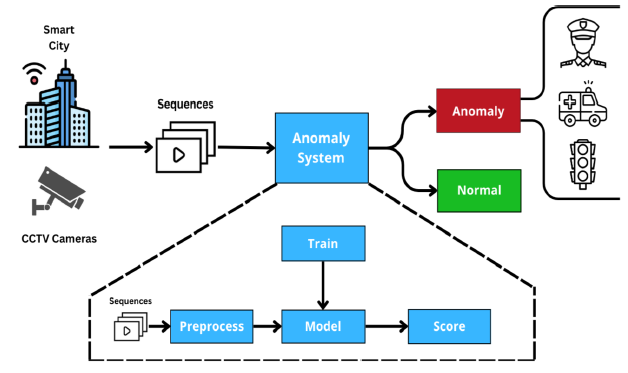
Fig. 2. Common architecture of anomaly detection systems in traffic surveillance and its possible integration into a smart city framework
2.3. Although AI and BD play a very important role in the decision-making of many industries nowadays, the maritime industry is one of the oldest and most traditional industries, relying mainly on expertise and experience rather than on data collection and analysis, largely because of the vast size of the network and planning challenges. According to the same review, AI techniques are exploited mainly in the digital transformation of the maritime industry, including applications of big data from automatic identification systems (AIS), energy efficiency, and predictive analytics. Among these, applications of big data from AIS and predictive analytics are related to transportation safety. Nonetheless, relevant AI and BD applications have recently been launched for real-time maritime intelligence [7, 12].
2.3.1. Several approaches have been used for incident detection in the maritime domain. Bayesian networks have been used for anomaly detection in vessel tracking, and a novel two-step approach has been proposed in which HMMs represent patterns that are classified using SVM. Suspicious activities are differentiated from unobjectionable behavior by fusing data and information, including kinematic features, geospatial features, contextual information, and maritime domain knowledge. Maritime Mobile Service Identity, status, speed, longitude, latitude, course, heading, and timestamp are used. An improved neurobiologically inspired algorithm for situation awareness in the maritime domain has been tested. The algorithm receives tracking information and learns motion patterns in real time, enabling models to adapt well to evolving situations while maintaining high performance. Models that are constantly refined by concurrent incremental learning are used for vessel behavioral pattern evaluation based on motion states. The advantages of Bayesian Networks (BN), namely the ability to easily include expert knowledge into the model and to facilitate the understanding and interpretation of the learned model for humans, have established this method as a good-performing solution for the detection of anomalous vessels [8, 9, 10].
2.3.2. Maritime Surveillance employed CNN models with super-resolution satellite data to enhance vessel detection, counting, and recognition for maritime surveillance tasks. This methodology can be further extended and specialized for the detection of ships not tracked by radar or for monitoring critical infrastructure near harbors or protected areas. To improve visual recognition, a CNN-based framework was also used, focusing on the classification and identification of maritime vessels. This approach was trained on the MARVEL dataset and showed improved accuracy. Finally, the review of the use of AI techniques for global maritime surveillance showed that new opportunities are emerging for target detection, segmentation, and classification [11].
2.4. AI and automation have been part of the aviation sector for many decades, with several AI applications. Two main groups of applications include incident diagnosis (e.g., unmanned aerial systems detection and collision prevention), aviation computer training, diagnostics of airborne components and assemblies, management automation, combat mission solutions, and flight assistance (e.g., operational decisions by the crew, intelligent crew interface, air traffic data collection, processing, and analysis for air traffic control systems, optimization of the airspace structure to maximize real aircraft flows, and optimization of aircraft routes in the airport area).
2.4.1. It is found that AI can assist in flight journey management more effectively than humans. An unsupervised machine learning algorithm was employed to cluster landing phase sequences using the normalized length of the longest common subsequence as a similarity measure. A detailed outlier analysis was applied to approximately 2,200 flight sequences to detect anomalies, and the results were compared to those of HMM. It was shown that this approach may increase safety when an airplane is landing. Moreover, on-wing data from a commercial aircraft engine were exploited for engine health assessment. To this end, the authors used the PNN approach, which proved able to correctly identify the subsystem fault. Other research addresses the problem of real-time turbulence forecasting using a methodology that fuses data from diverse sources, including Doppler radar, geostationary satellites, a lightning detection network, and a numerical weather prediction model. The model developed for aviation turbulence detection is based on an unsupervised classification method named Random Forest. This approach enables the avoidance of predetermined route deviation, fuel minimization, and air-control management enhancement [15, 16].
2.4.2. A genetic algorithm was developed to generate trajectories of specified length for the onboard flight path safety system. When the separation standards with other aircraft are not met by this system’s speed control, the algorithm minimizes the increase in trajectory length. An intelligent landing control system for civil aviation aircraft was developed. This system manages wind disturbances during the landing phase when the aircraft is simultaneously subjected to severe winds and failures, e.g., stuck control surfaces. The architecture of the system includes a dual fuzzy neural network (DFNN) controller, which can implement fuzzy inference in general and neural network mechanisms in particular. Improved performance of the conventional automatic landing system was observed during simulation tests. An ANN-based PID (proportional integral derivative) controller was developed to suppress peak overshoot caused by disturbances in the airframe dynamics, which severely degrade the system’s response. Results indicated that the artificial neural PID controller outperformed the conventional offline PID controller in controlling the pitch attitude of the longitudinal autopilot for general aviation aircraft [17].
- Conclusion
Research revealed an increasing interest among transportation researchers and practitioners in AI applications, using tools and methods developed by the AI community for transport safety. This enables them to address real transportation problems that were previously difficult to solve with traditional methods. AI advancements are greatly benefiting transportation safety across all modes, including road, rail, maritime, and aviation, particularly the safety issues of autonomous systems within these four transportation modes. Our results highlighted that knowledge transfer among different safety fields is possible and that there could be benefits from more systematic mapping of experiences in transport safety. Despite the great benefits that AI techniques are expected to bring, there are also several challenges, concerns, and obstacles that need to be tackled before fully deploying those techniques into transport safety, e.g., the large size of data collection required, the representativeness of data samples collected, the intentional malicious manipulation of training datasets, cybersecurity and regulatory concerns, ethics and social acceptability issues, and the determination of safe and risky boundaries. The adoption of AVs and ADAS in the future is expected to bring considerable benefits to society, such as traffic optimization and crash reduction.
First of all, not all transport modes were reviewed. Urban transportation AI concepts, such as urban air transport, last-mile delivery drones, and public transport, were not excluded from this study but did not appear in the search because the research focuses more on efficiency and acceptability and less on the safety aspects of those systems. Nonetheless, these are emerging transportation concepts based on AI and should be examined, including the Hyperloop, which was not considered in this study and for which the safety aspects have been investigated only at a theoretical level.
References
[1] RAZZAQUE, M., KHADEM, S., PATRA, S., OKWATA, G., NOOR-A-RAHIM, MD., Cybersecurity in vehicle-to-grid (V2G) systems: A systematic review, Applied Energy, Volume 398, 2025, 126364, ISSN 0306-2619, https://doi.org/10.1016/j.apenergy. 2025.126364.
[2] SAFARI, A., RAHIMI, A., Vehicle-to-everything mode of operation technologies: A state-of-art systematic review, Applied Energy, Volume 398, 2025, 126382, ISSN 0306-2619, https://doi.org/10.1016/j.apenergy.2025.126382.
[3] YEOM, S., KIM, J., HONG, T., Hybrid AI model for fault detection and energy consumption analysis of air handling unit systems with supervised and unsupervised learning, Building and Environment, Volume 282, 2025, 113272, ISSN 0360-1323.
[4] MA, T., XIAO, F., ZHANG, C., ZHANG, J., ZHANG, H., XU, K., LUO, X., Digital twin for 3D interactive building operations: Integrating BIM, IoT-enabled building automation systems, AI, and mixed reality. Automation in Construction, Volume 176, 2025, 106277, ISSN 0926-5805, https://doi.org/10.1016/j.autcon.2025.106277.
[5] CHEN, L., MA, S., LI, C., YANG, Y., WEI, W., CUI, R., A spatial–temporal graph-based AI model for truck loan default prediction using large-scale GPS trajectory data, Transportation Research Part E: Logistics and Transportation Review, Volume 183, 2024, 103445, ISSN 1366-5545, https://doi.org/10.1016/j.tre.2024.103445.
[6] ZHANG, Y., ZHANG, S., DINAVAHI, V., A survey of machine learning applications in advanced transportation systems: Trends, techniques, and future directions, eTransportation, Volume 24, 2025, 100417, ISSN 2590-1168, https://doi.org/10.1016/j.etran.2025.100417.
[7] YU, D., TAO, Q., LIU, Q., JIN, Y., SUN, Y., FU, P., Lifecycle management of urban renewal enabled by Internet of Things: Development, application, and challenges, Results in Engineering, Volume 27, 2025, 105706, ISSN 2590-1230, https://doi.org/10.1016/j.rineng. 2025.105706.
[8] FERA, F., SPANDONIDIS, C., A Fault Diagnosis Approach Utilizing Artificial Intelligence for Maritime Power Systems within an Integrated Digital Twin Framework. Appl. Sci. 2024, 14, 8107, ISSN 2076-3417. doi 10.3390/app14188107.
[9] DURLIK, I., MILLER, T., KOSTECKA, E., TU´ NSKI, T., Artificial Intelligence in Maritime Transportation: A Comprehensive Review of Safety and Risk Management Applications. Appl. Sci. 2024, 14, 8420. https://doi.org/10.3390/app14188420.
[10] HOWLADER, M. M., HAQUE, M. M., Opposing-through crash risk forecasting using artificial intelligence-based video analytics for real-time application: integrating generalized extreme value theory and time series forecasting models, Accident Analysis & Prevention, Volume 218, 2025, 108073, ISSN 0001-4575, https://doi.org/10.1016/j.aap.2025.108073.
[11] BRAYDI, A., FOSSAT, P., ARDABILIAN, M., BAREILLE, O., Innovative prognostic methodology for pipe defect detection leveraging acoustic emissions analysis and computational modeling integration, Applied Ocean Research, Volume 158, 2025, 104521, ISSN 0141-1187, https://doi.org/10.1016/j.apor.2025.104521.
[12] KAUL, A., ALTAF, I., Vanet-TSMA: A traffic safety management approach for smart road transportation in vehicular ad hoc networks. International Journal of Communication Systems. 2022, vol. 35, no. 8, e5132. ISSN 1074-5351, doi 10.1002/dac.5132.
[13] HASAN, M., FADLI, F., Multimodal Transport For Smart Mobility in Emerging Cities: Case of Doha. Proceedings of the International Conference on Civil Infrastructure and Construction (CIC 2023). Doha, Qatar, February 2023. Doha: Qatar University Press, 2023, pp. 933–940. DOI 10.29117/cic.2023.0117.
[14] RIDWAN, M., RADZI, N., AZMI, K., ABDULLAH, F., AHMAD, W., A New Machine Learning-based Hybrid Intrusion Detection System and Intelligent Routing Algorithm for MPLS Network. International Journal of Advanced Computer Science and Applications. 2023, vol. 14, no. 12, pp. 94–107. ISSN 2156-5570. DOI 10.14569/IJACSA.2023.0141211.
[15] PETROVA, I., Applied Methodological Essence of Project Management in Transport Through Artificial Intelligence, Proceedings of the 15th International Scientific and Practical Conference. Volume II, 242-246, https://journals.rta.lv/index.php/ETR/article/view/8047.
[16] SCHUMACHER, M., ADRIANO, C., GIESE, H., Challenges in Reward Design for Reinforcement Learning-based Traffic Signal Control: An Investigation using a CO2 Emission Objective. In Proceedings of the SUMO Conference, Berlin, Germany, 2–4 May 2023; Berlin: German Aerospace Center (DLR), 2023, pp. 131–151. DOI 10.5281/zenodo.7941215.
[17] BURDZIK, R., KHAN, D., An overview of the current state of knowledge and technology on techniques and procedures for signal processing, analysis, and accurate inference for transportation noise and vibration, Measurement, 2025, volume 252, 117314, pp. 1–19, ISSN 0263-2241. doi 10.1016/j.measurement.2025.117314.
[18] MUBEEN, M., HE, S., RAHMAN, M. S., WANG, L., ZHANG, X., AHMED, B., HE, Z., HAN, Y., Smart prediction and optimization of air quality index with artificial intelligence, Journal of Environmental Sciences, volume 158, 2025, pp. 761-775, ISSN 1001-0742, https://doi.org/10.1016/j.jes.2025.02.041.
[19] GESKE, A. M., HEROLD, D. M., KUMMER, S., Using sustainable technology to drive efficiency: Artificial intelligence as an information broker for advancing airline operations management, Sustainable Technology and Entrepreneurship, Volume 4, Issue 3, 2025, 100111, ISSN 2773-0328, https://doi.org/10.1016/j.stae.2025.100111.
Ivan Manchev, MSc
ORCID iD: 0009-0006-9513-159X
Department of Technology Organization and Management of Transport
Todor Kableshkov University of Transport
158 Geo Milev Str., 1574 Sofia, Bulgaria
E-mail: imanchev@vtu.bg
Dimiitar Dimitrov, Prof., DSc
ORCID iD: 0009-0006-1854-9052
Department of Technology Organization and Management of Transport
Todor Kableshkov University of Transport
158 Geo Milev Str. 1574 Sofia, Bulgaria
E-mail: ddimitrov@vtu.bg

Свързани статии:
 Research and Application of The PDCA Cycle in Artificial Intelligence Management Systems
Humans and Human-Centric AI in Idustry 5.0: Efficient Collaboration or Unethical Competition
Research and Application of The PDCA Cycle in Artificial Intelligence Management Systems
Humans and Human-Centric AI in Idustry 5.0: Efficient Collaboration or Unethical Competition
 Artificial Intelligence (AI) as an Opportunity for Enhancing the Competitiveness of the Restaurant Business through Innovative Modules (IM)
Classification and Evaluation of Methods for Determining Railway Infrastructure Capacity
Artificial Intelligence (AI) as an Opportunity for Enhancing the Competitiveness of the Restaurant Business through Innovative Modules (IM)
Classification and Evaluation of Methods for Determining Railway Infrastructure Capacity