



Svetlana Dimitrakieva
Technical University of Varna, Bulgaria
Dobrin Milev
Technical University of Varna, Bulgaria
Todor Koritarov
Technical University of Varna, Bulgaria
Ognyan Kostadinov
Nikola Vaptsarov Naval Academy, Varna, Bulgaria
https://doi.org/10.53656/igc-2025.31

Pages 336-343
Abstract. Intermodal and multimodal transport both involve multiple modes of transportation but differ in contractual and logistical aspects. Intermodal transport requires cargo to be loaded into an intermodal transport unit, which remains unchanged throughout the journey while being transferred between transport modes. Separate contracts cover each leg, providing flexibility but necessitating complex coordination. Multimodal transport, in contrast, operates under a single contract and a unified cargo document for the entire trip. This simplifies logistics and ensures smoother operations, as the shipper deals with only one carrier. Intermodal transport is ideal for cost efficiency and flexibility, whereas multimodal transport enhances operational efficiency and administrative ease.
Keywords: intermodal transport; multimodal transport; intermodal transport unit; multimodal single contract of carriage; single cargo document; transport modes
JEL: R41, L92
Introduction
Intermodal and multimodal transportation are key logistics concepts that facilitate product movement using multiple transport modes. While they share similarities, they differ in operational structure, contractual frameworks, and legal implications.
Intermodal transportation involves at least two modes of transport, such as rail, road, maritime, or air, with each segment managed by a different carrier under separate contracts. Cargo is transferred between modes within an intermodal transport unit (ITU), such as a container or trailer, which remains intact throughout the whole journey, ensuring flexibility but requiring coordination among service providers.
In contrast, multimodal transportation operates under a single contract, with one carrier responsible for the entire journey. A single transport document covers shipment, streamlining logistics, reducing administrative burdens, and enhancing efficiency. The consignor interacts with only one entity, despite multiple transport modes being involved.
Legally, intermodal transport follows distinct regulations for each segment, while multimodal transport is governed by unified legal frameworks, often under international conventions.
Each model offers advantages depending on shipment needs. Intermodal transport is cost-effective and flexible, whereas multimodal transport ensures efficiency and simplified logistics (Vunova-Narleva & Gancheva, 2023). Understanding these differences is crucial for optimizing global supply chains.
Historical perspectives of Multimodal and Intermodal Transport
Multimodal transport has historical precedents. In the 17th century, a French traveler transported his cart via barge on the Rhine, avoiding poor roads—an early Ro-Ro transport example. In 1830, early railways experimented with transferring coach bodies onto wagons to improve passenger convenience, though they faced opposition in some cities (United Nations, 2004).
– Critical Notes & Contractual Relations in Multimodal Transport
The provided examples align more with Intermodal transport rather than multimodality, as they involve intermodal units and lack an international element—essential for multimodality.
Intermodal transport – intermodal transport unit (ITU)
Intramodality – Definition and Application
Long-distance cargo transport often requires multiple modes due to geographical constraints. Efficiency depends on cargo volume and distance, but the most economical option is not always available at the beginning or end of transport. Transshipment is necessary and has leading to five key challenges:
– Additional costs;
– Delivery delays;
– Cargo losses (e.g., spillage, theft).
– Mechanical damage;
– Weather-related damage.
Cargo may be transported in bulk or packaged, requiring consolidation for efficient handling. Palletization, a key transport engineering solution, simplifies loading, unloading, and transshipment by securing cargo on pallets. This mechanization reduces costs, increases efficiency, and protects goods (Conev & Dimitrakiev, 2023). Pallets represent a fundamental intermodal unit, aligning with the core principle of intramodality: consolidating cargo into transport units to minimize handling risks.
Intramodality involves at least two transport modes without handling cargo during transit. According to UNICE, an „Intermodal Transport Unit“ (ITU) allows uninterrupted cargo movement across different transport systems.
Intermodal Units
The European Commission defines intermodal units as containers, swap bodies, and trailers. A broader classification includes:
– Pallets – intermodal units transported via air, road, and water;
– Containers – used in road, rail, and water transport;
– Trailers & Semi-Trailers – transported by rail and water with or without tractors;
– Railway Wagons – used in rail and ferry transport;
– Lighters – non-self-propelled vessels for river-sea transport, transferred to LASH vessels for maritime transit;
– Barges – non-self-propelled vessels pushed or pulled between ports.
Specialized vessels such as pallet carriers, container ships, Ro-Ro ferries, rail ferries, and LASH ships support these intermodal units, optimizing cargo movement across transport modes.
Standardization of Intermodal Units
Intermodal units fall into two categories:
– Standard intermodal units – purpose-built (e.g., containers, lighters);
– Vehicles with intermodal adaptability – transferred between transport modes (e.g., road trailers on railway wagons or Ro-Ro ships). Standardization enables seamless reloading across transport systems;
Intermodal integration follows “Gateway Technologies” (David & Bunn, 1988), ensuring technical connectivity through:
– Compatible additions – direct integration (e.g., plug and socket);
– Compatible substitutions – interchangeable use of subsystems (e.g., cable and wireless internet) (David & Bunn, 1988);
In transport, deep-sea systems function as complementary subsystems, while road, rail, and coastal transport act as partial substitutes. Road transport remains essential for terminal-to-door service, offering the necessary flexibility and infrastructure, particularly for medium and long distances.
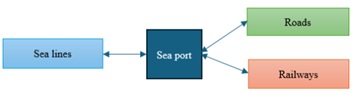
Figure 1. Illustration of compatible additives and substitutes in the transport system (Egyedi, 2000)
Multimodality – Necessity and Application
International cargo transport requires multiple modes of transportation. Beyond transshipment, organizing transport from origin to destination is complex, requiring multiple contracts and coordination. The growth of international trade led to the rise of transport companies capable of managing entire shipments, necessitating legal regulation (Dimitrakiev et al., 2023; Atanasova, 2023; Atanasova, & Teofilova, 2023). Customers seek reliability and proper documentation (e.g., bills of lading) for commercial transactions. This demand resulted in multimodality: a single carrier managing transport under one contract and document, using at least two transport modes (Bakalova, 2024).
The 1980 UN Convention on International Multimodal Transport (United Nations, 1981) defines multimodal transport as cargo movement across at least two transport modes under a single contract, starting in one country and ending in another. The carrier is responsible for the entire journey, even if subcontractors (actual carriers) handle different segments. The Multimodal Transport Operator (MTO) assumes contractual responsibility, not acting as an agent but as the principal carrier.
Multimodal transport refers to an international transport contract between a shipper and a MTO, who manages the entire transport chain using a single document (Bill of Lading or Waybill).
MTO’s contract actual carriers (truck, rail, air, or sea operators) for different transport legs. Sea transport of intermodal units occurs on specialized vessels, integrating water transport into international logistics. Combined sea transport includes:
– Container transport by container ships;
– Truck/trailer transport by Ro-Ro ships;
– Rail wagon transport by ferry ships;
– Lighter transport by lighter ships;
– Palletized cargo transport by pallet ships.
Key definitions from the Convention:
– Multimodal transport contract – a legally binding agreement where the MTO ensures transport for payment;
– Multimodal transport document – proof of contract and carrier responsibility;
– Consignor – the party contracting with the MTO or delivering goods for transport;
– Consignee – the recipient legally entitled to the goods;
– Goods – including containers, pallets, or packaging supplied by the consignor.
The Multimodal Transport Convention remains unratified by enough nations for global recognition but is applied in intermodal transport using containers, trailers, and rail wagons. Some countries, like Bulgaria, have adopted related national regulations, though the Convention’s application is limited (UNCTAD, 1980).
Contractual Relations in Multimodal Transport
Multimodal transport contracts are complex, as they involve multiple transport modes governed by distinct international conventions. The lack of sufficient ratification for the Multimodal Transport Convention stems from these complexities. A key challenge arises when cargo damage is discovered at delivery, making it difficult to determine liability.
According to (Hoeks, 2009), multimodal transport often relies on subcontracting rather than a single carrier operating across modes. In such cases, the multimodal carrier assumes the role of a shipper when dealing with subcontractors. This results in two contractual levels:
– The main contract between the shipper and multimodal carrier;
– Subcontracts between the multimodal carrier (acting as shipper) and actual carriers handling different transport segments.
Some carriers, like NVOCCs (Non-Vessel Operating Common Carriers), do not own transport assets but contract transport services, leading to full outsourcing (Hoeks, 2009).
Legal harmonization is crucial to ensuring that multimodal contracts benefit from established international conventions. However, contracts between multimodal carriers and subcontractors follow separate legal frameworks, complicating liability and recourse actions. If damage occurs, the multimodal carrier, though liable to the shipper, must seek compensation from subcontractors, often facing limited recovery due to differing legal regimes.
A notable case (Rechtbank Arnhem in 1996) involved Ro-Ro transport of cattle from the Netherlands to Ireland. Upon arrival, many animals had died. The maritime carrier (Stena Line) avoided liability under Dutch maritime law, but the road carrier (Van Weltering) was held accountable under the CMR Convention. Despite appealing, Van Weltering had to compensate the cargo interests at a limited rate per kilogram.
Main Similarities and Differences Between Intermodal and Multimodal Transport
Similarities:
– Both involve at least two means of transport;
– Both require cargo transshipment between transport modes.
Differences:
– Intermodal transport is not necessarily international, while multimodal transport must be;
– Intermodal transport does not require a single contract and document, but multimodal transport does;
– Intermodal transport mandates the use of intermodal units, while multimodal transport does not.
Combined Intermodal and Multimodal Transport
A transport process qualifies as both intermodal and multimodal if it:
– Uses an intermodal unit;
– Utilizes at least two transport modes;
– It is international;
– Operates under one multimodal transport contract and one transport document.
Conclusion
The Intermodal transport focuses on moving goods within an intermodal unit, while multimodal transport is defined by its international nature and the use of a single contract and transport document across at least two modes. It involves goods loaded onto intermodal units that move across multiple transport modes without direct handling of the cargo.
The Multimodal transport challenges and advantages are:
– Effectiveness and optimization;
– Single point of contact;
– Decreased expenses;
– Better tracking;
– Decreased emissions and environmental impact.
Establishing transport networks, transshipment hubs, and modernization in shipbuilding, the water transport plays a key role in international multimodal and intermodal transport systems.
References
Atanasova, C. (2023). Transforming maritime education for a digital industry. Strategies for Policy in Science and Education, 31(6s), 9 – 18. https://doi.org/10.53656/str2023-6s-1-mar.
Atanasova, C., & Teofilova, T. (2023). Challenges to the professional training of cruise industry employees in Bulgaria. Proceedings of the International Association of Maritime Universities Conference. https://archive.iamu-edu.org/download/aga23_proceedings_each-abstract/.
Bakalova, R. (2024). Trends and strategies for the development of multimodality. International Journal of Global Economic Light, 10(5). https://doi.org/10.36713/epra16710.
Conev, I., & Dimitrakiev, D. (2023). Use of modern technologies at Naval Academy Varna. Proceedings of the International Association of Maritime Universities Conference. https://archive.iamu-edu.org/download/aga23_proceedings_each-abstract/.
David, P. A., & Bunn, J. A. (1988). The economics of gateway technologies and network evolution: Lessons from electricity supply history. Information Economics and Policy, 3(2), 165 – 202. https://doi.org/10.1016/0167-6245(88)90024-8.
Dimitrakiev, D., Stankov, V., & Atanasova, C. (2023). Simulator training – unique powerful instrument for educating, skills creating, mitigating skills and resilience creating. Strategies for Policy in Science and Education, 31(6s), 103 – 111. https://doi.org/10.53656/str2023-6s-9-sim.
Egyedi, T. M. (2000). The Standardized container: Gateway technologies in Cargo transportation. In: M. J. Holler, & E. Niskanen (Eds.), EURAS Yearbook of Standardization (pp. 231 – 262). EURAS.
Hoeks, M. A. I. (2009). Multimodal transport law: The law applicable to the multimodal contract for the carriage of goods. [Dissertation]. Erasmus University Rotterdam, Kluwer Law International. http://hdl.handle.net/1765/17470
United Nations. (2004). Manual on modernization of inland water transport for integration within a multimodal transport system. United Nations.
United Nations. (1981). Conference on a Convention on International Multimodal Transport, Held at Geneva from 12 to 30 November 1979 (first part of the session) and from 8 to 24 May 1980 (resumed session). United Nations.
Vunova-Narleva, K., & Gancheva, Y. (2023). Study of the application of entrepreneurial approach in the logistic business of the Republic of Bulgaria. Yearbook of Varna University of Management, 16, 197 – 204. https://vum.bg/wp-content/uploads/2023/07/Volume-16.pdf.
Prof. Svetlana Dimitrakieva, PhD
ORCID iD: 0000-0001-9639-9957
Web of Science Researcher ID: D-8405-2012
Technical University of Varna
1, Studentska St.
9010 Varna, Bulgaria
E-mail: s_dimitrakieva@tu-varna.bg
Assoc. Prof. Dobrin Milev, PhD
ORCID iD: 0009-0004-3671-036X
Scopus Author ID: 57215007113
Nikola Vaptsarov Naval Academy
73, Vasil Drumev St.
9002 Varna, Bulgaria
E-mail: d.milev@nvna.eu
Assoc. Prof. Todor Koritarov, PhD
ORDID iD: 0000-0002-7712-8235
Nikola Vaptsarov Naval Academy
73, Vasil Drumev St.
9002 Varna, Bulgaria
E-mail: t.koritarov@nvna.eu
Assist. Prof. Ognyan Kostadinov, Ph.D.
ORCID iD: 0000-0002-9183-5243
Web of Science Researcher ID: ABC-5572-2
Nikola Vaptsarov Naval Academy
73, Vasil Drumev St.
9002 Varna, Bulgaria
E-mail: o.kostadinov@nvna.eu

Свързани статии:
 PUBLIC ADMINISTRATION THROUGH THE AGES: HISTORICAL MODELS, INSTITUTIONAL TRANSFORMATIONS, AND CONTEMPORARY PARADIGMS
AGILE TALENT IN MODERN BUSINESS ORGANIZATIONS – A BIBLIOMETRIC ANALYSIS
EXPLORING CONSUMER PERCEPTIONS OF DIGITAL MARKETING PRACTICES WITHIN INDUSTRY 4.0: AN EMPIRICAL STUDY ON THE INTERPLAY OF PERSONALIZATION, AUTOMATION, AND TRUST FORMATION
ENHANCING THE EFFICIENCY OF PUBLIC SPENDING THROUGH CITIZEN PARTICIPATION
