



Sotir Ivanov
University of National and World Economy, Sofia, Bulgaria
https://doi.org/10.53656/igc-2025.15

Pages 173-182
Abstract. Urban regeneration and sustainable development at municipal level demand integrated planning tools which balance environmental, social, and economic goals. This paper explores the application of Multi-Criteria Analysis (MCA) as a decision-support framework in municipal investment programmes. The study outlines key criteria, methodological approaches, and case applications to demonstrate how MCA enhances transparency, inclusivity, and long-term impact assessment in urban planning while harmonising competing interests and long-term impacts. The conceptual framework provides a foundational structure for future research development and eventual implementation in the capital budgeting process of Sofia Municipality, Bulgaria.
Keywords: multi-criteria analysis; municipal investment; decision-making process; sustainable development; urban regeneration; public budgeting
JEL: H72, Q01, R53
Introduction
In recent years, the sustainable development requires municipalities to design and implement investment strategies that simultaneously promote economic growth, social equity, and environmental protection. In countries where decentralisation is introduced to some extent, municipalities and local governments are directly responsible for constructing and renewing infrastructure, delivering social services, and managing environmental assets. But a growing need is emerging for municipal decision-making processes that balance these interdependent objectives in an integrated and efficient approach (United Nations, 2015). Municipalities often operate under conditions of fiscal constraint, political challenges, and institutional complexity (OECD, 2020). Diverse stakeholders like communities, residents from one side and council and government members from the other are competing for priorities which they believe are the most important. Sometimes without any particular arguments or reasons. These factors make the investment appraisal process a particularly challenging task, especially when traditional analytical frameworks fail to capture the multidimensional nature of sustainability and social factors.
Conventional decision-support tools, such as the single-criterion financial ranking and its most common interpretations like cost-benefit analysis (CBA) (Atkins et al., 2020; Robertson et al., 2019; European Commission, 2015), return on investment (ROI) (City of Austin)1 and social return on investment (SROI) (Watson et al., 2016) are widely used in municipal investment planning due to their apparent objectivity and well-established handbooks and guidelines (Millennium Challenge Corporation, 2021; European Commission, 2015). Yet such methods are limited in scope and they tend to privilege quantifiable financial benefits (direct, indirect and induced) (Millennium Challenge Corporation, 2021) while underestimating the true value created (Watson et al., 2016) and neglecting qualitative impacts, as well as local strategic and social priorities (Flyvbjerg, 2007; Xu et al., 2011). They are focusing on the outcomes and do not take into account the external effects of public opinions and stakeholders’ priorities. In practice, reliance on CBA and ROI is a key approach in the investment evaluation process but their implementation is time-consuming and expensive (Xu et al., 2011) and alone they might marginalise strategic and financial objectives, thereby undermining the community-driven progress of urban regeneration and sustainable development. This brings up the necessity of more comprehensive evaluative frameworks that can explicitly integrate multiple dimensions of value and facilitate reasoned deliberation among stakeholders.
Multi-criteria analysis (MCA) has emerged as an alternative that provides a structured methodology for evaluating investment alternatives across diverse criteria, thereby supporting a more holistic consideration of economic, social, environmental, and institutional dimensions (Belton & Stewart, 2002). It delivers a systematic approach to measure and weigh effects for the relevant stakeholders, where effects are not necessarily monetised as opposed to cost-benefit analysis (Hof et al., 2012). Again, according to Hof et al. (2012) MCA can help to explicitly take account of conflicts among the participants in the process of drafting a municipal investment programme by using different weighting schemes, proposed or inspired by the participants. The importance of the MCA methodology is also evidenced by the establishment in 2017 of a dedicated centre at the Joint Research Centre, European Commission – Competence Centre on Modelling and Decision Analysis (CC-MOD). It works on developing responsible, coherent, and transparent use of modelling to support decision-making of European Union (EU) policies (European Commission, 2025). CC-MOD undertakes activities that focus specifically on multi-criteria evaluation.
The present paper examines the potential of MCA as a comprehensive tool in the decision-making process of developing municipal investment programmes. It observes the methodological challenges and practical applications of the MCA in the local governance context of the Municipality of Sofia (Stolichna), Bulgaria and its 24 district municipalities. According to the Sofia Municipality’s Capital Expenditure Report for 2024 (Sofia Municipality, 2025) the actual expenditures of 445.35m BGN cannot reach the planned expenditures with the amount of 726.46m BGN. The low budget absorption rate and the slow urban regeneration process in the capital city of Bulgaria create clear discrepancies between Sofia and the rest of the European capitals. The identified problem is the basis of the research question – how to raise the efficiency of the municipal expenditures and how they are spent in the given example. Focusing on this challenge the study develops a pragmatic framework that outlines key operational actions in applying MCA.
At the end, the paper gives a recommendation for the integration of MCA into the municipal investment processes. The method represents a significant opportunity to resolve the competing objectives and address the multidimensional demands of sustainable development and urban regeneration. By broadening the appraisal beyond financial efficiency, MCA can accelerate the municipal development through a more balanced, easy-to-understand, and generally accepted decision-support framework.
Conceptual Framework
Scope Definition
The first step in the municipal investment process is to define its scope, objectives, and priorities (see fig. 1). It provides a strategic assessment and prioritises specific areas for improvement in the municipality/districts according to pre-defined criteria, considering their long-term development, the need of urban regeneration initiatives and actual condition to date.
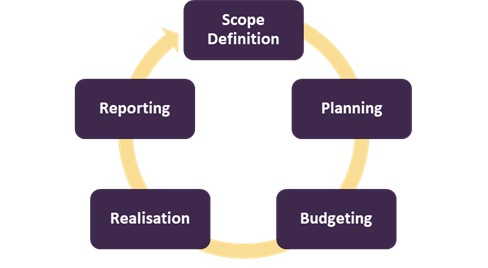
Figure 1. Stages of the municipal investment process
The proposed differentiation of these areas of urban intervention is based on the application of the following predefined criteria:
– Project type – the proposal here is to divide them according to the paragraphs, functions, and activities as described and reported in the budget. The aim is to avoid the comparison of non-comparable projects, such as a sports field or playground on the one hand, and the rehabilitation of a street on the other.
– Project size – comparing and evaluating projects of different scales would be ineffective due to disparities in cost ratios (e.g., price per square meter), total investment volumes, and associated benefits. An example would be comparing the renovation of an existing park and the construction of a new playground in a residential area. Considering the overall benefits, this methodology would favour large projects and deepen the problems, related to the urban regeneration of residential areas. The proposal is to divide them into price segments according to their total implementation cost and in accordance with the construction value thresholds set out in the Public Procurement Act. It is also possible to introduce intermediate thresholds for public competition (300,000 – 10,526,116 BGN, excl. VAT) due to its large range (e.g. up to 1m BGN and up to 5m BGN).
– Location – it is also possible to introduce criteria related to the area in which the projects are located, to achieve a balance and prevent densely populated districts from attracting all the initiatives, thereby causing the development of other districts to lag behind.
All these prerequisites must be fully consistent with the budgetary framework and the availability of financial resources. This requires a preliminary political decision on the goals and the percentage ratio between the individual paragraphs, functions, and activities, in line with the municipality’s policy on urban regeneration and sustainable development. Such a decision will provide clarity and prevent an imbalance where funds are concentrated on one or more types of projects that are “easier to implement”.
The next group of criteria and sub-criteria, which need to be specified at expert level, are related to the actual evaluation of projects using the MCA methodology. For a more accurate and easier evaluation, they should be divided into separate segments that are independent and unambiguous. The proposed breakdown is indicative and may be subject to change in accordance with the objectives and strategy of the municipality:
– Economical – cost-efficiency (e.g., price per square meter), long-term return on investment, local economic development, necessity of land compensations, compliance with UN Sustainable Development Goal (SDG) 8.
– Technical – technical readiness, availability of a building permit, need for urban planning procedures (compliance with the general development plan), comprehensive approach to solving the problem, integration with existing infrastructure, design and construction duration, conducted procurement procedure, current condition.
– Environmental – air pollution and greenhouse gas (GHG) emissions reduction, energy savings, biodiversity impacts, reduction of motor traffic, compliance with SDG 6, SDG 7, SDG 11, SDG 12, SDG 13, SDG 14, SDG 15.
– Social – accessibility, population/potential beneficiaries, lack of public spaces and urban infrastructure, long-term development (population growth potential), job creation, public health, promoting culture, compliance with SDG 1, SDG 2, SDG 3, SDG 4, SDG 5, SDG 9.
In order to evaluate the projects across the individual criteria, it is necessary to create a normalised scale for each sub-criterion that converts the different values (e.g., the price per square meter) into ratings on a scale from 1 to 10 (Worst to Best). This will further reduce subjectivity in the appraisal process for each criterion while simultaneously will increase the competition between the individual districts/projects as well as the efficiency of public fund allocation through the compliance with the set criteria.
During the scope definition phase, the criteria weighting is also conducted, involving the determination of relative importance through participatory or analytical methods. According to Dean (2022) there are multiple types of participatory approaches, from Analyst-Led MCA to Fully Participatory MCA. It depends on what extent the inputs on the MCA elements (projects, objectives, weights, scores) are contribution from experts, community representatives, and political stakeholders. The possible strategies for including multiple perspectives are three: disaggregation, negotiation/sharing and aggregation (e.g. mathematical average, median value) (Dean, 2022).
In the proposed framework, stakeholder engagement is related only to the weight elicitation process in order to avoid excessive and unjustified delays. Therefore, the criteria have been developed by experts in advance and are designed so that each project parameter can be assessed unambiguously. The projects, in turn, are submitted by the administration of Sofia Municipality and the district municipalities, which are responsible for preparing the scope of work, cost breakdown, urban and procurement procedures.
The current framework is based on an aggregation method (mathematical average) combining the inputs from an online vote among citizens (weight elicitation of each criterion (min. 10%) and sub-criterion (min. 1%), see Table 1) with the inputs from members of the city council. The cumulative scores assigned to all sub-criteria within a given criterion must total 100%. The same applies to the weights of the criteria (assessed separately from the sub-criteria), whose sum must again be 100%.
Table 1. Weight elicitation
| Criteria | Sub-criteria | Sub-criteria Weight | Criteria Weight |
| Economical | Cost-efficiency | (1÷99%) | Economical criterion weight (10÷99%) |
| … | =100% | ||
| Technical | Technical readiness | (1÷99%) | Technical criterion weight (10÷99%) |
| … | =100% | ||
| Environmental | Emissions reduction | (1÷99%) | Environmental criterion weight (10÷99%) |
| … | =100% | ||
| Social | Accessibility | (1÷99%) | Social criterion weight (10÷99%) |
| … | =100% | ||
| =100% | |||
Once all alternative projects across the defined categories are submitted, their evaluation begins. Each project applicant is required to submit structured information about the project (scope of work, cost breakdown, etc.) and to complete a questionnaire with fields that establish the value for each sub-criterion, and after a normalisation procedure, these inputs are transformed into scores on a standardised scale ranging from 1 to 10.
Meanwhile, the weights are converted from percentages into decimal fractions in the range from 0 to 1. Using the Simple Additive Weighting (SAW) method, also known as the Weighted Sum Model (WSM), the projects’ scores on the sub-criteria are multiplied by the weights and sum to get total scores for each criterion. The latter, in turn, are multiplied by the weights of each criterion. The method has been chosen due to its simplicity, easy to understand and calculate nature, which make it more transparent thus supporting the communication with the different stakeholders and community members. It also works well when criteria are preferentially independent (Belton & Stewart, 2002).
The final task in the planning phase is to rank the projects through an aggregation of criteria scores to derive priority rankings. Funding is allocated to the highest-ranked projects until the budget limit for the given function or activity is reached. The remaining projects will be kept as ranked reserves, which can replace higher-ranked projects that have been withdrawn or failed to be executed for some reason. Projects that have serious shortcomings during their development are rejected and do not enter the evaluation process at all.
The subsequent phase is the budgeting stage, during which the selected projects with their in-detail scope of work and cost breakdown are going through the capital budgeting process. Implementation requires formal approval by the city council for inclusion in the municipal budget and the allocation of the necessary financial resources. Municipalities such as Sofia typically use a combination of internal and external sources of funding, EU funds, and debt-based financial instruments, as well as strategic public-private partnerships (UN-Habitat, 2012). At this stage, the municipality needs to initiate and publish procurement procedures in accordance with the national and EU regulatory frameworks, where such procedures are mandated and have not been previously undertaken.
The analysis identified significant disparities in the distribution of financial resources and the revenue-expenditure ratio across selected districts. An example is the Mladost district, which had population of 110,932 in 2022, second in terms of population in Sofia (Civil Registration and Administrative Services General Directorate, Bulgaria)2. The district generated 8.9% of municipal revenues in the same year, according to information obtained under the Access to Public Information Act. In contrast, the capital expenditures allocated according to the 2022 Sofia Municipality budget amounted to 3,338,316 BGN, or 0.56% of the total amount (Sofia Municipality, 2023). Of these, 2,516,770 BGN, or 75.39%, had been disbursed by the end of 2022. These figures show the huge imbalance between revenues and expenditures for the Mladost district, indicating systematic lack of funding, which hinders urban regeneration and the sustainable development of residential areas. Similar numbers and disparities are observed in other districts as well. The proposed MCA framework aims to address such disparities so that funds are distributed more equitably and according to the urban development needs.
The last two phases include the realisation and reporting of the planned projects. A key success indicator is to clearly define as fully as possible the projects’ life cycles and the anticipated amortisation period, considering all risks, including those related to construction quality and long-term maintenance. The execution of reporting phase plays a pivotal role in reinforcing transparency and enhancing communication among residents, community members, and key opinion leaders. The relevant information is clearly disseminated via a well-structured and effectively implemented reporting process. In this way, the objectives and outcomes are openly shared, and the feedback mechanisms are accessible which, in turn, raise trust, supports participatory engagement, and facilitates constructive dialogue between the stakeholders and the wider community.
The proposed approach is iterative due to limited resources, e.g., finance, time, capacity. Therefore, after scope definition, planning, budgeting, realisation, and reporting, the process moves on to its next cycle. It is extremely important the preparation for each subsequent phase/cycle to begin while the previous one is still underway. An example would be when urban regeneration projects are underway, at the same time, the scope, criteria, and weights to be redefined if a need of changes or updates are identified during implementation, or to move directly to planning in the second phase.
Policy Implications
In order the proposed conceptual framework to be implemented by Sofia Municipality, Bulgaria, and other cities it requires certain actions by the administration prior to the introduction of the developed MCA methodology. Along with the political will to improve the evaluation of the investment programmes as a basis MCA has to be institutionalised in the municipal planning by first, embedding it into public investment legislation/budgeting to ensure sustainability is formally considered. This integration allows the MCA outputs to be compulsory input to capital budgeting decisions. The next step requires guideline development and standardised frameworks to ensure consistency and comparability across projects. This goes hand in hand with the capacity building. Such framework demands a well-trained municipal staff on the proposed MCA methodology and its tools. Participatory weight elicitation to be introduced to enhance legitimacy. As mentioned above, it combines citizen and expert input with technical criteria that reflect long-term strategic goals. Before scaling municipality-wide, a pilot MCA needs to be tested on a subset of projects to refine methods and build capacity.
Further step would be the digital integration with the current GIS systems for indicator collection, visualisation, and ex-post evaluation. Custom decision-support software based on the framework would be also a reasonable long-term development.
Conclusion
MCA is able to combine quantitative and qualitative effects, incorporate stakeholder preferences, and enhance transparency and accountability by making visible the assumptions, value judgments, and weighting schemes that underpin investment decisions. That makes MCA particularly relevant for municipal governance while contributes to building trust among stakeholders, community members, and residents with their diverse interests.
The current study suggests a conceptual framework to support and accelerate the urban regeneration and sustainable development through the municipal investment programmes in Sofia Municipality, Bulgaria. The used case study does not limit its applicability to other cities within the country or to countries with comparable characteristics. The proposed MCA methodology reflects the UN Sustainable Development Goals (SDGs) while incorporates the combination of different methods, expert opinions, and community values, ensuring stakeholders participation, engagement, and legitimacy of the results.
While methodological and institutional challenges remain, the benefits of adopting MCA in complex urban contexts – where competing interests and long-term impacts must be balanced – serve as a foundation for future research directions, further development of the proposed conceptual framework and ultimately, its implementation in the process of municipal capital budgeting in Sofia, Bulgaria.
Acknowledgement
This paper was supported by the University of National and World Economy under project No. NID-NI-6/2025A.
NOTES
- Return on Investment Guideline – https://www.austintexas.gov
- Tables of the persons registered at the permanent and current address – https://www.grao.bg/en/ tables.html
References
Atkins, G., Davies, N. & Bishop, T. (2020). How to value infrastructure: Improving cost benefit analysis. Institute for Government.
Belton, V., & Stewart, T. (2002). Multiple criteria decision analysis: An integrated approach. Springer. https://doi.org/10.1007/978-1-4615-1495-4.
Dean, M. (2022, January 26). A practical guide to multi-criteria analysis. Bartlett School of Planning, University College London. https://doi.org/10.13140/RG.2.2.15007.02722.
European Commission. (2015). Guide to cost-benefit analysis of investment projects: Economic appraisal tool for Cohesion policy 2014-2020. Directorate-General for Regional and Urban Policy.
European Commission. (2025, Mart 26). About the Competence centre on modelling and decision analysis (CC-MOD). https://knowledge4policy.ec.europa.eu/modelling/about_en.
Flyvbjerg, B. (2007). Cost overruns and demand shortfalls in urban rail and other infrastructure. Transportation Planning and Technology, 30(1), 9 – 30. https://doi.org/10.1080/03081060701207938.
Hof, B., Koopmans, C., Lieshout, R. & Wokke, F. (2012). Design of a methodology to evaluate the direct and indirect economic and social benefits of public investments in space: Technical note 3. ESA. https://www.seo.nl/wp-content/uploads/2020/04/2012-42_Public_Investment_in_Space.pdf.
Millennium Challenge Corporation. (2021, June 21). Cost benefit analysis guidelines. United States Government. https://www.mcc.gov/resources/doc/cost-benefit-analysis-guidelines/.
OECD. (2020, February 20). A territorial approach to the sustainable development goals: synthesis report. OECD Publishing. https://doi.org/10.1787/e86fa715-en.
Robertson, L., Skelly, C., & Phillips, D. (2019). Making hard choices in local public health spending with a cost-benefit analysis approach. Frontiers in public health, 7, 147. https://doi.org/10.3389/fpubh.2019.00147.
Sofia Municipality. (2023). Annual financial report for 2022. https://www.sofia.bg/2022-financial-year.
Sofia Municipality. (2025). Cash execution report of the Sofia municipality budget for 2024. Capital expenditure report (Appendix No. 5). https://www.sofia.bg/2024-financial-year.
UN-Habitat. (2012). Urban planning for city leaders (2nd Ed). UN-HABITAT. https://unhabitat.org/urban-planning-for-city-leaders-0.
United Nations. (2015). Transforming our world: the 2030 Agenda for sustainable development. UN General Assembly Resolution A/RES/70/1. https://sdgs.un.org/2030agenda.
Watson, K., Evans, J., Karvonen, A. & Whitley, T. (2016). Capturing the social value of buildings: The promise of Social Return on Investment (SROI). Building and Environment, 106, 289 – 301. Available at: https://doi.org/10.1016/j.buildenv.2016.04.007.
Xu, Y., Chan, E. & Qian, Q. (2011). Application of benefit-cost analysis (BCA) to evaluate environmental regulations. Proceedings of the 16th International Symposium on Advancement of Construction Management and Real Estate, 135 – 141.
Assist. Sotir Ivanov, PhD
Industrial Business Department
University of National and World Economy
19, December 8th St.
1700 Sofia, Bulgaria
E-mail: sotir.ivanov@unwe.bg

Свързани статии:
 TECHNOLOGICAL INNOVATIONS AND SUSTAINABLE DEVELOPMENT OF EUROPEAN SMALL AND MEDIUM-SIZED ENTERPRISES IN THE FOOD INDUSTRY
DIGITAL CHALLENGES IN ONLINE RETAILERS: IDENTIFYING BARRIERS TO SUSTAINABLE TRANSFORMATION
PROSPECTS AND CHALLENGES FOR THE BULGARIAN ECONOMY IN THE CONTEXT OF FULL MEMBERSHIP IN THE EUROZONE
APPLICATION OF HUMAN-CENTERED APPROACH IN INDUSTRY 5.0 ‒ THE ROLE OF SMART LEARNING FOR SUSTAINABLE ECONOMIC GROWTH
