



Gergana Dimcheva
University of Telecommunications and Post, Sofia, Bulgaria
Silviya Hristova
University of Chemical Technology and Metallurgy, Sofia, Bulgaria
Teodora Obretenova
University of Chemical Technology and Metallurgy, Sofia, Bulgaria
https://doi.org/10.53656/igc-2025.08

Pages 87-99
Abstract. In the era of digital transformation, consumer behaviour is changing under the significant impact of the evolution of technology, social media, mobile devices and global access to information. This article aims to examine the main changes in the motivation, habits and expectations of the modern consumer with an emphasis on the role of interactive communication channels and personalized marketing. New approaches to market positioning are analysed, including building an emotional connection with the customer, adaptive brand strategies and the use of behavioural targeting algorithms. Successful practices and examples from real businesses are presented.
Keywords: consumer behaviour; digital marketing; market positioning; personalization; brand strategies
JEL: M30, M31, O33
Introduction
Modern organizations operate in a dynamic economic environment. Their success depends not only on the products/services they offer, but also on the way they position themselves in the market and reach their customers. The choice of location when establishing an organization is of paramount importance for the success of its activities (Stefanova, 2022). However, more and more organizations are choosing to offer the goods they produce online.
With the advent of digital transformation at the beginning of the 21st century, changes have occurred that are expressed in the restructuring of the economy, businesses, society and communications. This imposes changes on business organizations, expressed not only in the digitalization of existing business processes, but also in the way they function and communicate / interact with their customers.
The advent of the internet, mobile devices, social media and artificial intelligence has created a new, complex environment in which traditional business models often prove inadequate (Chaffey & Ellis-Chadwick, 2016). The consumer behaviour has changed significantly. The modern consumer has access to a large amount of and different information. He can give immediate feedback, but also expects seamless, instant service. Understanding these changes on the part of companies is extremely important.
Changes in needs and requirements of consumers, as well as the rapid pace at which current knowledge, techniques and technologies become obsolete make the competitive positions of organizations unstable (Veleva, & Tsvetanova, 2020).
Without a thorough analysis of consumer behaviour, their expectations, and their motivation for purchasing in this digital world, marketing strategies may prove ineffective and organizations may lose market positions (Kotler et al., 2021). Properly understanding and serving customers is always a key factor for the competitiveness of organizations, regardless of what field of activity they are in. From such a perspective, the ability of businesses to adapt quickly to technologies and their proper integration into various marketing tools are just some of the main ways for organizations to improve customer service capabilities and meet constantly changing requirements. With rapidly developing information and communication technologies, the world is entering a new era of industrial development characterized by integrating human and technological resources in innovative and synergistic forms (Doncheva & Stoyancheva, 2024). And as Porter (2001) says about the importance of the Internet for modern business strategy, “The key question is not whether to implement Internet technologies – companies have no choice if they want to remain competitive – but how to implement them?” (Porter, 2001; Chaffey & Ellis-Chadwick, 2016). With each passing day, technologies offer newer and more perfect scalable solutions for accessing and exchanging information (Atanasova, 2023).
This article aims to analyse the changes in consumer behaviour brought about by digitalization and to examine how modern marketing approaches respond to these changes.
Changes in consumer behaviour in the context of digitalization
Digitalization has established itself as one of the most significant catalysts for changes in consumer behaviour. It is without a doubt that the impact of digital transformation and disruptive technologies has impacted all industries globally (Mounir el Khatib et al., 2023). The development of information and communication technologies has changed the way consumers search, compare, choose and buy products and services. Changes in consumer habits are expressed not only in a “transition” to a digital environment, but also in a change in the motivation, values and expectations of consumers. Instant access to information, convenience, and two-way communication are the main factors that are increasingly influencing consumers. Unlike just a few years ago, when the consumer was a passive recipient of advertisements, today he has become an active participant in the marketing process.
This is also clear from the results of a study conducted at the end of 2023. For example, 81% of consumers do online research before making a purchase online or in a physical store. It has been shown that 73% use several channels for online research, with 74% preferring websites and 38% – social networks. In this way, consumers have access to more information and have the opportunity to do more thorough research before making purchasing decisions. The study shows that 77% of online shoppers use their mobile devices to shop, which is consistent with the results of the survey conducted by the authors of this article. These data speak to the importance of an online presence for business organizations, regardless of their field of activity.1
Various platforms and social networks (such as Instagram, Tik Tok, and Facebook) are no longer just communication channels, but image marketing tools that influence consumer behaviour and purchasing attitudes.
Undoubtedly, digitalization has changed consumer behaviour, which is expressed in the following: (Adapted from Balkan eCommerce Summit; Capital Insights).2, 3
– Growing trend towards online shopping: online users are increasing continuously, due to convenience, speed and the ability to easily compare prices.
– Search for more information: consumers are looking for information about both the products / services themselves and reviews and recommendations from other users;
– Multi-channel approach – using different channels for communication and purchase;
– Increased demands for more and easier payment methods, easy ordering process, and fast delivery;
– Expect personalized offers that meet individual user needs and requirements, real-time feedback;
– Growing demands for transparency in the collection and use of personal data. In addition to a personal approach, consumers highly value those brands that behave ethically and ensure security when processing personal information. The lack of effective measures can lead to a loss of consumer trust, regardless of the quality of the product / service.
The issue of cybersecurity is one of the essential issues that managers of modern enterprises must take into account, because not only the digital transformation of corporate business structures or the work of virtual teams is subject to cyberbullying, but it also manifests itself in traditionally functioning enterprises (Stoyanov, 2024), where online communication and data exchange between employees and users can also be vulnerable.
Influence of digital technologies on consumer behaviour in Bulgaria
Research methodology
A 15-question survey was designed and conducted to analyse consumer behaviour in the digital age and the adoption of modern marketing approaches.
The survey was conducted online and completed anonymously. The survey was conducted between May 20 and July 31, 2025. 78 people responded to it. The number of respondents does not claim to be representative of the sample, but it is possible to outline trends regarding consumers’ opinions regarding the adoption of modern marketing approaches and their purchasing behaviour in the digital era.
The questions in the survey are closed, which makes it easier for respondents to complete it. Specifically, the survey used questions about their trust in recommendations on social networks when choosing to purchase a product/service, the influence of online advertisements on their choice, whether they feel emotionally connected to a brand, how they perceive brands that send them personalized purchase suggestions, and more. A multiple-choice question gives respondents the freedom to express their opinions in more detail without feeling limited by pre-set options.
Results and discussion
78 people answered the survey questions. Of these, 57 were women and 21 were men. The largest percentage of respondents are between the ages of 36 and 45. This is mainly due to the fact that the speakers’ circle is around their age.
Fig. 1 presents the answers of the question of how often respondents shop online. Online purchasing has become a normalized part of consumer behaviour, not just an occasional activity.
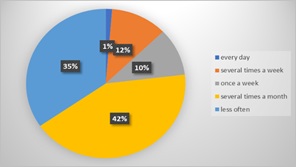
Figure 1. Answer the question „How often do you shop online?“
Over half of those surveyed always use mobile devices when making purchasing decisions. (Fig. 2). Mobile commerce dominates the purchasing process, underscoring the need for mobile-optimized sites and apps.
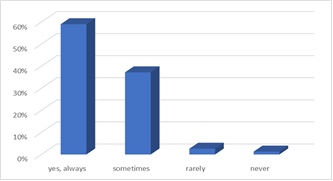
Figure 2. Answer the question „Do you use a mobile device (phone, tablet) when making a purchasing decision?“
Fig. 3 answers the question of how often respondents trust recommendations from social networks when choosing products/services. A significant proportion trust recommendations on social networks when choosing products/services. Influencer marketing and user-generated content remain powerful in shaping choices.
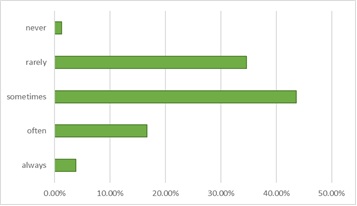
Figure 3. Answer the question „Do you trust recommendations from social networks when choosing products/services?“
Fig. 4 shows the influence of online advertising on consumer choice. Online advertisements (banners, sponsored posts) have a noticeable impact on consumer decisions. Paid digital marketing retains relevance, though its effectiveness likely depends on personalization and context.
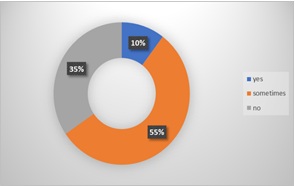
Figure 4. Answer the question „Do online advertisements (banners, sponsored posts) influence your choices?“
How important is the emotional connection with a brand is for consumer loyalty can be seen in Fig. 5. Respondents consider emotional connection an important factor for loyalty. Emotional branding (storytelling, brand values) is key for retention and long-term engagement.
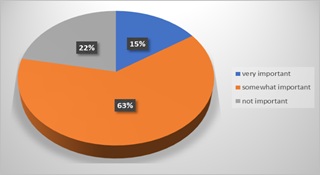
Figure 5. Answer the question „How important is the emotional connection with a brand to your loyalty?“
Fig. 6 answers the question of whether consumers like it if an online store or platform offers them products based on their various searches or purchased items. Responses are divided between those who appreciate product suggestions and those who feel “watched” or uncomfortable. Personalization is a double-edged sword — beneficial for convenience, but risky if perceived as invasive.
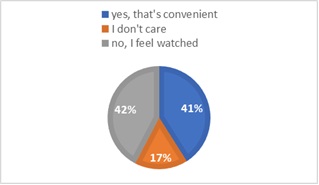
Figure 6. Answer the question „Do you like it when an online store or platform suggests products to you based on previous searches/purchases?“
Whether and how consumers perceive a brand that uses personalized messages and offers (e.g. by name, with individual orders) is shown in Fig. 7. Consumers have mixed feelings about personalized communication (by name, preferences). Brands must maintain a balance between relevance and privacy, ensuring transparency and consent.
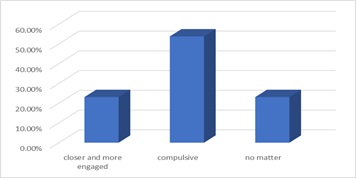
Figure 7. Answer the question „How do you perceive a brand that uses personalized messages and offers (e.g. by name, with individual orders)?“
Fig 8. Shows that the majority believe data use is acceptable only with explicit user consent.
Ethical marketing and data transparency are crucial for building trust in digital environments.
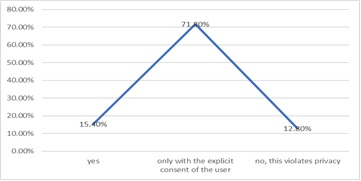
Figure 8. Answer the question „Do you think companies should use consumer behaviour data to offer better services?“
Fig. 9 is an embodiment of the question „Which of the following marketing strategies make you more committed to a given brand?“. Respondents could give up to 2 answers to this question. The survey results show that consumers increasingly value authenticity, ethics, and customization over traditional marketing appeals.
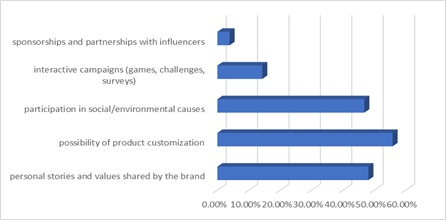
Figure 9. Answer the question „Which of the following marketing strategies make you more engaged with a brand?“
Respondents were asked how they would react to a brand that adapted its ads and messages to their online behaviour. (Fig. 10) Consumers show caution toward brands that tailor ads too specifically. There is a clear privacy paradox — users want relevance but dislike over-targeting.
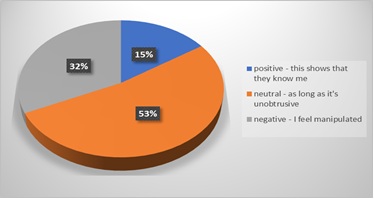
Figure 10. Answer the question „How would you react to a brand that adapts its ads and messaging based on your online behaviour?“
Fig. 11 shows that most respondents do not notice when brands communicate differently to various consumer groups. Segmentation and audience targeting may be effective but not consciously perceived, making subtle marketing differentiation successful.
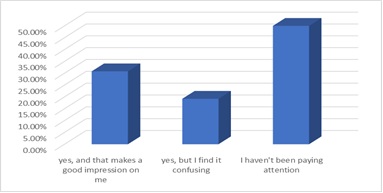
Figure 11. Answer the question „Do you notice when a brand „speaks“ to different groups of consumers differently?“
Recipients were asked about the key differentiating factors for brands (Fig. 12) The answers show that brand distinction in digital spaces depends not just on innovation, but also on ethics, aesthetics, and personalization.
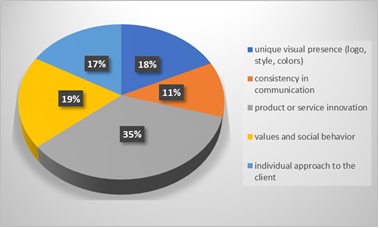
Figure 12. Answer the question „What do you think best distinguishes a brand from its competitors in an online environment?“
Question 15 asked respondents to describe a memorable digital experience with a brand. Half (39) provided answers. Most couldn’t recall a specific ad, while some mentioned disliking Jumbo or medicine ads, and others liked Ozone or certain perfume ads. Overall, consumers remember ads both positively and negatively — even disliked ones remain memorable and raise brand awareness.
The results of the study significantly highlight the depth and multidimensional nature of changes in consumer behavior in the digital age. The study shows that consumers have moved from passive recipients of marketing messages to active participants in the marketing process, characterized by:
– Greater autonomy and access to information before purchase (81% research products online before purchasing);
– Increased use of multiple digital channels (websites, social media, mobile apps);
– Increased demand for personalization, convenience and ethical transparency;
– Ambivalence towards personalized marketing – consumers value convenience, but feel „watched“ when targeting is too intrusive.
These findings reveal the paradox of digital consumer behavior: people seek individualized experiences, but remain sensitive to privacy and authenticity. In this way, the study contributes meaningfully to understanding the emotional, ethical and technological dimensions of modern consumption.
The study shows that companies are already adapting their traditional marketing tools (4P/7P) to respond to new behavioral trends in the following ways:
– Product: Companies are introducing personalization options and innovative products based on real-time customer feedback.
– Price: Dynamic and personalized pricing strategies are emerging, supported by data analytics.
– Place: Digitalization is shifting distribution from physical to omnichannel platforms, integrating e-commerce, social media and mobile applications.
– Promotion: Marketing communications rely heavily on interactive, emotional and data-driven campaigns, using behavioral targeting algorithms and partnerships with influencers.
In this way, digital consumer behavior directly shapes brand adaptive strategies – marketing tools are becoming personalized, responsive and ethically conscious.
The change in consumer behavior is reflected in several aspects:
– The purchase process is now non-linear and continuous. Consumers move freely between awareness, consideration, and post-purchase feedback through digital channels.
– Decision-making is influenced more by expert judgment, algorithmic recommendations, and social validation than by traditional advertising.
– Motivation has evolved from functional needs to experiential and identity-based desires, such as belonging, sustainability, and authenticity.
The transformation is therefore both cognitive and emotional, changing how and why consumers choose.
The study provides evidence that many businesses have already restructured their marketing approaches. They use social media not only for communication, but also for brand storytelling and image building. Personalized digital campaigns and AI-powered targeting are now standard tools.
Ethical practices (data protection, sustainability, inclusion) are becoming central to brand positioning. However, the study also reveals that while companies recognize the need for personalization, they must carefully balance it with consumer trust and privacy concerns.
Conclusion
Digital shopping has entered people’s lives rapidly, especially during the Covid pandemic. And to this day, a large number of consumers prefer to shop online. The main advantage of this type of shopping is that you can order products that are manufactured and delivered from countries quite far from the country of the specific consumer. The increase in online sales is causing manufacturers to come up with different ways to attract customers.
The conclusions from the survey conducted to measure consumer behaviour in a digital environment can be summarized as follows: Most consumers shop online several times a month, sometimes influenced by recommendations on social networks and online advertisements. For more than half of consumers, an emotional connection makes them loyal to a brand, but they perceive it as intrusive if a brand uses personalized messages or offers to attract them as customers. It is paradoxical, because although they consider personalized ads intrusive, the majority of respondents believe that the ability to personalize a product is one of the best marketing strategies that would engage them with a given brand. Respondents believe that product or service innovation would distinguish a brand from its competitors in the online environment.
NOTES
- How Many Consumers Research Online Before Buying? – https://consumergravity.com/online-shopping-statistics/?utm
- E-commerce in Bulgaria: Growth, opportunities and challenges – https://balkanecommerce.com/ecommerce-in-bulgaria-growth-opportunities-and-challenges/
- A further surge in online retailers’ revenues – https://kinsights.capital.bg/business/2025/03/25/4760731_a_further_surge_in_online_retailers_revenues
References
Atanasova, C. (2023). Transforming maritime education for a digital industry. Strategies for Policy in Science Education, 31(6s), 9 – 18. https://doi.org/10.53656/str2023-6s-1-mar.
Chaffey, D., & Ellis-Chadwich, F. (2016) Digital marketing. (6th Ed.). Pearson Education Limited.
Doncheva, D., & Stoyancheva, D. (2024) Development of the information economy concept and the transition to Industry 5.0. Strategies for Policy in Science Education, 32(6s), 98 – 111. https://doi.org/10.53656/str2024-6s-8-dev.
Khatib, M., Ali, S. Alharam, I., Alhajeri, A., Peneva, G., Angelova, J., & Shanaa, M. (2023). Drafting a digital transformation strategy for project management sector – empirical study on UAE. Strategies for Policy in Science Education, 31(6s), 31 – 47. https://doi.org/10.53656/str2023-6s-3-dra.
Kotler, P., Kartajaya, H., & Setiawan, I. (2021). Marketing 5.0: Technology for humanity. Wiley.
Porter, M. E. (2001). Strategy and the Internet. Harvard Business Review, 79, 62 – 78.
Stefanova, E. (2022). Vliyanie na lokatsiyata varhu ikonomicheskata efektivnost na mebelnite predpriyatia v Bulgaria. Intel Entrans. [In Bulgarian]
Stoyanov, I. T. (2024). Cybersecurity and prevention against cyberbullying on human factors in small and medium-sized telecommunications enterprises in the Republic of Bulgaria. Engineering Proceedings, 70(1), 48. https://doi.org/10.3390/engproc2024070048.
Veleva, S., & Tsvetanova, A. (2020) Application of the TOPSIS method for preliminary assessment of technological transfer options. Ikonomicheski izsledvania, 29(2), 108 – 125.
Assoc. Prof. Gergana Dimcheva, PhD
ORCID iD: 0009-0002-1249-301X
Department of Management in Communications
University of Telecommunications and Post
1, Akad. Stefan Mladenov St.
1700 Sofia, Bulgaria
E-mail: g.dimcheva@utp.bg
Assoc. Prof. Silviya Hristova, PhD
ORCID iD: 0009-0008-1831-5103
Department of Economics and Business Administration
Faculty of Chemical and Systems Engineering
University of Chemical Technology and Metallurgy
8, Kliment Ohridski Blvd.
1756 Sofia, Bulgaria
E-mail: silviyahristova@uctm.edu
Assoc. Prof. Teodora Obretenova, PhD
ORCID iD: 0009-0001-9514-9064
Department of Economics and Business Administration
Faculty of Chemical and Systems Engineering
University of Chemical Technology and Metallurgy,
8, Kliment Ohridski Blvd.
1756 Sofia, Bulgaria
E-mail: tobretenova@uctm.edu

Свързани статии:
 DIGITAL CHALLENGES IN ONLINE RETAILERS: IDENTIFYING BARRIERS TO SUSTAINABLE TRANSFORMATION
PROSPECTS AND CHALLENGES FOR THE BULGARIAN ECONOMY IN THE CONTEXT OF FULL MEMBERSHIP IN THE EUROZONE
THE APPLICATION OF ARTIFICIAL INTELLIGENCE IN HUMAN RESOURCE MOTIVATION
ANALYSIS OF THE TRANSITION TO SUSTAINABLE DECARBONIZED ROAD TRANSPORT IN BULGARIA
