



Emil Nikolov
Tsenov Academy of Economics, Svishtov, Bulgaria
Ivaylo Kostov
Tsenov Academy of Economics, Svishtov, Bulgaria
Lyubcho Varamezov
Tsenov Academy of Economics, Svishtov, Bulgaria
Iskra Panteleeva
Tsenov Academy of Economics, Svishtov, Bulgaria
https://doi.org/10.53656/igc-2025.17

Pages 193-205
Abstract. This paper examines the penetration of artificial intelligence (AI) as a learning tool among economics students, its impact on academic performance, and students’ perceptions regarding potential career displacement. The study addresses three research questions through survey data from 436 students at Tsenov Academy of Economics, Bulgaria. Results reveal that 75% of students use AI tools in their academic preparation, primarily for explaining complex concepts, summarizing content, and translation. However, usage remains largely sporadic rather than systematic, with only 15.6% using AI regularly. Statistical analysis using Spearman correlation and Kruskal-Wallis tests found no significant relationship between AI usage frequency and academic performance. Despite this, 23.2% of students report improved grades since adopting AI tools, and 45.9% consider AI beneficial for learning. Regarding career perceptions, 51.8% view AI as an opportunity rather than a threat, believing it enhances efficiency and competitiveness. The findings suggest that while AI adoption is widespread among economics students, its potential for improving academic outcomes remains underutilized due to fragmented and unsystematic usage patterns.
Keywords: artificial intelligence; economics students; academic performance; career perceptions; higher education; digital literacy
JEL: A22, I21, C88
Introduction
The emergence and rapid proliferation of artificial intelligence technologies have transformed numerous sectors of human activity, with education positioned at the forefront of this technological revolution. Since John McCarthy first introduced the term “artificial intelligence” in the distant year of 1956, AI has evolved from a theoretical concept into a practical tool that increasingly shapes educational systems worldwide. The applications of AI in education encompass multiple dimensions, creating significant potential to transform traditional educational approaches, methods, and tools. Nevertheless, empirical research on the impact of AI on academic performance remains inconclusive, ranging from positive to negative outcomes, particularly in cases of improper use and insufficient support. The field of economics education offers a particularly compelling context for examining patterns of AI adoption, given the discipline’s emphasis on analytical thinking, data interpretation, and problem-solving skills – competencies that closely align with AI’s capabilities. Economics students, as future professionals in a domain increasingly shaped by technological advancement, constitute a critical demographic for understanding how AI integration influences academic preparation and readiness for career development.
The present study addresses three core research questions that remain underexplored in the contemporary literature: the extent to which economics students employ AI tools in their academic preparation; the relationship between AI usage and academic performance; and students’ perceptions of AI as either an opportunity or a threat to their future career prospects. By examining these questions through an empirical survey conducted among economics students at the Tsenov Academy of Economics, Svishtov, Bulgaria, this research contributes to the growing body of knowledge on the role of AI in higher education while providing specific insights into its implications for economics education.
Literature Review
The concept of Artificial Intelligence (AI) was first introduced by John McCarthy in 1956, who defined it as the ability of a machine to exhibit behavior that would be considered intelligent if demonstrated by a human (Ahmad et al., 2021). This early vision framed machines as potential simulators of human thought, prompting the development of approaches for detecting intelligent behavior, including tests designed to distinguish between human and machine interlocutors (Marinova-Kostova, 2023).
In recent years, AI has emerged as a transformative force in education, with applications ranging from the automation of assessment processes to the personalization of learning pathways, the facilitation of teacher – student communication, the enhancement of collaboration and feedback, and the optimization of administrative and analytical tasks (Ahmad et al., 2021; Neha, 2020). By enabling the adaptation of learning materials to individual needs and offering predictive insights into student performance, AI has the potential to fundamentally reconfigure traditional pedagogical models (Dimcheva & Hristova, 2024; Maphalala & Ajani, 2025).
Across diverse contexts, studies report high levels of acceptance and adoption of AI tools by students. For example, Balogh (2024) found that over 90% of Hungarian students believed AI could improve learning, with strong support for its role in addressing diverse learner needs and for the provision of educator training. In Hong Kong, Chan and Hu (2023) reported that two-thirds of students had used generative AI (GenAI) tools such as ChatGPT, valuing their availability, personalized support, and academic assistance. Similar trends are evident in Portugal, where Sousa and Cardoso (2025) observed near-universal student engagement with GenAI for translation, concept clarification, problem-solving, and idea generation, despite concerns about occasional inaccuracies. In India, Gohain (2025) found that AI was frequently employed for research, writing, and understanding complex concepts, though adoption was limited by a lack of awareness and expertise. Collectively, these findings indicate that AI adoption in higher education is becoming mainstream, driven by perceived benefits in efficiency, personalization, and accessibility, yet tempered by concerns over accuracy and skill gaps.
The relationship between AI use and academic performance, however, is less straightforward. Several studies report positive outcomes: Stoyanova and Angelova (2024) documented grade improvements of 0.5 – 0.8 points (on a 6-point scale) among Bulgarian students using AI tools, alongside enhanced understanding of course content. Heil et al. (2025) demonstrated that strategic use of multiple GenAI tools significantly improved performance across student cohorts in Australia, Germany, and Italy. Similarly, Almasri (2024) found a 23% increase in success rates, coupled with improved learning environments and assessment practices. Yet, other research highlights potential drawbacks. Wecks et al. (2024) reported that German students using GenAI scored lower on average than non-users, particularly among high achievers, possibly due to overreliance. Ju (2023) likewise observed performance declines in AI-assisted writing tasks compared to reading tasks. These mixed findings suggest that AI’s academic impact is contingent on usage patterns, user competence, and the learning context.
Beyond measurable performance outcomes, psychological and pedagogical factors significantly influence AI adoption. Wang et al. (2025), in a study of over 1,000 Chinese students, demonstrated that fulfilling three core psychological needs – autonomy, competence, and relatedness – was essential for improving AI literacy. This relationship was mediated by cognitive engagement, metacognitive knowledge, resource management, and motivational beliefs. Such findings underscore that technological integration must be paired with supportive learning strategies, educator training, and institutional frameworks. Similarly, Heil et al. (2025) highlight that students’ AI competence – including technical, ethical, and critical dimensions – strongly affects how they evaluate and apply generative AI tools in learning. Their findings also point to the need for institutional support and critical engagement to ensure responsible and effective AI integration. This focus on user competence and supportive frameworks is further reinforced by Biolcheva and Sterev (2024), who argue that the value of AI depends not only on the technology itself but also on cognitive, behavioural, and institutional factors. Furthermore, successful integration necessitates strategic readiness at the organizational level. Molhova-Vladova and Ivanov (2024) note that adopting disruptive technologies such as AI entails institutional and governance risks that must be actively managed. These perspectives collectively emphasize the need for educator preparedness, structured pedagogical environments, and risk-aware institutional policies to maximize benefits and mitigate risks such as misinformation and dependency. These insights align with the present study’s focus on the role of digital literacy and structured pedagogical environments in maximizing AI’s educational potential.
In sum, while AI’s integration into higher education offers substantial promise, its positive effects are not automatic. The literature suggests four critical conclusions: high acceptance and adoption across student cohorts; a conditional impact on performance based on usage quality (improper or passive use may hinder deep learning); the centrality of digital literacy for effective and critical engagement with AI outputs; and a vital need for institutional support and educator training to navigate governance risks and establish structured teaching frameworks. Realizing AI’s potential requires a deliberate alignment of technological capabilities with pedagogical strategies, digital literacy initiatives, and attention to the motivational and cognitive dimensions of student learning.
Empirical research
Methodology and data
The analysis of the scientific literature shows that AI is already part of students’ learning processes and generates positive effects. In this context, the main objective of the present publication is to examine the extent of penetration of artificial intelligence as a tool for academic preparation among economics students, the influence it exerts on their academic performance, and their perceptions regarding the possibility of AI replacing them in their future career paths. To achieve this objective, three research questions (RQ) are defined: RQ1: To what extent do economics students utilize the capabilities of artificial intelligence in their academic preparation? RQ2: Is there a relationship between the use of artificial intelligence for academic preparation and the academic performance of economics students? RQ3: Do economics students perceive artificial intelligence as a threat to their career prospects? To address these questions, three research statements (RS) are formulated and tested: RS1: Economics students make extensive use of the capabilities of artificial intelligence in their academic preparation. RS2: There is a positive relationship between the use of artificial intelligence for self-preparation and the academic performance of economics students. RS3: Economics students perceive artificial intelligence as a threat to their career prospects.
The data for this study were collected through a survey administered to students enrolled at Tsenov Academy of Economics – Svishtov. The survey employed an online questionnaire developed in Google Forms and distributed via a QR code generated using the built-in QR code generator in Google Chrome. To ensure data integrity and prevent multiple submissions from the same participant, the questionnaire was software-restricted to a single response per device (smartphone, computer, or tablet). Prior to full deployment, the questionnaire was pilot tested with 10 students to evaluate its clarity and structure. Feedback from the pilot study was used to address identified weaknesses and omissions, after which the final version of the questionnaire was distributed to the student population. The survey was conducted in person prior to students’ examinations over the period from June 3 to July 2, 2025. The questionnaire contained 15 questions, of which 11 examined the prevalence, effects, and perceptions of students regarding artificial intelligence, while 4 served to compile their demographic profile (gender, age, form of study, EQL and year of study). The questions, as well as the aggregated responses from the survey, are publicly available and can be accessed1.
The total population comprised 3,982 students enrolled at Tsenov Academy of Economics as of July 2025. For this population size, a sample of 350 respondents ensures a 95% confidence level with a 5% margin of error. In practice, 436 students participated in the survey, fully meeting the minimum sample size requirement.
Table 1. Profile of the respondents
| Characteristics | n | % | Characteristics | n | % | |||
| 1. Gender
– Men – Women – Other / Prefer not to say |
220 214 2 |
50.4% 49.1% 0.5% |
2. Age1
– 19-24 years – 25-34 years – 35-44 years – 45-57 years |
118 145 128 43 |
27,2% 33,4% 29,5% 9,9% |
|||
| 3. Form of Study
– Full-time – Part-time – Distance learning |
168 36 232 |
38.5% 8.3% 53.2% |
4. Year of study
– Bachelor’s, 1st year – Bachelor’s, 2nd year – Bachelor’s, 3rd year – Bachelor’s, 4th year – Master’s, 1st year – Master’s, 2nd year |
128 108 73 94 18 15 |
29.4% 24.8% 16.7% 21.6% 4.1% 3.4% |
|||
[1] The mean age of the respondents was 32 years, with ages ranging from 19 to 57 years. Two cases had missing data in the Age group variable, resulting in a valid sample size of 434.
The analysis of the data generated through the survey was conducted using Microsoft Excel and the statistical software package SPSS ver. 26. Descriptive statistics, including means, minimum and maximum values, as well as visual elements such as tables and charts, were employed to test the research statements. Nonparametric tests were also applied: Spearman’s rho to measure the strength and direction of relationships between two ordinal variables, and the Kruskal–Wallis H test to assess statistically significant differences in the medians of more than two independent variables. The minimum required sample size was determined using the online calculator provided by Jetform2. As the study did not involve the construction of composite measurement scales through the aggregation of multiple items, no reliability analysis, such as Cronbach’s alpha, was conducted.
In accordance with ethical standards, participation in the survey was voluntary and anonymous, and the questionnaire was designed to avoid collecting any personally identifiable information. The data are presented in aggregated form to protect participants’ privacy, and the dataset is publicly available to promote transparency and reproducibility. As the study involved only anonymous, aggregated data on students’ use of artificial intelligence, ethical approval was not required.
The study was conducted under certain limitations. First, the sample includes only economics students enrolled at Tsenov Academy of Economics – Svishtov, Bulgaria, which may lead to potential bias in the results. Second, the sample was formed through a self-selection method, which introduces the risk of selection bias. Third, even within the investigated institution, the sample structure does not fully reflect the demographic and academic characteristics of the general population, which may affect the internal validity of the conclusions.
Results
The penetration of artificial intelligence into all spheres of human activity is unfolding at an unprecedented pace. ChatGPT alone, for example, reports over 122 million active daily users and processes more than 1 billion queries per day (Singh, 2025). In this context, it is reasonable to expect that students will actively take advantage of the opportunities offered by artificial intelligence. This expectation forms the basis of the first research statement addressed in this study – namely, that economics students make extensive use of artificial intelligence in their academic preparation. The findings of the empirical survey indicate that 75.0% of respondents report using artificial intelligence as part of their study process. However, the intensity of its use varies considerably among students, as illustrated in Figure 1.
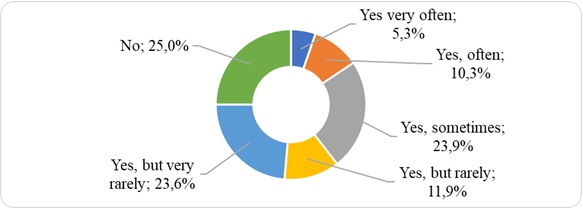
Figure 1. Percentage distribution of responses to the question: “Do you use artificial intelligence (ChatGPT, Claude, Deep Seek, Copilot, etc.) in your academic preparation?”
A considerable proportion of surveyed students (35.5%) use artificial intelligence rather sporadically – rarely or very rarely – while only 15.6% report regular use (often or very often). This suggests that, although 75.0% of students indicate that they incorporate AI into their study process, the majority do not fully exploit its potential. Consequently, the first research statement is only partially supported: AI adoption is widespread, but its frequency of use remains limited.
In terms of specific applications, students most frequently use AI to explain complex terms and concepts (46.6%), summarize learning content (22.6%), translate texts from/into foreign languages (21.0%), analyse data (19.9%), solve case studies and tasks (16.4%), prepare for exams (13.9%), check spelling and grammar (11.1%), and write reports, essays, and projects (7.9%).
The main concerns expressed regarding the use of AI in academic preparation include loss of independent thinking and problem-solving skills (46.3%), increased dependence on technology (16.5%), diminished creativity (16.3%), reduced critical thinking (9.4%), and ethical issues related to the difficulty of distinguishing original work from AI-generated content (8.9%).
Artificial intelligence has the potential to transform the traditionally slow-to-change educational system. By providing learners with personalised support, AI can enhance the effectiveness of the learning process. For this reason, the study examined whether a positive relationship exists between the use of artificial intelligence for self-study and the academic performance of economics students. The underlying expectation is that students who employ AI tools in their preparation may demonstrate better academic performance.
Since the variables under investigation (frequency of AI use and current average grade) were measured on an ordinal scale, the use of parametric tests such as Pearson’s correlation coefficient or ANOVA was not appropriate. For this reason, the nonparametric Spearman’s rho and Kruskal–Wallis tests were applied. Spearman’s rho was used to examine the strength and direction of the relationship between the two variables, while the Kruskal–Wallis test was used to determine whether statistically significant differences in academic performance exist between groups of students categorized by frequency of AI use.
Tables 2 and 3 present the frequency distributions of responses to the questions “Do you use artificial intelligence tools (e.g., ChatGPT, Claude, DeepSeek, Copilot, etc.) in your study preparation?” (AI_use) and “Which of the following best describes your current average grade?” (Grade).
Table 2. Frequency distribution of responses to the question “Do you use artificial intelligence tools (e.g., ChatGPT, Claude, DeepSeek, Copilot, etc.) in your study preparation?”
| Frequency | Percent | Valid
Percent |
Cumulative Percent | |||
| Valid | No, I have never used it | 109 | 25,0 | 25,0 | 25,0 | |
| Yes, but very rarely | 103 | 23,6 | 23,6 | 48,6 | ||
| Yes, but rarely | 52 | 11,9 | 11,9 | 60,6 | ||
| Yes, occasionally | 104 | 23,9 | 23,9 | 84,4 | ||
| Yes, often | 45 | 10,3 | 10,3 | 94,7 | ||
| Yes, very often | 23 | 5,3 | 5,3 | 100,0 | ||
| Total | 436 | 100,0 | 100,0 | |||
Table 3. Frequency distribution of responses to the question “Which of the following best describes your current average grade?”
| Frequency | Percent | Valid
Percent |
Cumulative Percent | ||
| Valid | Average (from 3.00 to 3.49) | 6 | 1,4 | 1,4 | 1,4 |
| Good (from 3.50 to 4.49) | 62 | 14,2 | 14,2 | 15,6 | |
| Very Good (from 4.50 to 5.49) | 241 | 55,3 | 55,3 | 70,9 | |
| Excellent (from 5.50 to 6.00) | 127 | 29,1 | 29,1 | 100,0 | |
| Total | 436 | 100,0 | 100,0 | ||
Table 4 presents the results of Spearman’s correlation analysis. Since the significance value (Sig. = 0.339) exceeds the 0.05 threshold, the data do not provide evidence of a positive association between the use of artificial intelligence in the learning process and students’ average academic performance.
Table 4. Spearman’s rho
| AI_use | Grade | |||
| Spearman’s rho | Do you use artificial intelligence in your study preparation? | Correlation Coefficient | 1.000 | 0.046 |
| Sig. (2-tailed) | . | 0.339 | ||
| N | 436 | 436 | ||
| What is your average academic grade? | Correlation Coefficient | 0.046 | 1.000 | |
| Sig. (2-tailed) | 0.339 | . | ||
| N | 436 | 436 | ||
The results of an additional analysis using the Kruskal – Wallis test. The test revealed no statistically significant differences in the distribution of academic performance among student groups classified by the frequency of artificial intelligence use (Sig. = 0.264 > 0.05). Based on these results, no evidence of a relationship can be observed. Therefore, within the studied sample, there is no statistical support for the proposition that the use of artificial intelligence for self-study significantly affects the academic performance of economics students, and the corresponding research statement is not supported. However, 23.2% of the surveyed students report that since they started using artificial intelligence, their academic results (grades) have improved, and 45.9% consider it a useful tool for their learning. Through AI, they are able to understand very complex topics and concepts (39.9% of respondents), absorb study material more quickly (30.3%), and solve complex problems and case studies (21.6%). Furthermore, for 27.5% of the surveyed students, using artificial intelligence leads to increased confidence in their own knowledge and skills, while 24.7% report that it boosts their motivation to learn.
One of the primary concerns regarding artificial intelligence is that it may replace humans in the workforce, potentially leading to economic and social disruptions. To explore economics students’ attitudes toward this issue, the study formulated and examined the research statement that students perceive artificial intelligence as a threat to their career prospects. This research statement was examined using responses to the statement: “Artificial intelligence is an opportunity, not a threat to my professional development. It will not ‘take’ my job but will only make me more efficient and competitive in the labour market.” Responses were recorded on a five-point Likert scale, ranging from 1 (strongly disagree) to 5 (strongly agree). The percentage distribution of responses is shown in Figure 2. More than half of the surveyed students (51.8%) who use artificial intelligence in their study preparation perceive AI as an opportunity rather than a threat to their career prospects, viewing it as a tool that enhances efficiency and competitiveness in the labour market. In contrast, a substantial portion of students (20.7%) regard artificial intelligence as a potential threat to their professional development. A relatively large share (27.5%) of students remain undecided and have not yet formed a clear opinion on this issue.
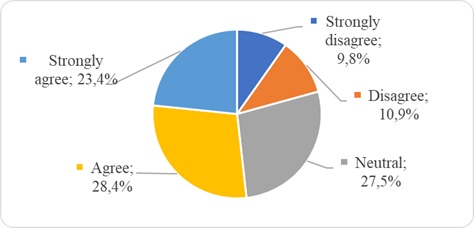
Figure 2. Percentage distribution of responses to the question:
“To what extent do you agree with the statement ‘Artificial intelligence is an opportunity, not a threat to my professional development. It will not “take” my job but will only make me more efficient and competitive in the labour market”
Based on these data, the research statement that economics students perceive artificial intelligence as a threat to their career prospects is not supported. The majority of students hold the opposite view.
Findings and discussion
This study examined the use of artificial intelligence (AI) among economics students at Tsenov Academy of Economics, Bulgaria, focusing on three research questions.
RQ1: To what extent do economics students utilize the capabilities of AI in their academic preparation? The findings indicate that AI adoption is widespread, with 75% of students reporting its use. Students primarily employ AI for explaining complex concepts, summarizing content, and translation. However, usage remains largely sporadic, with only 15.6% using AI regularly, suggesting that it functions mainly as a supplementary tool rather than a central component of study routines.
RQ2: Is there a relationship between the use of AI for academic preparation and academic performance? Statistical analyses using Spearman’s correlation and the Kruskal–Wallis test revealed no significant relationship between AI usage frequency and academic performance. While 23.2% of students report improved grades since adopting AI tools and 45.9% consider AI beneficial for learning, overall, AI use alone does not appear to systematically enhance academic outcomes.
RQ3: Do economics students perceive AI as a threat to their career prospects? The majority of students (51.8%) view AI as an opportunity, enhancing efficiency and competitiveness in the labour market. A smaller share (20.7%) perceive it as a threat, while 27.5% remain undecided. This indicates generally positive attitudes toward AI, although some caution persists.
The findings highlight that while AI adoption is widespread, its potential for improving learning outcomes is underutilized due to fragmented and unsystematic usage patterns. Universities and educators should provide guidance and training on effective AI integration, promote digital literacy, and encourage structured, critical engagement with AI tools. Future research could investigate factors mediating the relationship between AI use and academic performance, such as course-specific applications, quality of AI-assisted study methods, or variations across fields of study. Longitudinal studies could also track how students’ attitudes toward AI and its impact on learning and career prospects evolve over time.
NOTES
- https://forms.gle/zJsadPRmksK33Ced6
- https://www.jotform.com/bg/sample-size-calculator/
References
Ahmad, S., Rahmat, M., Mubarik, M., Alam, M., & Hyder, S. (2021). Artificial intelligence and its role in education. Sustainability, 13(22), 12902. https://doi.org/10.3390/su132212902.
Almasri, F. (2024). Exploring the impact of artificial intelligence in teaching and learning of science: A systematic review of empirical research. Research in Science Education, 54, 977 – 997. https://doi.org/10.1007/s11165-024-10176-3.
Balogh, A. (2024). Educational innovation of using artificial intelligence in university education: A comprehensive student survey. International Journal on Lifelong Education and Leadership, 10(2), 55 – 65. https://doi.org/10.25233/ijlel.1528746.
Biolcheva, P., & Sterev, N. (2024). A model for calculating the indirect added value of AI for business. Strategies for Policy in Science and Education, 32(3s), 9 – 17. https://doi.org/10.53656/str2024-3s-1-mod.
Chan, C. K. Y., & Hu, W. (2023). Students’ voices on generative AI: Perceptions, benefits, and challenges in higher education. International Journal of Educational Technology in Higher Education, 20, 43.
Dimcheva, G., & Hristova, S. (2024). Education, advantages and disadvantages of artificial intelligence in Bulgarian education. Industrial Growth Conference 2024, 269 – 280. https://doi.org/10.53656/igc-2024.25.
Gohain, M. (2025, July 12). Half of Delhi students surveyed rely on AI for studies, but trust and access remain hurdles: Study: The Times of India. https://timesofindia.indiatimes.com/city/delhi/half-of-delhi-students-surveyed-rely-on-ai-for-studies-but-trust-and-access-remain-hurdles-study/articleshow/122393200.cms?utm_source=chatgpt.com.
Heil, J., Ifenthaler, D., Cooper, M., Mascia, M., Conti, R., & Penna, M. (2025). Students’ perceived impact of GenAI tools on learning and assessment in higher education: the role of individual AI competence. Smart Learning Environments, 12, 37. https://doi.org/10.1186/s40561-025-00395-0.
Ju, Q. (2023). Experimental evidence on negative impact of generative AI on scientific learning outcomes. SSRN. http://dx.doi.org/10.2139/ssrn.4567696.
Maphalala, M. C., & Ajani, O. A. (2025). Leveraging artificial intelligence as a learning tool in higher education. Interdisciplinary Journal of Education Research, 7(1), а01. https://doi.org/10.38140/ijer-2025.vol7.1.01.
Marinova-Kostova, K. (2023). Research on Internet technologies’ potential to improve digital competence in education. Publishing house Knowledge and business.
Molhova-Vladova, M., & Ivanov, I. (2024). Disruptive technologies risk management. Strategies for Policy in Science and Education, 32(6s), 25 – 36. https://doi.org/10.53656/str2024-6s-dis.
Neha, K. (2020). Role of artificial intelligence in education. Alochana Chakra Journal, 9(9), 305 – 309.
Singh, S. (2025). ChatGPT Statistics 2025. https://www.demandsage.com/chatgpt-statistics/?utm_source=chatgpt.com.
Sousa, A., & Cardoso, P. (2025, March 25). Use of generative AI by higher education students. Electronics, 14(7), 1258. https://doi.org/10.3390/electronics14071258.
Stoyanova, T., & Angelova, M. (2024). Good practices of using Artificial Intelligence in the digitalization of higher education. Entrepreneurship and Sustainability Issues, 11(4), 44 – 62. https://doi.org/10.9770/jesi.2024.11.4(3).
Wang, K., Cui, W., & Yuan, X. (2025). Artificial intelligence in higher education: The impact of need satisfaction on artificial intelligence literacy mediated by self-regulated learning strategies. Behavioral Sciences, 15(2), 165. https://doi.org/10.3390/bs15020165.
Wecks, J., Voshaar, J., Plate, B., & Zimmermann, J. (2024). Generative AI usage and exam performance. arXiv. https://doi.org/10.48550/arXiv.2404.19699.
Assoc. Prof, Emil Nikolov, PhD
ORCID iD: 0000-0003-3852-9316
Department of Industrial Business and Entrepreneurship
Tsenov Academy of Economics
2, Em. Chakarov St.
5250 Svishtov, Bulgaria
E-mail: e.nikolov@uni-svishtov.bg
Head Assist. Prof. Ivaylo Kostov, PhD
ORCID iD: 0000-0002-1308-945X
Department of Industrial Business and Entrepreneurship
Tsenov Academy of Economics
Em. Chakarov St.
5250 Svishtov, Bulgaria
E-mail: i.kostov@uni-svishtov.bg
Prof. Lyubcho Varamezov, PhD
ORCID iD: 0000-0003-1964-2786
Department of Industrial Business and Entrepreneurship
Tsenov Academy of Economics
2, Em. Chakarov St.
5250 Svishtov, Bulgaria
E-mail: l.varamezov@uni-svishtov.bg
Assoc. Prof. Iskra Panteleeva, PhD
ORCID iD: 0000-0002-6976-0644
Department of Industrial Business and Entrepreneurship
Tsenov Academy of Economics
2, Em. Chakarov St.
5250 Svishtov, Bulgaria
E-mail: i.panteleeva@uni-svishtov.bg

Свързани статии:
 THE APPLICATION OF ARTIFICIAL INTELLIGENCE IN HUMAN RESOURCE MOTIVATION
APPLICATION OF HUMAN-CENTERED APPROACH IN INDUSTRY 5.0 ‒ THE ROLE OF SMART LEARNING FOR SUSTAINABLE ECONOMIC GROWTH
An Innovative Model for Developing Digital Competences of Social Workers
DIGITAL CHALLENGES IN ONLINE RETAILERS: IDENTIFYING BARRIERS TO SUSTAINABLE TRANSFORMATION
