



Irena Petrova
Todor Kableshkov University of Transport, Sofia, Bulgaria
https://doi.org/10.53656/isct-2025.04

Pages 41-49
Abstract. EU policy is aimed at sustainable transport development, including the construction and maintenance of a modern transport system that ensures the increased need for mobility of goods and services and at the same time does not jeopardise the ability of future generations to meet their transport needs. The main principles of sustainable transport development are: reduction of harmful emissions, energy efficiency; development of public transport, alternative forms of transport; social justice and accessibility. Achieving a balance between environmental, economic and social needs in the transport system is the objective of the infrastructure modernisation policy, achieving energy efficiency, accessibility and safety for all citizens.
This article examines the possibilities for using sustainable performance indicators in the process of monitoring and control of transport projects. For this purpose, sustainable performance indicators have been identified and analyzed, which reflect the progress of the project and assess the long-term impact on the environment, society and the economy. These indicators assess the potential impact of transport infrastructure projects on the environment, economy, society and transport safety. A literature review, analysis of real cases and good practices in European and international contexts has been made.
The results of the study show the need for a methodology for assessing the sustainable efficiency of transport projects in the monitoring and control stages in terms of long-term impact on the environment, society, economy and safety.
Keywords: Ex-post evaluation; transport projects; indicators; successful project
- Introduction
The sustainable development of transport is a key element in European policy. The idea is to build an environmentally friendly, high-tech, accessible and safe transport system providing connectivity to all Member States. Sustainable transport is achieved by reducing harmful emissions, promoting the use of public, environmentally friendly transport and improving accessible mobility.
The development of transport infrastructure, rehabilitation of an existing one, construction of a new one, etc., is organized through transport projects. When planning these projects, it is necessary to take into account how they will affect regional development, urban development, environmental protection, use of agricultural areas, alternative energy sources, reduction of greenhouse gas emissions, cross-border connectivity and others. Not only economic, but also social and environmental – both financial and non-financial – related to the creation, maintenance and costs of operating transport infrastructure, equipment and materials are taken into account.
The implementation of transport projects is associated with delays due to design problems, administrative procedures, problems with land expropriation, archaeological sites, problems with the implementation of the Public Procurement Act, the Spatial Planning Act and the International Federation of Consulting Engineers.
- Project Success Assessment
2.1. European policy
The European Commission has developed a clear legal and institutional framework for financing major transport projects, prioritising support for the core TEN-T network, cross-border connections and interoperability projects. The European Court of Auditors defines five main stages in the implementation of large transport projects:
- Defining a strategy;
- Project coordination;
- Selection of projects for funding;
- Project monitoring;
- Ex-post evaluation of projects.
Member States draw up their own national transport infrastructure strategies or plans, taking into account the overall objectives set by the European Union. They decide which projects to be implemented, how to implement them and with what funding. Environmental impact assessments and building permits are carried out at local level. Only in the United States are standardized indicators for the final effects of the project implementation. Before the start of the project, a report is submitted, which serves as a basis for comparison. After the completion of the project, the beneficiaries submit a report on the results, covering a period of 5 years. The data is checked by an independent assessor, who assesses its quality and extracts information for future projects. At this stage, the European Commission does not require ex-post evaluations of major transport projects. There is no legal basis for subsequent evaluation of projects [1].
In England, France, Norway, USA, Japan, etc. ex-post evaluation of national transport projects shall be applied. Institutions such as the World Bank, the European Bank for Reconstruction and Development, etc. ex-post evaluation of railway and road projects. The problems observed in the ex-post evaluations are related to differences in quality, scope, budget and time. There are no standardized methods for conducting at national level, which hinders comparability and limits the potential for learning from them. The other big problem is related to data backup and retrieval. The author develops an approach for evaluating projects after one, five and 15 years after the commissioning of the infrastructure and the construction of a database [2].
The database with statistical information about the projects will make it possible to compare how the initial plan is changed to the results of operation, to identify defects in the method of assessment applied in the planning phase.
The most used method for evaluating and prioritizing projects is benefit-cost analysis (BA). The study [3] analyzed the accuracy of the benefit-cost analyses for transport projects financed by the Asian Development Bank. In this way, they find gaps in the planning process that are related to underestimating the internal rate of return (IRR) and net present value (NPV).
Transport projects are the tools for achieving the strategic goals set out in the European policy. This requires an assessment of each implemented project whether it has achieved its goals and what the results are through predetermined indicators. The latest EU programme is the Recovery and Resilience Plan. It recommends (based on global experience) to use a chain of results in the development of indicators. The chain of results includes sequential actions (Fig. 1) through which the intermediate or final result is evaluated [4].

Figure 1. Source [4]
Ex-ante cost-benefit analysis is often used in transport projects, but ex-post assessments (after commissioning) are very rare, although they are useful. The authors [5] propose a methodology for ex-post evaluation of transport projects, which is based on benefit-cost analysis and qualitative analysis. An integrated method for ex-post evaluation, a combination of benefit-cost analysis and qualitative analysis is examined in [6] and tested on 10 significant transport projects implemented in different countries in Europe. The projects are financed by the European Regional Development Fund and the Cohesion Fund. The qualitative analysis was carried out in the form of interviews with stakeholders.
The traditional approach to evaluating the success of transport infrastructure projects focuses mainly on meeting deadlines and budgets. The new trend is to look at it in a broader perspective – whether the project fulfills the pre-set goals. In this way, a more complete picture of the real benefits of the project is obtained. For this purpose, Norway has implemented a model with six factors – effectiveness, efficiency, relevance, sustainability, other impacts and benefit-cost ratio [7].
A two-level assessment of the success of a highway project has been developed – examining its operational success (effectiveness) and tactical success (efficiency). Operational success is related to the project triangle, and tactical success assesses whether the project objectives have been achieved. Looking at both aspects of success allows for a fuller understanding of the benefits of the project [8].
The biggest problem in the ex-post evaluation of transport projects is the lack of data. For this purpose, national databases have been created in Sweden and Norway, which contain information on traffic accidents, traffic volume, type of road, road construction, sidewalk, pedestrian access, parking, etc. [9, 10]. There are four sources of data on transport infrastructure – projects, facilities, assembly by departments and by the network [11]. Their collection, storage, processing and confidentiality are a serious challenge [12].
2.2. Monitoring
Monitoring is the process of monitoring the implementation of the project to detect and quantify any deviation from the original plan. Through monitoring, the actual progress of the project is tracked compared to the planned one and their contribution to the achievement of expected final results is measured. The process of systematic and continuous collection and analysis of information about the real progress of the project is key to its success. For transport projects, monitoring must be included in the project plan. The monitoring focuses on the project triangle: cost, time and scope, and when the scope changes, the price and time change.
The achieved results are measured by indicators, which are the main monitoring tool. The indicators must be clearly defined, closely related to the activity and measured periodically. In the process of monitoring, a lot of data is collected, through which problematic situations are detected where projects do not meet expectations. Monitoring data supports the day-to-day management of transport projects and allows for a timely response to identify problems and take corrective action. These data are the basis for impact assessment and decision-making for future interventions [13]. The sustainability indicators of transport projects need to be selected to be applied in each phase of the life cycle and for subsequent impact assessment.
The lack of feedback on the quality and implementation of transport projects creates a significant risk of incorrect selection of infrastructures that will be in operation for a minimum of 30 years and large amounts of money have been used [14]. In Norway, ex-post evaluation of projects worth more than 1 billion euros is carried out Norwegian kroner. Six criteria are used to assess the success of a project: productivity, achievement of objectives, relevance, impact, viability and socio-economic profitability.
In Bulgaria, an impact assessment of the transport projects included in the Operational Programme on Transport 2007 – 2013 has been carried out, including studies on the financial implementation of the projects, the contribution to economic development, the impact on the gross domestic product and employment. The effects of infrastructure workload and the degree of integration in the European transport network and the impact of transport projects on sustainable development – economic, environmental and social problems – are studied. The environmental impact assessment was carried out at two levels – a program and a project. As a result of the in-depth studies, the main problems and proposals for improving future programs and projects are identified [15].
There is no legal framework in the European legislation that requires ex-post evaluations of large transport projects.
- Methodology for Ex-post Evaluation of Transport Projects
A sustainable transport project is one that provides transport infrastructure and a service in a safe, environmentally friendly, socially engaged way and is at the heart of the economic growth of the region. Indicators should be included in the ex-post evaluation of transport projects to assess sustainability categories.
The methodology for ex-post evaluation of transport projects is the result of a thorough study of scientific articles and European legislation. The methodology includes three categories of indicators: social, environmental and economic. Each category consists of 5 indicators relevant for sustainable transport infrastructure projects (Table 1).
The ex-post evaluation will be carried out five years after the completion of the transport project, and the initial forecast data used in the planning process will serve as a basis for comparison. The results of the comparison of the initial data and the data after 5 years provide information about the success of the transport project and whether the goals have been achieved.
The indicators in the three categories can change depending on the type of project.
The User Satisfaction Index (CSI) measures the degree of user satisfaction with the use of a service or infrastructure. It can be measured every year or every 2 – 3 years. Low values are a signal of problems with the final product.
Table 1
| Category | Indicator | Description |
| Social | Use of sustainable transport | The share of people using sustainable transport (bicycles, pedestrians, electric cars, public transport, etc.) |
| Accessibility of the transport service | Accessibility of the transport service for all social groups, including people with disabilities | |
| User satisfaction | End-user survey | |
| Job creation | Number of newly created jobs per year | |
| Safety | Safety of transported passengers and cargo. Number of incidents | |
| Economic | Number of passengers per day | Average number of users of the transport service |
| Travel time | Average travel time during peak hours | |
| Volume of cargo transported | Quantity of cargo transported | |
| Maintenance and operating costs | Financial resources required for maintenance and operation | |
| Impact on regional economic development | Assessment of the project’s contribution to GDP | |
| Environmental | Noise pollution | Measurement of noise levels on the environment and population. |
| Air pollution | Concentration of fine particulate matter | |
| Use of renewable energy sources | The amount of energy produced or consumed by the transport project (solar, wind, water, biomass, etc.) | |
| Impact on natural resources | How it affects vegetation and the conservation of natural resources such as land, water, air, minerals and biodiversity | |
| Greenhouse gas emissions (CO2, etc.) | The amount of carbon and other harmful gases emitted from transport, measured in tonnes per year |
The consumer satisfaction index is calculated using formula (1).
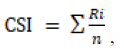
where:
Ri – user rating i
n – number of respondents
Can be assessed – frequency, cleanliness, comfort, information, accessibility, security and safety, general satisfaction, etc.
User satisfaction surveys play a key role in assessing the impact of infrastructure, renovation, safety [16]. Consumer surveys can be used to annually study the effect of a project and take concrete actions.
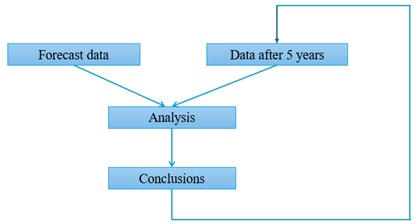
Figure 2. Blog-scheme of an algorithm for subsequent evaluation of transport projects
In Figure 2 presents the algorithm of the study, which is repeated every 5 years. Transport projects have a long service life, for this reason it is appropriate to make the ex-post assessment 3 times, i.e. after 5, 10 and 15 years. The information obtained will provide valuable information to avoid the same mistakes and use good practices.
Conclusions
It is necessary to carry out an ex-post evaluation of transport projects in order to assess successful or unsuccessful and whether the objectives have been achieved. Monitoring time, budget, and scope is not enough to have a successful project. The ex-post evaluation of transport projects is of utmost importance in order to avoid mistakes.
A methodology for ex-post evaluation of sustainable transport projects has been developed, which integrates environmental, social and economic aspects through clearly defined and measurable indicators.
A national transport database should be created, which should be open access.
REFERENCES
[1] EUROPEAN COURT OF AUDITORS, EU framework for major transport infrastructure projects: an international comparison. Review no 05/2021, Luxembourg: Publications Office of the EU, 2021. 59 p. https://www.eca.europa.eu/lists/ecadocuments/rw21_05/rw_transport_flagships_bg.pdf?utm_source=chatgpt.com.
[2] SARGINA, A., World Experience in Ex-Post Evaluation of Transport Infrastructure Projects. Federalism, 2023, vol. 27, ISS: 4, pp. 203 – 217, https://scispace.com/papers/world-experience-in-ex-post-evaluation-of-transport-2apmt4od.
[3] WANG, Y., LEVINSON, D., The accuracy of benefit-cost analysis for transport projects supported by the Asian Development Bank, Asian Transport Studies, 2023, vol. 9, 100104, ISSN 2185-5560, https://doi.org/10.1016/j.eastsj.2023.100104.
[4] INSTITUTE FOR MARKET ECONOMICS, A Look at the Recovery and Resilience Plan: Priorities. Investment. Expected results, 2021, 24 p.
[5] GERARD DE JONG, VIGNETTI, S., PANCOTTI, C., Ex-post evalution of major infrastructure projects, Transportation research Procedia, Vol. 42, pp. 75 – 84, 2019, 10.1016/J.TRPRO.2019.12.008.
[6] VIGNETTI, S,. GIFFONI, F., PANGLIARA, F., Analytical framework for ex-post evaluation of transport projects: Lessons learned on retrospective CBA, Papers in Regional Science (John wiley & Sons, Ltd), Vol. 99, Iss: 3, 2020, pp. 683 – 687, 10.1111/PIRS.12501.
[7] FOROUTAN MIRHOSSEINI, A., PITERA, K. & SCLECK, J., Ex-post evaluation of project efficiency and effectiveness within a Norwegian highway project. Case Studies on Transport Policy, 2023, https://doi.org/10.1016/j.cstp.2023.101067.
[8] MIRHOSSEINI, F. A., PITERA, K., ODECK, J., Ex-post evaluation of roject efficiency and effectiveness within a Norwegian highway project, Case Studies on Transport Policy, vol. 13, 2023, 101067, https://doi.org/10.1016/j.cstp.2023.101067.
[9] Monitoring and Evaluation of European Cohesion Policy, European Social Fund Plus (FSF +) Shared Management Strand, Common indicators toolbox Working document, 2021, https://sfc.ec.europa.eu/system/files/documents/documents/toolbox-october-2021_0.pdf.
[10] About NVDB, https://www.nvdb.se/sv/about-nvdb/ (accessed on 2025-07-10).
[11] DIMITROV D., MANCHEV I., Methodological and technical aspects of models for digital management of transport systems, ENVIRONMENT. TECHNOLOGIES. RESOURCES. Proceedings of the International Scientific and Practical Conference, 2024, vol. 2, 2024, pp. 79-82, https://doi.org/10.17770/etr2024vol2.8049.
[12] DIMITROV D., LALOV K., Intelligent rail transport management systems – methodological essence, goals and tasks, ENVIRONMENT. TECHNOLOGIES. RESOURCES. Proceedings of the International Scientific and Practical Conference, 2024, vol. 2, 2024, pp. 83-88, https://doi.org/10.17770/etr2024vol2.8050
[13] NAP – NVDB transportportal, https://nvdbtransportportal.vegdata.no/.
[14] DAVID MEUNIER, MORTEN WELDE, Ex-post evaluations in Norway and France, Transportation Research Procedia, vol. 26, 2017, pp. 144-155, ISSN 2352-1465, https://doi.org/10.1016/j.trpro.2017.07.015.
[15] DZZD “EUROPEAN ASSESSMENTS”, Evaluation report on the topic: Impact Assessment and Effects of the Implementation of Operational Programme on Transport 2007 – 2023, 2020.
[16] Motorway roadworks leads to decline in driver satisfaction in new survey, https://www.transportfocus.org.uk/news/motorway-roadworks-leads-to-decline-in-driver-satisfaction-in-new-survey/ (accessed 10.07.2025).
Dr. Irena Petrova
ORCID iD: 0009-0001-6321-7210
Department of Technology, Organization and Management of Transport
Todor Kableshkov University of Transport
158, Geo Milev St.
1574 Sofia, Bulgaria
E-mail: ipetrova@vtu.bg