



Prof. Dr. Georgi Ignatov
ORCID iD: 0000-0002-3264-8376
Sector “Sports Games and Mountain Sports”
Department of Sport
Sofia University “St. Kliment Ohridski”
Sofia, Bulgaria
E-mail: gvignatov@uni-sofia.bg
https://doi.org/10.53656/ctpes-2026.GI

Pages 33-43
Abstract. The purpose of this scientific article is to use the IRST test to determine the current physical condition of football players from the representative elite U-16 teams of FC “Barocco” and FC “Dimitrovgrad 1947”, as well as to conduct a comparative analysis of the physical data of the two teams. The Maximum test option was applied – each athlete runs until failure. The main parameters that we examined from the test were speed, number of runs and total number of runs. To determine the physical development of the athletes, data was collected on 3 indicators – height, weight and age, and the athlete’s BMI was determined. The present study was done in March 2024. The study’s participants were 44 athletes. All athletes were 16 years old. Based on the results, we would recommend looking for ways to optimize the training process in future work with the athletes of both teams.
Keywords: football; physical training; indicators; IRST test; physical data; control
- Introduction
Nowadays, the development of sports and in particular football, places new demands on the approach to the methodology of training and to the organization of training loads and their control in particular. High sports results today can be achieved only on the basis of successful selection and high quality and efficiency of the training process. Modern training must ensure continuous growth of the sportsmanship of the football player. By its nature, it must be close to the essence of the game itself. In such a way, it will be most useful and effective, successfully solving the tasks that are set for it.
In its current form, the periodisation of year-round preparation is unlikely to undergo any fundamental changes in the future. Changes could be made regarding the use of training methods and their alternation in periods and stages, as well as in the continuous development in the fields of recovery and monitoring of physical loads in the training process of football players. The periodic change in training processes is primarily related to the objective laws in the development of sports form. Training work in football teams is carried out year-round in the form of group, team or individual activities and competitions, which have a cyclical nature in three periods: preparatory, competitive and transitional.
The issue of year-round preparation for football players is an integral part of every coach’s work. Without year-round planning, good results cannot be achieved. Proper planning is a guarantee of success for any football team, leading to inevitable progress in tactical, psychological, technical, and physical aspects, and contributing to the overall development of players’ football mastery.
In modern football, the game’s dynamics and the demands on players’ physical fitness are continually evolving. Football has a distinctly intermittent profile – marked by repeated bouts of high-intensity actions (sprinting, changes of direction, jumping) interspersed with short recovery periods (Stølen et al., 2005; Reilly et al., 2000). This requires precise methods for monitoring and assessing physical capabilities that closely replicate match conditions.
According to many authors, the primary purpose of control monitoring is to optimize the training and competition process by using objective information about the effects of applied training stimuli on the athlete. The focus of control is the key determinants of sporting performance – that is, those parameters (indices, qualities, properties) of human motor abilities that correlate strongly with performance and are, to some extent, trainable and manageable through appropriate training means and methods (Zhelyazkov & Dasheva, 2006; Atanasov, 2013; Stoyanov et al., 1992).
In recent decades, various authors have developed and applied test methods to assess key components of football-specific physical performance – agility, explosiveness, speed, strength, and endurance. Established test batteries include those of Bosco et al. (1983) and Margaria et al. (1966); agility assessments such as the Illinois test and the T-test (Miller et al., 2006) and various VO₂max protocols, including those applied by Hoff et al. (2002) and Helgerud et al. (2001).
A special place in practice and research is occupied by the Intermittent Recovery Shuttle Test (IRST), also known as the Yo-Yo Intermittent Recovery Test (IR1/IR2), developed by Bangsbo et al. (2008). This field-based shuttle test is widely used to assess football players’ ability to perform repeated high-intensity efforts with limited recovery. According to Krustrup et al. (2003), IR1 demonstrates high validity and correlates with match actions and VO₂max, whereas IR2 is intended for more highly trained athletes. The IRST is sensitive to seasonal variations in training (Mohr et al., 2003) and is employed not only in professional football but also in youth and amateur cohorts (Deprez et al., 2015; Buchheit & Mendez-Villanueva, 2013). Dutch researchers, including Van Hooren and Peake (2018), emphasize that the IRST is among the few tests combining aerobic and anaerobic components. In a systematic review, Asimakidis et al. (2025) compared the IRST with the 30 – 15 Intermittent Fitness Test and concluded that these are the most reliable assessments of intermittent endurance in team sports. The IRST is also used to monitor recovery and adaptation after intense training cycles (Thorpe et al., 2015).
Based on the IRST, Ignatov (2016) assessed the physical fitness of the Sofia University ‘St. Kliment Ohridski’ student football team. G. Ignatov and E. Atanasov (2017) evaluated the physical capabilities of the student teams of Sofia University “St. Kliment Ohridski” and the National Sports Academy “Vasil Levski”. E. Atanasov, G. Ignatov and K. Lovkov (2019) made a comparative analysis of the physical condition of the Sofia University student team and the Elite U-19 squad of PFC Beroe (Stara Zagora). K. Lovkov (2018) also assessed the physical capabilities of U-17 age group football players.
The accumulated scientific and practical data indicates that the IRST provides reliable, valid, and applicable results for monitoring football players’ physical condition.
Consequently, the training process must be properly targeted and effective, with coaches systematically monitoring players’ physical development.
The purpose of this article is to use the IRST to determine the current physical condition of players from the representative elite U-16 teams of FC “Barocco” (Sofia) and FC “Dimitrovgrad 1947” (Dimitrovgrad), and to conduct a comparative analysis of the two teams’ physical performance data.
Based on the values obtained from the conducted research, the results of the two teams should be compared and ways should be sought to optimize their training process.
To achieve the specified goal, we set the following tasks:
- By applying the IRST test, we should understand the current physical condition of the football; players from both teams;
- To determine the physical development of the players through the data collected on 3 morphological indicators – height, weight and age and the resulting BMI of the players;
- To determine who are the best and least prepared players;
- Based on the results obtained, we should optimize the training process.
- Methods
The accumulated scientific and practical data indicates that the IRST provides reliable, valid, and applicable results for monitoring football players’ physical condition.
The present study was conducted in August 2024 during the preparatory period of the
representative elite U-16 football teams of FC “Barocco”, Sofia and FC “Dimitrovgrad 1947”, Dimitrovgrad.
The object of the study were the players from the representative elite U-16 football teams of FC “Barocco”, Sofia and FC “Dimitrovgrad 1947”, Dimitrovgrad.
The subject of the study is the physical fitness of the players from the representative football teams of FC “Barocco”, Sofia and FC “Dimitrovgrad 1947”, Dimitrovgrad.
The study contingent was 44 players – 22 from each team. All players are 16 years old.
To assess physical fitness, players completed the IRST (Intermittent Recovery Shuttle Test) wearing appropriate shoes (“centipedes”). Testing took place at each club’s facility: the “Bonsist” Stadium (Studentski Grad, Sofia) for FC “Barocco”, and the “Miner” Stadium (Dimitrovgrad) for FC “Dimitrovgrad 1947”.
Required equipment for completing the test:
– Two tall cones per player;
– Four small cones per player;
– Sound system;
– Test administration protocol;
– A coach/supervisor to ensure correct test execution.
The applied IRST provided information on aerobic endurance – i.e., the ability to sustain intermittent running at progressively increasing speeds, typically for >10 minutes. The Maximum Test was applied: each player continued running until failure.
Test description: The outer shuttle distance between points A and B is 20 m. Two inner cones are placed 3 m inside from points A and B, creating an inner shuttle distance of 14 m between the inner cones. The test starts at point A, when the competitors hear the sound signal from a previously prepared sound system. If the competitor has reached the cone (point A or point B) and the sound signal has not sounded, the examinee must wait until it sounds. If the competitor hears the sound signal and is in the 3-meter zone, the test continues, but if during the sound signal the competitor is in the 14-meter zone, a penalty point is awarded. If a competitor makes 2 penalty points, his participation in the test is terminated.
The test includes a break. During the break, players walk to and from the small cones, which are positioned 8 m outside the large (outer) cones, regardless of which side of the track they are on (Figure 1).
During the test, at least one coach is required for every four players. Coaches monitor correct execution, record distances covered, and provide standardized encouragement.
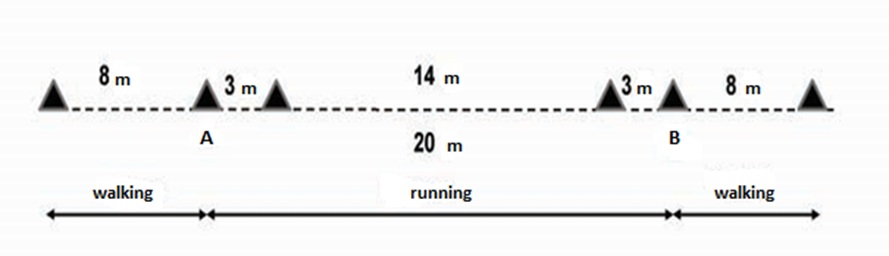
Figure 1. IRST test
During the test, at least one coach is required for every four players. Coaches monitor correct execution, record distances covered, and provide standardized encouragement.
To determine players’ physical development, data was collected on three morphological indicators – height, weight, and age – and computed BMI, as well as it extracted the main IRST parameters: speed (km/h), number of runs per stage, and total number of runs.
All data were mathematically and statistically processed using a specialised computer program IBM “SPSS 19” and “Excel”. Depending on the study aims, the Kolmogorov–Smirnov test and the index method were applied.
- Results and Discussion
In the athletes from both teams, age was uniform: all 44 players (22 per team) were 16 years old.
For FC “Barocco”, body mass ranged from 53 to 86 kg, with a mean of 69.4 kg (Figure 2) and a range of 33 kg. The standard deviation was 8.07 kg, and the coefficient of variation was V = 11.63%, indicating a homogeneous sample (V < 12%). According to the Kolmogorov–Smirnov (K–S) test, the distribution was normal (Sig > 0.05). The skewness and kurtosis coefficients also supported normality (As = 0.01 < 0.927; Ex = −0.35 < 1.803) for a sample size of n = 22 (Table 1).
In the studied athletes from FC “Dimitrovgrad”, the minimum recorded weight value is 55 kg, and the maximum 77 kg. The range is 22 kg. The average value that was calculated is 64.8 kg (Figure 2), and the standard deviation is 6.08 kg. The coefficient of variation is V=9.38, which shows that the sample is homogeneous (V < 0-12%). According to the Kolmogorov-Smirnov (K-S) test, the distribution of the values is normal (Sig > 0.05). Here too, the coefficients of asymmetry and kurtosis show that the distribution of the trait is normal (As = 0.17 < 0.927 and Ex = -0.94 < 1.803) with a sample size of n=22 (Table 1).
Table 1. Weight of the studied football players (kg)
| Weight (kg) | |||||||||||
| № | Club | n | Хmin | Xmax | R | X̅ | S | V | As | Ex | K-S |
| 1 | Barocco | 22 | 53.0 | 86.0 | 33.0 | 69.4 | 8.07 | 11.63 | 0.01 | -0.35 | 0.20 |
| 2 | Dimitrovgrad | 22 | 55.0 | 77.0 | 22.0 | 64.8 | 6.08 | 9.38 | 0.17 | -0.94 | 0.20 |
Note: The critical values of the skewness and kurtosis coefficients at n=22 and
α=0.05 are equal to 0.927 and 1.803
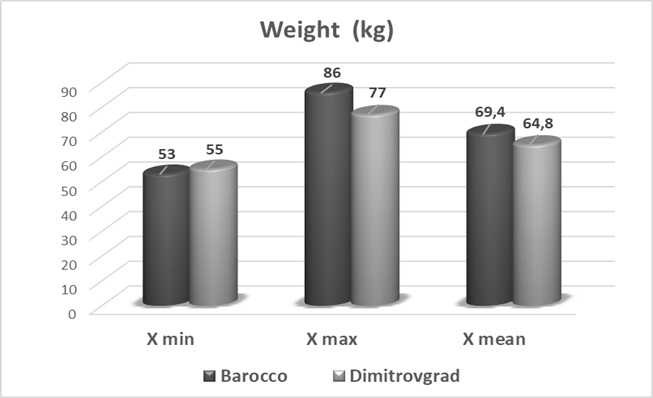 Figure 2. Weight values of the studied football players
For FC “Barocco”, stature ranged from 165 to 190 cm, with a mean of 179.1 cm (Figure 3) and a range of 25 cm. The standard deviation was 6.36 cm. Skewness and kurtosis were below their critical values (As = −0.31 < 0.927; Ex = 0.49 < 1.803) with a sample size of n = 22 (Table 2).
For FC “Dimitrovgrad”, stature ranged from 164 to 192 cm, with a mean of 176.3 cm (Figure 3) and a range of 28 cm. The standard deviation was 7.0 cm. Skewness and kurtosis were below their critical values (As = 0.27 < 0.927 and Ex = 0.01 < 1.803) with a sample size of n = 22 (Table 2).
The coefficient of variation (V) for height was 3.55% in FC “Barocco” and 3.97% in FC “Dimitrovgrad,” indicating homogeneity in both groups (V < 10 – 12%). The Kolmogorov–Smirnov test also supported normal distributions in both teams (Sig > 0.05).
Table 2. Height of the studied football players (cm)
| Height (cm) | |||||||||||
| № | Club | n | Хmin | Xmax | R | X̅ | S | V | As | Ex | K-S |
| 1 | Barocco | 22 | 165.0 | 190.0 | 25.0 | 179.1 | 6.36 | 3.55 | -0.31 | 0.49 | 0.20 |
| 2 | Dimitrovgrad | 22 | 164.0 | 192.0 | 28.0 | 176.3 | 7.00 | 3.97 | 0.27 | 0.01 | 0.20 |
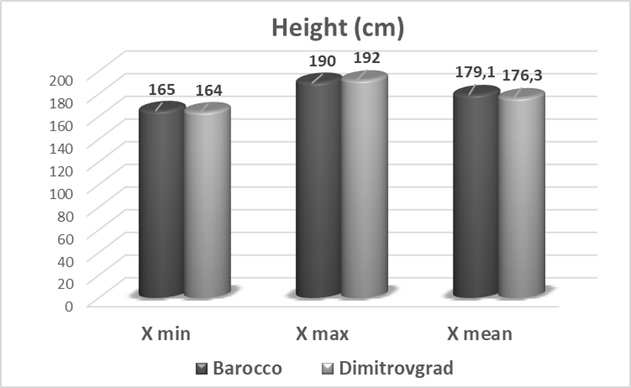
Figure 3. Height values of the studied football players
For FC “Barocco”, BMI ranged from 19.0 to 25.1 (kg)/(m²), with a mean of 21.6 (Figure 4) and a range of 6.1. The standard deviation was 1.86, and the coefficient of variation was V = 8.60%, indicating a homogeneous sample (V < 10 – 12%). The Kolmogorov–Smirnov (K–S) test indicated normality (Sig > 0.05). Skewness and kurtosis were within critical bounds (As = 0.80 < 0.927 and Ex = −0.37 < 1.803) with a sample size of n = 22 (Table 3).
For FC “Dimitrovgrad”, BMI ranged from 19.0 to 23.1 (kg)/(m²), range = 4.1, with a mean of 20.8 (Figure 4) and a standard deviation of 1.20. The coefficient of variation was V = 5.77%, indicating a homogeneous sample (V < 10 – 12%). The Kolmogorov–Smirnov (K–S) test indicated normality (Sig > 0.05). Skewness and kurtosis were within critical bounds (As = 0.21 < 0.927 and Ex = −0.99 < 1.803) with a sample size of n = 22 (Table 3).
Table 3. BMI of the studied football players
| BMI ((kg)/(m)2) | |||||||||||
| № | Club | n | Хmin | Xmax | R | X̅ | S | V | As | Ex | K-S |
| 1 | Barocco | 22 | 19.0 | 25.1 | 6.1 | 21.6 | 1.86 | 8.60 | 0.80 | -0.37 | 0.14 |
| 2 | Dimitrovgrad | 22 | 19.0 | 23.1 | 4.1 | 20.8 | 1.20 | 5.77 | 0.21 | -0.99 | 0.11 |
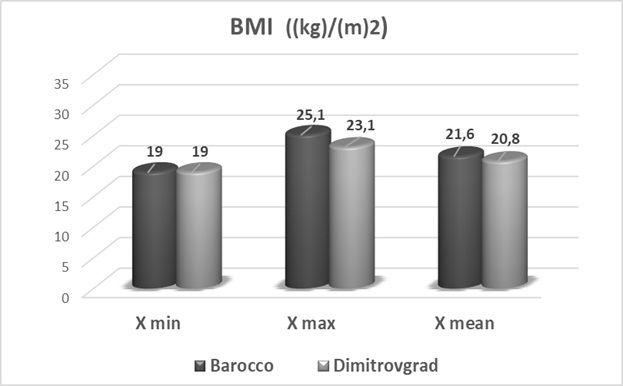
Figure 4. BMI values in the studied football players
For FC “Barocco”, the mean number of shuttles completed on the IRST was 86.30 (corresponding to 15.00 km/h). The minimum was 62 shuttles (14.00 km·h⁻¹) and the maximum was 117 shuttles (16.00 km·h⁻¹). The standard deviation was 12.37 shuttles. Skewness and kurtosis were within critical bounds (As = 0.59 < 0.927 and Ex = 0.91 < 1.803) with a sample size of n=22 (Table 4).
For FC “Dimitrovgrad”, IRST performance ranged from 64 to 110 shuttles (14.00–16.00 km/h). The mean was 79.9 shuttles (15.00 km/h) with a standard deviation of 10.47. Skewness was within the critical bound (As = 0.82 < 0.927), whereas kurtosis exceeded it (Ex = 2.15 > 1.803), indicating a leptokurtic distribution with results concentrated more tightly around the mean (Table 4 and Figure 5).
The coefficient of variation (V) for IRST performance was 14.32% in FC “Barocco” and 13.10% in FC “Dimitrovgrad”, indicating broadly comparable variability between teams (10% < V < 30%). The Kolmogorov–Smirnov test supported normal distributions in both groups (Sig > 0.05).
Table 4. IRST values in the studied football players (number of runs)
| IRST (number of runs) | |||||||||||
| № | Club | n | Хmin | Xmax | R | X̅ | S | V | As | Ex | K-S |
| 1 | Barocco | 22 | 62.0 | 117.0 | 55.0 | 86.3 | 12.37 | 14.32 | 0.59 | 0.91 | 0.20 |
| 2 | Dimitrovgrad | 22 | 64.0 | 110.0 | 46.0 | 79.9 | 10.47 | 13.10 | 0.82 | 2.15 | 0.20 |
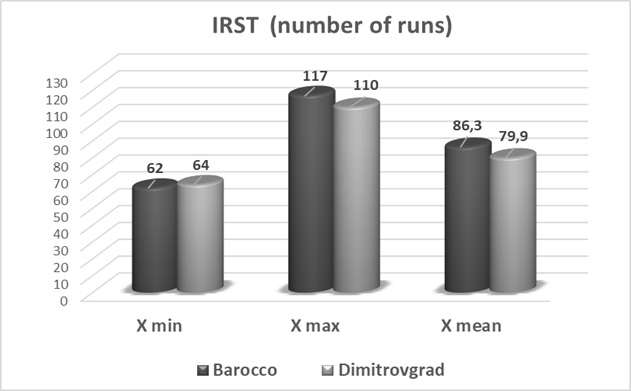
Figure 5. IRST values in the studied football players
- Conclusion
Regarding the height of the studied athletes, differences were registered in favor of the athletes from FC “Barocco”. The average value of the athletes from FC “Barocco” is 179.1 cm, and that of the athletes from FC “Dimitrovgrad” is 176.3 cm. In relation to the weight of the studied athletes, it turns out that those from FC “Barocco” have higher values (69.4 kg) than those from FC “Dimitrovgrad” (64.8). One of the reasons for the difference of 4.6 kg may be due to the lower height of the athletes from FC “Dimitrovgrad”. In terms of BMI, the average value of the athletes from the FC “Barocco” team is 21.6, and that of those from FC “Dimitrovgrad” is 19.
Using the IRST, we assessed the current aerobic capacity of both teams, with an advantage for FC “Barocco”: the mean number of shuttles was 86.30 versus 79.9 for FC “Dimitrovgrad”. The minimum values were similar between teams (62 shuttles for FC “Barocco” and 64 shuttles for FC “Dimitrovgrad”).
FC Barocco’s players showed a higher IRST score (86.30) and a wider range of results, suggesting good overall fitness but also greater within-team heterogeneity—some players complete substantially more shuttles while others lag behind. FC Dimitrovgrad’s players had a lower mean (79.9) with smaller dispersion; however, the elevated kurtosis (Ex = 2.15) indicates a sharp, leptokurtic distribution in which most players cluster near the mean and a few outliers (very high or very low) fall beyond typical bounds.
Based on previous research, the minimum values observed here are relatively low, likely due to the inclusion of goalkeepers and the positional demands of their role. The maximum values were 117 shuttles for Barocco and 110 for Dimitrovgrad. The teams’ mean IRST scores (≈79–86 shuttles) fall within the reported average range for U-17 players (74–91 shuttles), while the maximum scores (110–117) align with a “very high” classification (>108 shuttles) when compared with the findings of Krum Lovkov (2018).
Based on the study of U-16 players from two Bulgarian teams located roughly 220 km apart, FC “Barocco” fielded larger players on average, which is associated with higher mean physical output but may warrant stricter individualized nutritional oversight. FC “Dimitrovgrad” players were lighter, more compact, and more uniform, which facilitates standardized group training loads; however, additional physical reserves may be developed in some individuals.
Briefly segmenting each team into subgroups, then applying targeted interventions in strength, interval running, and nutrition – followed by gradual reintegration and continuous monitoring – can reduce internal disparities and build a stable, homogeneous physical base without compromising athletes’ individual strengths.
By optimizing and targeting the training process to improve the players’ aerobic capacity, both teams can achieve greater homogeneity in physical condition across the studied indicators.
Acknowledgement
This study is financed by the European Union-NextGenerationEU, through the National Recovery and Resilience Plan of the Republic of Bulgaria, project No BG-RRP-2.004-0008.
REFERENCES
Asimakidis, N. D., Bishop, C., Beato, M., & Turner, A. N. (2025). Assessment of Aerobic Fitness and Repeated Sprint Ability in Elite Male Soccer: A Systematic Review of Test Protocols Used in Practice and Research. Sports Medicine, 55(5), 1233 – 1264. https://doi.org/10.1007/s40279-025-02188-4.
Atanasov, E. (2013). In the world of women’s football. NSA Press. ISBN 978-954-718-360-5. [In Bulgarian]
Atanasov, E., G. Ignatov, K. Lovkov (2019). Comparative analysis of physical condition of Sofia University’s student football team and Elite team U-19 PFC “Beroe”, Stara Zagora. Activities in physical education and sport, 9(1 – 2), 3 – 6. https://fsprm.mk/apes2019-vol-9-no-1-2/.
Bangsbo, J., Iaia, F. M., & Krustrup, P. (2008). The Yo-Yo intermittent recovery test: A useful tool for evaluation of physical performance in intermittent sports. Sports Medicine, 38, 37 – 51. https://doi.org/10.2165/00007256-200838010-00004.
Bosco, C., Luhtann, P. & Komi, P. V. (1983). A simple method for measurement of mechanical power in jumping. European Journal of Applied Physiology and Occupational Physiology, 50, 273 – 282. https://doi.org/10.1007/BF00422166.
Buchheit, M., & Mendez-Villanueva, A. (2013). Reliability and stability of anthropometric and performance measures in highly-trained young soccer players: Effect of age and maturation. Journal of Sports Sciences, 31(12), 1332 – 1343. https://doi.org/10.1080/02640414.2013.781662.
Deprez, D., Fransen, J., Boone, J., Lenoir, M., Philippaerts, R. M., & Vaeyens, R. (2015). Characteristics of high-level youth soccer players: Variation by playing position. Journal of Sports Sciences, 33(3), 243 – 254. https://doi.org/10.1080/02640414.2014.934707.
Helgerud, J., Engen, L. C., Wisloff, U., & Hoff, J. (2001). Aerobic endurance training improves soccer performance. Medicine and Science in Sports and Exercise, 33(11), 1925 – 1931. https://doi.org/10.1097/00005768-200111000-00019.
Hoff, J., Wisloff, U., Engen, L. C., Kemi, O. J., & Helgerud, J. (2002). Soccer specific aerobic endurance training. British Journal of Sports Medicine, 36(3), 218 – 221. https://doi.org/10.1136/bjsm.36.3.218.
Ignatov, G. (2016). Testing the physical fitness of the student football team of Sofia University. Proceedings of Eighth International Scientific Conference “Modern Trends in Physical Education and Sports”, 16 – 23. [In Bulgarian]
Ignatov, G., & Atanasov, E. (2017). Control and assessment of the physical capabilities of the student football teams of the Sofia University and the National Sports Academy. Research in Kinesiology, 45(1), 45 – 48. https://fsprm.mk/rik2017-vol-45-no-1/.
Krustrup, P., Mohr, M., Amstrup, T., Rysgaard, T., Johansen, J., Steensberg, A., Pedersen, P. K., & Bangsbo, J. (2003). The Yo-Yo intermittent recovery test: Physiological response, reliability, and validity. Medicine & Science in Sports & Exercise, 35(4), 697 – 705. https://doi.org/10.1249/01.MSS.0000058441.94520.32.
Lovkov, K. (2018). Assessment of the physical capabilities of football players from the U-17 age group. Sport and Science, 62(3), 55 – 59. [In Bulgarian].
Margaria, R., Aghemo, P., & Rovelli, E. (1966). Measurement of muscular power (anaerobic) in man. Journal of Applied Physiology, 21(5), 1662 – 1664. https://doi.org/10.1152/jappl.1966.21.5.1662.
Miller, M. G., Herniman, J. J., Ricard, M. D., Cheatham, C. C., & Michael, T. J. (2006). The effects of a 6-week plyometric training program on agility. Journal of Sports Science & Medicine, 5(3), 459 – 465.
Mohr, M., Krustrup, P., & Bangsbo, J. (2003). Match performance of high-standard soccer players with special reference to development of fatigue. Journal of Sports Sciences, 21(7), 519 – 528. https://doi.org/10.1080/0264041031000071182.
Reilly, T., Bangsbo, J., & Franks, A. (2000). Anthropometric and physiological predispositions for elite soccer. Journal of Sports Sciences, 18(9), 669 – 683. https://doi.org/10.1080/02640410050120050.
Stoyanov, S. I., Georgiev, V. G., Madanski, M. N., Simov, B. F. & Shishkov, A. S. (1992). Football – a textbook for students of the National Academy of Sciences. Medicina i fizkultura. ISBN 954-420-091-6. [In Bulgarian]
Stølen, T., Chamari, K., Castagna, C., & Wisløff, U. (2005). Physiology of soccer: An update. Sports Medicine, 35(6), 501 – 536. https://doi.org/10.2165/00007256-200535060-00004.
Thorpe, R. T., Strudwick, A. J., Buchheit, M., Atkinson, G., Drust, B., & Gregson, W. (2015). Monitoring fatigue during the in-season competitive phase in elite soccer players. International Journal of Sports Physiology and Performance, 10(8), 958 – 964. https://doi.org/10.1123/ijspp.2015-0004.
Van Hooren, B., & Peake, J. M. (2018). Do we need a cool-down after exercise? A narrative review of the psychophysiological effects and the effects on performance, injuries and the long-term adaptive response. Sports Medicine, 48, 1575 – 1595. https://doi.org/10.1007/s40279-018-0916-2.
Zhelyazkov, T. & Dasheva, D. (2006). Fundamentals of sports training. Gera Art. ISBN 954-90510-9-9. [In Bulgarian].