

Dr. Zlatka Dimitrova, Assoc. Prof.
ORCID iD: 0000-0001-7392-4480
WoS Researcher IDKFS-0106-2024
Department of Physical Education and Sport
Burgas State University “Prof. Dr. Assen Zlatarov”
Burgas, Bulgaria
Email: dimitrova.zlatka@yahoo.com
https://doi.org/10.53656/ctpes-2026.ZD

Pages 166-174
Abstract. The article examines the Golden Age Gym Festival (GAGF) as a form of social inclusion and a way to promote physical activity among participants aged 50 and over. The analysis is based on data from two consecutive editions of the festival, held in Madeira (2022) and Burgas (2024), using field observations and participant surveys to explore social effects, emotional experiences and levels of physical activity. The data is processed with static analysis.
GAGF is an international non-competitive festival, organized every two years by the European Gymnastics Federation. The festival has gathered more than 3,200 people over the years, with approximately 1,400 – 1,600 participants from 18 – 19 countries participating in the last edition in Burgas. The program is rich in diverse activities and includes daily physical activity workshops, an educational health forum and thematic cultural events. Participants have the opportunity to learn new forms of physical activity, exchange experiences and get acquainted with the culture of the host country.
The results of the analysis show that GAGF effectively supports active aging by strengthening social ties and enhancing a sense of community. In the Burgas edition, the average age of participants was 67.1 years, with women making up 85% of the sample. The results also indicate that participation in the festival contributes to increased motivation for physical activity, improved well-being and sustainable social engagement among older people.
Keywords: active ageing; older adults; social inclusion; physical activity
1. Introduction
Europe’s and the world’s population is aging rapidly, bringing increased focus to the concept of active aging process of optimizing the health, social, and physical capabilities of older adults (Bull et al., 2020). This approach extends beyond healthy longevity to include social participation and the maintenance of a meaningful life in later adulthood (Murgova, 2019). Recognizing the urgency of these demographic changes, the World Health Organization has declared the period 2021 – 2030 as the Decade of Healthy Ageing, highlighting the need to ensure meaningful lives, active participation in society and regular physical activity for older people (QASP, 2021). Regular physical activity plays a central role in healthy ageing. The World Health Organization recommends that older adults engage in 150 – 300 minutes of moderate-intensity aerobic activity per week to support overall health and functional independence (World Health Organization, 2019). These recommendations are vital but are not followed by a large proportion of older adults. Bulgaria is an example of a country with one of the lowest levels of physical activity in Europe, with only approximately 11% of adults achieving the minimum recommended 150 minutes per week (Vazova et al., 2025). These findings highlight the need for effective interventions aimed at promoting physical activity among the aging population. Inactivity in later life is associated with an increased risk of chronic diseases, functional decline and reduced quality of life (Tcymbal et al., 2022).
Social well-being and social connectedness are also important dimensions of healthy ageing. Social isolation and loneliness are recognised as major risk factors for people aged 50–60 and above, especially after retirement and the loss of established social roles. Insufficient social engagement can lead to a reduced quality of life and deterioration in both mental and physical health. According to social capital theory (Putnam, 2000), participation in community groups improves individual well-being by promoting emotional support, learning opportunities and a sense of belonging. In this context, informal sports initiatives, such as dance clubs, hiking groups or festivals for older participants, can serve as vital social networks. Through these activities, older people establish new relationships, maintain a sense of purpose and remain actively engaged in their communities.
The Golden Age Fitness Festival (GAGF) is an event that purposefully integrates the two dimensions of active ageing: physical activity and social inclusion. Launched in 2008 by the European Gymnastics Federation, GAGF was specifically designed for adults aged 50 and over. The festival is open to all European federations that are members of European Gymnastics. Over time, the festival has evolved beyond its initial recreational focus, offering participants opportunities to engage in new forms of physical activity and to build lasting social connections. The participants are gymnastic and dance formations from all over the world, who present their own choreographies on a large stage in front of a large audience. What is important for the GAGF festival is not the demonstration of high sportsmanship, but the joy of movement, shared experiences and intercultural exchange. This unique combination of physical engagement and social connection positions GAGF as a promising and sustainable model for promoting active ageing and social integration among older people.
2. Methodology
This study analyzes the role of the Golden Age Gym Festival (GAGF) as a model for social inclusion and physical activity promotion among people over 50 years of age. The methodology is based on a combined approach including the analysis of field observations and questionnaire surveys from two consecutive editions of the festival: the 8th GAGF held in Madeira, Portugal (2022), which hosted 1573 participants from 18 countries, and the 9th festival in Burgas, Bulgaria (2024), with 1414 participants from 19 countries. The sustained interest in the festival, observed especially after the COVID-19 pandemic, highlights the necessity and significance of the event for the community of people of mature age. The study applies an autoethnographic method, based on the analysis of the author’s personal experience and observations, as an active participant in both editions of the festival with increasing levels of participation. During the Madeira Festival (2022), the author was the head of a Bulgarian delegation, receiving first-hand information about the participants’ experiences. In the Burgas edition (2024), the author took on a dual role: as a member of the Organizing Committee and as a team leader of three Bulgarian groups, consisting of a total of 51 participants. This role of inside researcher provides in-depth access to the organizational processes and authentic perspectives of the participants, allowing for systematic observation combined with immersive engagement in the festival community.
Observations on private individuals (Madeira 2022 and Burgas 2024) focused on the structure and diversity of festival activities (movement workshops, stage performances, educational forums, thematic and cultural events), the level of engagement and behavior of participants, social interactions within teams at national and international delegation level, as well as the overall emotional atmosphere and expressions of enthusiasm. Field notes documented spontaneous interactions, mutual support and indicators of intercultural exchange and social cohesion.
An anonymous survey included 128 Bulgarian participants aged 53 – 75 years (M = 67.1, SD = 6.3), of whom 85% were women. The instrument comprised five sections: demographic characteristics; previous experience with physical activity and sport; motivations for participation, including socialization, health improvement, and enjoyment; self-assessment of expected changes in future physical activity; and perceived social inclusion and sense of belonging, measured on a 5-point Likert scale. Semi-structured interviews involved 31 Bulgarian participants (27 women and 4 men) aged 58 – 72 years from different cities. Open-ended questions addressed participants’ experiences during the festival, the formation of new social connections, the sense of community belonging, comparisons with other forms of physical activity, and the perceived impact on well-being. The analysis of two consecutive festival editions drew on official newsletters and publications of the European Gymnastics Federation, which provided data on participant numbers, represented countries, cultural events, gymnastic performances, and the overall structure of the program. The theoretical framework is based on the scientific literature on active aging, the social effects of physical activity in older people, and the search for models for their improvement.
3. Results
The data from the survey among 128 Bulgarian participants reveal a profile dominated mainly by women (85%) with an average age of around 67 years (SD – 6.3). It is striking that 72% of the respondents already have experience with sports or physical activities (Tablе 1). This shows that the festival audience does not consist of complete beginners, but rather of people with a lasting interest in maintaining an active lifestyle.
Table 1. Demographic profile
| Indicator | Value |
| Mean age (in years), M±SD | 67.1±6.3 |
| Women (%) | 85% |
| Prior physical activity experience (%) | 72% |
The largest share of respondents indicates the pure pleasure of movement (91%), followed by the opportunity for social contact (88%) and health care (76%). These results confirm that GAGF attracts older people not only with its functional benefits for physical condition, but also with its strong social element and emotional satisfaction (Fig. 1).
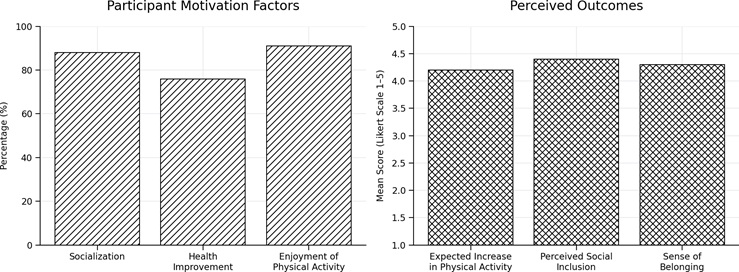
Figure 1. Participant Motivation Factors and perceived Outcomes
The qualitative analysis of semi-structured interviews with 31 respondents from the GAGF 2024 in Burgas identified five key thematic areas reflecting participants’ lived experiences, motivations, and perceived social impact of the festival. The most frequently reported theme was emotional impact and satisfaction (n = 31), indicating a strong positive emotional response to participation. New social connections were also widely reported (n = 28), highlighting the role of the festival in fostering interpersonal relationships. Increased motivation for movement was identified by 25 participants, suggesting a positive influence on future physical activity behavior. Intercultural interaction was mentioned by 22 respondents, emphasizing the importance of cross-cultural exchange. Finally, 19 participants compared the festival experience with other forms of physical activity, underlining its distinctive and multifaceted nature.
The most frequently reported theme was emotional impact and satisfaction (n = 31), suggesting a strong positive influence of the festival on emotional well-being. Participants described experiences of inspiration and renewed vitality, often referring to the event as a meaningful stage of life after the age of 60 and as a celebration of movement and personal expression. These accounts highlight the transformative potential of the festival.
“New social connections” emerged as the second most cited theme (n = 28), underscoring the socially inclusive function of GAGF. Interviewees reported forming lasting friendships within national teams as well as across countries, which enhanced their sense of belonging and created connections that often extended beyond the event itself.
“Increased motivation for movement” (n = 25) reflected the inspiring effect of participating in workshops and public performances. Many participants expressed their intention to continue their physical activity after the festival, to join local gymnastics clubs or to share their experiences with their friends. The responses “intercultural interaction” (n = 22) and “comparison with other physical activities” (n = 19) highlighted that GAGF provides a distinctive blend of movement and community engagement. The qualitative analysis of the structure and content of the GAGF program is based on official documents (European Gymnastics in the Event Guide) as well as the author’s autoethnographic experience as a participant and organizer. The core of the program is the urban performances, which are outdoor stage performances by each group in central city locations. The performances include a diverse range of choreographies, costumes, music and original gymnastics-based creative performances that reflect the identity of each team. This public performance affirms the value of movement as a form of communication, cultural exchange and shared emotional experience.
The closed workshops require prior registration and often involve specialized equipment, such as step aerobics, rhythmic gymnastics, paddle boarding, water gymnastics, kayaking, golf, acrobatics, and PBOXX. These sessions provide structured motor skill development, led by expert facilitators, and support participants’ physical learning.
The open workshops are freely accessible and spontaneous, typically featuring inclusive movement activities like Zumba, folk and social dances, salsa, and bachata. They encourage joyful participation and informal social bonding. The open workshops are led by experienced and internationally recognized professionals in dance and movement education, ensuring methodological soundness, safety, and inclusive engagement for participants of varying abilities.
The educational forum, a mandatory component of each edition, provides lectures and discussions on topics related to healthy ageing, disease prevention, and psychological well-being. This element adds a reflective and knowledge-based layer to the festival experience.
Each festival also features a collective flashmob and an official motto that encapsulates its message. At GAGF 2024 in Burgas, the motto was: “Let the Motion Express Emotion! “Emphasizing movement as a means of emotional expression, identity, and connection.
Cultural activities, city orienteering, and excursions offer participants opportunities to explore the host city, connect with its cultural landscape, and engage in playful, interactive experiences.
Finally, informal social contact, spontaneous conversations, and shared downtime among teams help to build lasting relationships. These interpersonal dynamics are essential for sustaining motivation and reinforcing social inclusion among older adults.
4. Discussion
The results of this study confirm the importance of community-based movement initiatives in promoting active ageing, as highlighted in previous research (Salvo et al., 2021; WHO, 2020). However, the results also provide empirical and experiential evidence that the specific format of the Golden Age Gym Festival (GAGF) offers added value beyond regular physical activity programs. Based on survey data, participant observations and the author’s direct involvement in both editions of the festival, the GAGF creates a supportive environment that encourages continued engagement in physical activity. Many participants were physically active during the event and expressed strong motivation to continue movement-related activities after returning home. Proof of this is the preparation of more than one hundred participants from Burgas, Varna, Mezdra and Shumen for the tenth edition of the festival in October 2026 in Le Sable-d’Olonne, France. This suggests that the festival is motivating and sustainable and is not perceived as a short-term entertainment experience.
One of the distinctive strengths of GAGF lies in its non-competitive structure. Unlike traditional sports competitions, which emphasize the results of the performance, the festival prioritizes pleasure, creativity and collective participation on stage. From the author’s point of view, both as a participant and as an organizer, this lack of pressure from the performance allowed the participants to engage more freely, to experiment during the performances on stage with non-standard equipment (suitcases, spoons, towels, etc.) and to express individual and group identity without fear of evaluation. This atmosphere is consistent with inclusive physical education models that emphasize enjoyment and social connection as key drivers of participation (Bull et al., 2020).
The variety of movement workshops and performances on stage in front of city guests further contributed to the participants’ sense of meaningful, quality, and independent lives. Movement workshops offered structured opportunities to acquire new skills under expert guidance, while public performances provided meaningful moments of visibility and collective achievement. Observations from both editions showed that participants often referred to these performances as emotionally significant milestones rather than demonstrations of technical excellence. This underscores the symbolic and motivational role of public representation in physical activity in later life.
Both the survey results and the interview data confirm the strong social dimension of performers in the Golden Age Gym Festival. Socialization was cited as a primary motivation by more than 88% of respondents, indicating that the desire for social contact was at least as important as the physical activity itself. This result was consistently supported during interviews, where participants often described the festival not only as a sporting event, but also as a meaningful social experience.
From the author’s direct observation and interaction with performers during the Madeira (2022) and Burgas (2024) editions, social connections developed rapidly and extended beyond the formal program activities. Informal conversations, shared meals, and collective preparation before city performances functioned as important spaces for relationship building. Many participants cited these moments as being just as valuable as workshops, suggesting that social inclusion emerged through daily interaction, not just through a structured intervention.
These results are supported by Putnam’s (2000) social capital theory, which emphasizes that shared activities foster trust and social cohesion. In this context, GAGF can be interpreted as a form of social capital, as it connects people from different regions, countries and cultural backgrounds through a collective experience of movement. The international nature of the festival enhanced this effect, as participants often expressed a sense of pride in representing their local group while also belonging to a wider transnational community. The interview data further highlighted the emotional importance of belonging. All interviewed participants (31/31) mentioned strong positive emotions associated with participation, including feelings of acceptance, recognition and renewed self-esteem. Several respondents described the festival as a “life-changing” experience, particularly in terms of overcoming loneliness and regaining a sense of purpose after retirement. Such claims suggest that belonging through movement is not simply a secondary outcome, but a central mechanism through which GAGF influences well-being.
The non-competitive structure of the festival played a key role in facilitating this social climate. By eliminating rankings and comparisons of achievements, the festival reduced the social hierarchies often present in traditional sports environments. Participants of different abilities could engage in an equal footing, which encouraged mutual support rather than judgment. From the author’s perspective, this inclusive atmosphere allowed participants to feel seen and valued, regardless of their level of physical ability or age restrictions.
Furthermore, collective performances in public urban spaces reinforced a shared sense of identity. “City Performances” transformed private group training into a visible social act, enhancing both internal group cohesion and external recognition. Groups often described these moments as affirming, as they challenged stereotypes about aging bodies and demonstrated active participation in public life.
The participant profile shows a clear predominance of women, who constituted 85% of the surveyed sample. This distribution reflects European trends indicating higher female participation in non‑competitive and socially oriented physical activity in later life (Eurostat, 2022; Foster & Walker, 2015). Although men also participated, their proportion remained relatively low. Informal conversations suggested that some felt less comfortable with the expressive and performative character of certain activities. This observation points to the need for future research and program adaptation aimed at increasing male engagement while preserving the inclusive, non‑competitive ethos of the festival.
- Conclusion
This study examines the Golden Age Gym Festival (GAGF) as a comprehensive model for promoting physical activity and social inclusion among adults aged 50 and over. Based on quantitative and qualitative data from two consecutive editions, Madeira (2022) and Burgas (2024), the analysis indicates that the festival format supports key principles of active ageing outlined in international frameworks.
The results point to meaningful physical engagement among participants, accompanied by increased motivation for continued activity and a stronger sense of belonging and emotional well-being. The non-competitive and inclusive structure of the festival, with its emphasis on city performances, intercultural workshops, and social interaction, creates conditions that address both the physical and psychosocial aspects of ageing.
The festival also provides a platform for women’s participation and leadership in later life, reflecting broader gender-related patterns in community-based physical activity. Insights drawn from the author’s direct involvement further underline the importance of lived experience in understanding how older adults engage with and benefit from such initiatives.
The upcoming 10th edition of the GAGF, scheduled for 2026 in Les Sables-d’Olonne, France, further underscores the continuity and success of this model. Its sustained implementation over nearly two decades suggests that GAGF is not only an innovative but also a viable and scalable strategy for enhancing quality of life among older citizens across Europe.
As societies face the complex challenges of demographic ageing, the GAGF model offers a compelling framework that blends physical activity, culture, education, and social connection. Future research should explore how such approaches can be adapted at local and national levels to ensure broader access, long-term sustainability, and inclusive health promotion for the ageing population.
Acknowledgement
This research was supported by Contract NIH-519/2025 “Models for Promoting an Active and Dignified Life for Post-Retirement Women through Physical Activity and Social Inclusion”, funded by Burgas State University “Prof. dr. Assen Zlatarov”.
NOTES
- https://www.europeangymnastics.com
- https://www.europeangymnastics.com/event/2024-golden-age-gym-festival-burgas-bul/downloads
- https://backend.europeangymnastics.com/sites/default/files/paragraph/document/GAGF_2022_Event%20Guide.pdf
REFERENCES
Braun, V., & Clarke, V. (2006). Using thematic analysis in psychology. Qualitative Research in Psychology, 3(2), 77 – 101. https://doi.org/10.1191/1478088706qp063oa.
Bull, F. C., Al-Ansari, S. S., Biddle, S., Borodulin, K., Buman, M. P., Cardon, G., Carty, C., Chaput, J. P., Chastin, S., Chou, R., Dempsey, P. C., DiPietro, L., Ekelund, U., Firth, J., Friedenreich, C. M., Garcia, L., Gichu, M., Jago, R., & Katzmarzyk, P. T. (2020). World Health Organization 2020 guidelines on physical activity and sedentary behaviour. British Journal of Sports Medicine, 54(24), 1451 – 1462. https://doi.org/10.1136/bjsports-2020-102955.
Deci, E. L., & Ryan, R. M. (2000). The “what” and “why” of goal pursuits: Human needs and the self-determination of behavior. Psychological Inquiry, 11(4), 227 – 268. https://doi.org/10.1207/S15327965PLI1104_01.
Eurostat. (2022). Sport participation statistics. European Commission. https://ec.europa.eu/eurostat/statistics-explained/index.php?title=Statistics_on_sport_participation.
Foster, L., & Walker, A. (2015). Active and successful aging: A European policy perspective. The Gerontologist, 55(1), 83 – 90. https://doi.org/10.1093/geront/gnu028.
Marques, A., Peralta, M., Martins, J., Loureiro, V., Almanzar, P. C., & de Matos, M. G. (2025). Health behaviors in the context of optimism and self-efficacy: The role of gender differences. Behavioral Sciences, 15(5), Article 626. https://doi.org/10.3390/bs15050626.
Murgova, M. (2019). Active ageing and active ageing index. Scientific Works of the Union of Scientists in Bulgaria – Plovdiv, Series A: Social Sciences, Art and Culture, 5.
Putnam, R. D. (2000). Bowling alone: The collapse and revival of American community. Simon & Schuster.
QASP Research. (2021). Decade of healthy ageing 2020–2030: Good health adds life to years. https://qaspresearch.wixsite.com/blog/post/decade-of-healthy-ageing-2020-2030-good-health-adds-life-to-years.
Salvo, D., Garcia, L., Reis, R. S., Stankov, I., Goel, R., Schipperijn, J., Hallal, P. C., Orzanco-Garralda, R., & Pratt, M. (2021). Physical activity promotion and the United Nations sustainable development goals: Building synergies to maximize impact. Journal of Physical Activity and Health, 18(10), 1163 – 1180. https://doi.org/10.1123/jpah.2021-0413.
Tcymbal, A., Abu-Omar, K., Hartung, V., Bußkamp, A., Comito, C., Rossmann, C., Meinzinger, D., & Reimers, A. K. (2022). Interventions simultaneously promoting social participation and physical activity in community-living older adults: A systematic review. Frontiers in Public Health, 10, Article 1048496. https://doi.org/10.3389/fpubh.2022.1048496.
Vazova, T., Vazov, R., & Radev, V. (2025). Active aging among the elderly and its economic and social consequences in Bulgaria. Jurnal Ilmiah Ilmu Terapan Universitas Jambi, 9(3), 1037 – 1054. https://doi.org/10.22437/jiituj.v9i3.42957.
World Health Organization. (2019). Global action plan on physical activity 2018 – 2030: More active people for a healthier world.
World Health Organization. (2020). UN Decade of Healthy Ageing: Plan of action 2021 – 2030. https://www.who.int/publications/m/item/decade-of-healthy-ageing-plan-of-action.

Свързани статии:
 Eugenics and Euthanasia in Czechoslovakia (1914 – 1945): Historical, Social, and Educational Contexts
Control and Assessment of the Physical Capabilities of Football Players
Innovative Systems in Physical Education Teaching at the Level of Initial Education
Eccentric Hamstring Strength and Inter-limb Asymmetry in Non-professional Football Players
