


Dena Spyrou
Independent – affiliation not provided
https://doi.org/10.53656/str2026-1-8-app
Abstract. This article presents the results of a pedagogical experiment aimed at examining the effectiveness of the mathematical fairy tale as an instructional tool in fifth-grade mathematics education, with a particular focus on bilingual students. The study was conducted in a Bulgarian school and proceeded through three stages—diagnostic, formative, and evaluative. The diagnostic stage revealed low levels of mastery of mathematical terminology, limited ability to apply mathematical laws, low interest in the subject, and frequent discipline problems. In the formative stage, original mathematical fairy tales, aligned with the curriculum, were integrated into the lessons for the experimental group, serving introductory, explanatory, summarizing, and corrective functions, as well as an “adventure-test” function for assessment. The evaluative stage demonstrated a significant improvement in the experimental group compared to the control group across all established criteria: mastery and accurate use of abstract concepts, ability to apply mathematical formulas, and test performance. The study confirms the hypothesis that incorporating mathematical fairy tales into the learning process enhances instructional effectiveness, stimulates interest, leads to higher academic achievement, and positively changes students’ attitudes toward mathematics.
Keywords: mathematical fairy tale, mathematics teaching methodology, bilingual students, cross-curricular connections, motivation, academic achievement
Introduction
In many European countries and the United States, educators face a troubling trend: students are losing interest in learning and increasingly questioning the value of academic achievement for their future careers. This erosion of motivation is not limited to less popular subjects but extends even to traditionally prestigious fields such as medicine. For example, in the United States, 25% of medical school graduates repay their student loans over a period of six to ten years, while 34% expect repayment to take more than ten years. Such data undermine the perceived value of long-term educational investment.
If, in a highly regarded profession such as medicine, the return on investment is uncertain, mathematics is often perceived as even more detached from students’ real-life needs. Although it underpins numerous disciplines – including physics, computer science, and even music and the arts – it remains, for many students, an abstract and mandatory subject lacking an obvious connection to everyday life.
Within the Bulgarian educational system, the transition from primary to lower-secondary school – and particularly to the fifth grade – presents a complex pedagogical challenge. At this stage, students leave the stable and familiar learning environment in which a single primary teacher delivered all core subjects and enter a new structure with multiple subject teachers, each with distinct teaching styles and expectations. This institutional and organizational shift coincides with a critical stage in cognitive development: the transition from concrete to abstract thinking (ages 10 – 12). This stage requires the implementation of targeted, scientifically grounded, and methodologically precise approaches to pedagogical support.
Mathematics is inherently a highly abstract and conceptually demanding subject, posing difficulties even for students whose first language is Bulgarian. For bilingual students, these challenges are magnified. They encounter substantial obstacles in both oral and written mastery of the Bulgarian language. When working with word problems, students often comprehend only about one-third of the information presented, including what is given and what is required. The complex system of pronouns in Bulgarian – which is absent in Romani—further complicates the comprehension of problems involving textual components.
As a result of these linguistic and cognitive barriers, bilingual students often experience a sense of inadequacy in the learning process, which can diminish their interest in the subject matter and lead to boredom, irritability, or even aggression. This creates significant difficulties for teachers working in bilingual contexts – not only in delivering the material but also in maintaining discipline and fostering students’ cognitive engagement. The absence of adequate methodological tools and effective strategies for bilingual education contributes to an annual decline in learning motivation and an increase in the proportion of functionally illiterate students.
The relevance of this pedagogical study is determined by several key factors: declining learning motivation among fifth graders, increasing abstraction of the curriculum, changes in the organizational structure of teaching, low results on national external assessments, and the rising levels of functional illiteracy.
In response to these challenges – and driven by the need to introduce innovative teaching methods – the author chose to explore and apply the method of the mathematical fairy tale. This approach is well established in the educational systems of several European countries, including Finland, England, and Russia, and has demonstrated potential for improving academic outcomes and enhancing learning motivation.
Research Aim and Hypothesis
The primary aim of this pedagogical experiment was to test the hypothesis that the use of mathematical fairy tales in fifth-grade mathematics instruction – particularly with bilingual students – would:
- Increase learning motivation;
- Improve the acquisition of mathematical terminology;
- Support the development of more durable and sustainable knowledge;
- Lead to significantly higher academic performance.
The object of the study is the educational process and the possibilities for its enhancement through the integration of mathematical fairy tales.
The subject of the study is the mathematical fairy tale as a pedagogical tool and its potential to reduce the abstractness of mathematical concepts, facilitate the acquisition of terminology and mathematical knowledge, and improve students’ academic achievement.
Theoretical Framework
A mathematical fairy tale is a didactic narrative in which mathematical concepts and relationships are presented through a plot, featuring symbolic characters such as numbers, geometric shapes, mathematical signs, and operations. This narrative approach significantly reduces the degree of abstraction of the learning content, makes it more accessible and comprehensible to students, and stimulates their intrinsic motivation to learn.
As Simeonova–Ingilizova (2023) emphasizes, the use of didactic fairy tales in teaching fosters conditions for “informal learning,” in which new knowledge is acquired in a natural and engaging way. This aligns with the thesis that integrating narrative and game elements into the educational process enhances cognitive activity and promotes the long-term retention of material. The mathematical fairy tale, as a distinct subtype of the didactic tale, interlaces mathematical concepts and relationships into a storyline whose characters include numbers, geometric figures, symbols, and operations, thereby simultaneously supporting both cognitive and emotional development in students.
In several Western educational systems (e.g., the United States and certain European countries), similar narrative-based methods are already recognized as effective tools for building interdisciplinary connections and developing key competencies outlined in educational standards. From this perspective, the mathematical fairy tale should not be viewed merely as an alternative method for presenting content but as a means of enriching the learning process by integrating cognitive, emotional, and social dimensions of learning.
From the standpoint of constructivist learning theory, storytelling is a key mechanism for linking abstract concepts to the real world. As ELM Learning (2024) notes, “storytelling and real-world context” create meaningful and emotional connections that facilitate deep learning and support the transfer of knowledge to authentic situations. In this sense, the mathematical fairy tale provides a scaffolded situation in which the student becomes an active participant, applying newly acquired knowledge within a plot and problem that require a solution.
Modern educational standards, including those of the European Commission, emphasize the importance of interdisciplinary connections, the development of key competencies, and inclusive education. The mathematical fairy tale naturally contributes to achieving these goals by uniting logical, emotional, and aesthetic learning in alignment with competency-based education requirements.
Empirical evidence for the effectiveness of narrative approaches in mathematics instruction is found in the study by Charalambos Lemonidis and Ioanna Kaiafa (2019), mathematics teachers in Florina, Greece. In an experiment involving third-grade high school students (n = 76) divided into experimental and control groups, the authors found that the use of “target-focused teaching stories” led to significantly higher achievement in mastering fractions. They observe: “The students who benefited most from the use of storytelling were those with medium, especially, with low performance” (p. 177). Moreover, the method had a positive effect on specific mathematical skills – comparing fractions, finding equivalent fractions, creating and manipulating representations, and solving problems.
In her 2023 study, Magilnaya highlights that mathematical fairy tales have the potential to increase student interest by presenting abstract concepts in an engaging and figurative context: “Fairy tales do not take much time, but they are extremely important: they affect imagination, associative thinking, and create a pictorial image of the world” (p. 44). This approach not only aids memory but also facilitates the transfer of knowledge to new situations, as the student relies on internally constructed concepts rather than mechanical reproduction.
Significant contributions to the study of the potential of mathematical fairy tales come from the work of mathematics teacher Mukhamedyanova (2016), who, through pedagogical experimentation, demonstrated that didactic tales not only facilitate the acquisition of learning material but also develop analytical, comparative, generalization, and inferential skills. By embedding logical and quantitative challenges within the plot, students develop higher-order thinking skills—moving beyond reproduction toward conscious construction of knowledge.
In her research, Pasyukevich (2019) views the mathematical fairy tale as a form of “hidden teaching,” in which the student does not perceive learning as an externally imposed obligation but as spontaneous participation in a plot requiring attention, logical reasoning, and active engagement. The author stresses that when a student “co-experiences” and makes decisions alongside the characters, deep identification with the content is formed, leading to more durable knowledge retention.
In the Bulgarian context, contributions also include the works of Ganka Radeva (2023, 2024) – author of Perrault’s Tales in Numbers and Fairy-Tale Mathematics, in which classical literary plots are adapted to introduce and practice mathematical concepts. While still limited, such practices indicate growing interest in the fairy-tale model in the national educational environment.
The synthesized analysis of theoretical perspectives indicates that the mathematical fairy tale is not an occasional methodological device but a complete didactic system capable of transforming the learning process. Through the language of the fairy tale, cognitive models are built alongside value-based and social orientations that extend beyond the boundaries of subject-specific instruction. This conceptual and empirical foundation determines the necessity of the present study, which aims to test the method’s effectiveness in a real classroom environment.
Methodology of the Study
This pedagogical study was conducted in a primary school in Sliven, Bulgaria, between March 1 and May 12, 2025. The participants included two Grade 5 classes, each comprising 26 bilingual students, whose linguistic and cultural backgrounds posed additional challenges in mastering mathematical terminology and applying abstract concepts.
Purpose of the Experiment:
To investigate and determine the influence of the mathematical fairy tale on mathematics instruction in Grade 5, particularly with bilingual students.
Objectives:
– Diagnose the level of acquired knowledge and identify the causes of the recorded results.
– Develop a strategy with appropriate methods and didactic materials.
– Apply these methods experimentally in the learning process.
– Conduct criterion-oriented diagnostics of the achieved results.
– Summarize the collected data and draw relevant conclusions.
Methods:
– Observation of student progress.
– Maintaining a statistical logbook to record ongoing assessment results.
– Surveys through questionnaires and reflective self-assessment cards.
– Comparative analysis of results at each stage of the experiment.
Sample Structure:
– Experimental group (Grade 5A, n = 26) – taught through original mathematical fairy tales created in accordance with the curriculum and integrated into standard mathematics lessons.
– Control group (Grade 5B, n = 26) – taught using the traditional method without narrative elements.
Instruments:
– Original mathematical fairy tales – adapted for different topics and lesson stages (review, introduction of new content, consolidation, and assessment).
– Questionnaires – to examine motivation and attitudes toward mathematics before and after the experiment.
– Reflective cards – for self-evaluation and personal progress tracking.
– Tests – to measure knowledge at entry, mid-point, and final stages.
Stages of the Study
Stage 1: Diagnostic Stage – Entry-Level Assessment
Criteria for evaluation:
– Classroom participation (recorded in a special logbook).
– Use of mathematical terminology (number of correctly applied terms in context).
– Retention and comprehension of mathematical formulas.
– Ability to apply formulas.
– Ability to work with measurement units.
– Results of written and oral assessments.
– Creativity and critical thinking (e.g., number of original fairy tales created, dramatizations, and mathematics-themed drawings).
On March 6, 2025, an entry test revealed that both groups had limited mastery of mathematical terminology, weak skills in applying laws and formulas, low learning motivation, poor discipline, and unsatisfactory problem-solving results.
The results are presented in Table 1 (by criteria) and Figure 1 (by achievement).
Table 1. Comparative Analysis of Entry-Level Test Results by Criteria
| Criteria | 5A – Experimental Class | 5B – Control Class | Difference % |
| Mastery of Terminology | 20% | 15% | 5% |
| Retention and Comprehension of Formulas | 15% | 10% | 5% |
| Proficiency in Applying Formulas | 15% | 10% | 5% |
| Use of Measurement Units | 10% | 10% | 0% |
| Average Score | 15% | 11% | 4% |
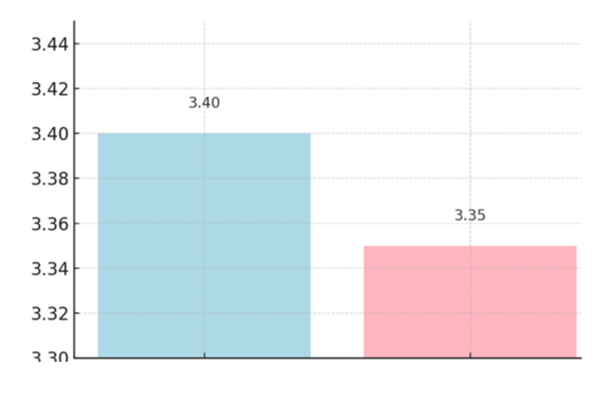
Figure 1. Comparative Analysis of the Entry-Level Test Results by Academic Performance (Six-Point Grading Scale) for the Experimental Group (in blue) and the Control Group (in pink)
Following this, Grade 5A students were surveyed anonymously about learning with mathematical fairy tales. Over 90% expressed strong interest and willingness to participate.
Stage 2: Formative Stage – Implementation of the Experimental Methodology
The experimental group began with three mathematical fairy tales serving a corrective function for reviewing fractions and operations with fractions.
The first – The Tale of the Decimal Point – reinforced knowledge of decimal fractions and created a positive classroom atmosphere that encouraged engagement. The impact was so strong that students requested to dramatize the story for the school celebration.
Two additional corrective tales reviewed common fractions and mixed numbers, strengthening conceptual understanding and skills in calculating parts and percentages of a number.
This review prepared students for new geometry topics: types of triangles, perimeter and area of triangles, parallelograms, rhombuses, and trapezoids. Lessons focused on both mathematical operations and narrative elements that linked abstract concepts to real-life situations.
After each lesson, students completed reflective cards with two questions:
- Was the lesson interesting?
- Was it easier to understand the content?
The highlight was the assessment fairy tale The Ship Discovery and the Ghostly Nebula, where students assumed the role of assistant captain and solved mathematical tasks to advance through levels. This reduced test anxiety and increased engagement, with potential to be developed as an interactive “Escape Room” game.
Stage 3: Evaluation Stage — Comparative Analysis of Results
Throughout the study, Grade 5A showed marked improvement in participation, willingness to solve problems at the board, and active questioning. Grade 5B remained largely passive, participating mainly when prompted.
The mid-term test (April 14, 2025) revealed significant improvement in Grade 5A across all criteria, while Grade 5B lagged behind (see Table 2 and Figure 2).
Table 2. Comparative Analysis of the Midterm Assessment Results by Criteria
| Criteria | 5A – Experimental Class | 5B – Control Class | Difference % |
| Mastery of Terminology | 55% | 35% | 20% |
| Retention and Comprehension of Formulas | 50% | 20% | 30% |
| Proficiency in Applying Formulas | 45% | 20% | 25% |
| Use of Measurement Units | 40% | 20% | 20% |
| Average Score | 47,5% | 23,75% | 23,75% |
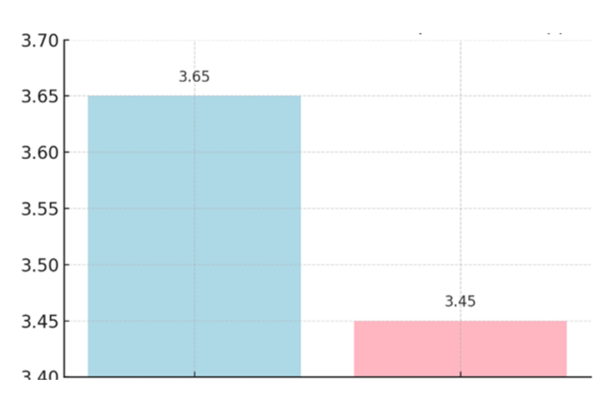
Figure 2. Comparative Analysis of Academic Performance (Six-Point Grading Scale) from the Midterm Assessment: Experimental Group (blue) vs. Control Group (pink)
The final test (May 12, 2025) showed that Grade 5A scored about 20% higher by criteria and 0.20 points higher in overall achievement compared to Grade 5B (see Table 3 and Figure 3).
Table 3. Comparative Analysis of the Final Assessment Results by Criteria
| Criteria | 5A – Experimental Class | 5B – Control Class | Difference % | |
| Mastery of Terminology | 65% | 45% | 20% | |
| Retention and Comprehension of Formulas | 60% | 40% | 20% | |
| Proficiency in Applying Formulas | 65% | 40% | 20% | |
| Use of Measurement Units | 55% | 35% | 20% | |
| Average Score | 61,25% | 41,25% | 20% |
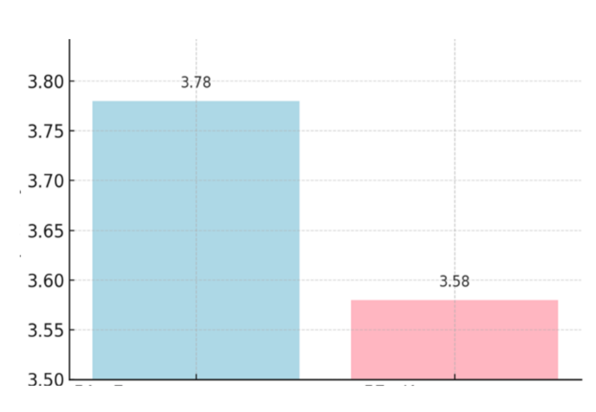
Figure 3. Comparative Analysis of Academic Performance (Six-Point Grading Scale) from the Midterm Assessment: Experimental Group (blue) vs. Control Group (pink)
More than 90% of Grade 5A students favored the fairy-tale method, and even Grade 5B students expressed interest in future participation.
Analysis and Summary of Results
The evaluation of the effectiveness of implementing mathematical fairy tales as a methodological tool in mathematics instruction was based on three main criteria: acquired knowledge and skills, learning motivation, and student behavior.
- Acquired Knowledge and Skills
The results of the entry-level test confirmed the initial homogeneity of the two groups – no statistically significant differences in achievement were observed. However, in the midterm test, the experimental group demonstrated a significant improvement in problem-solving, particularly in tasks requiring the application of formulas and terminology in context. The final test showed a sustained positive trend: students from Grade 5A achieved an average score 22% higher than at the baseline, while the control group’s improvement was only 9%. - Learning Motivation
Questionnaires completed at the beginning and end of the study revealed a significant shift in the attitudes of the experimental group. By the end of the school year, 84% of students stated that mathematics had become “more interesting” or “much more interesting,” compared to just 27% at the start. Similarly, 68% reported anticipating mathematics lessons with “curiosity” or “excitement” – a sentiment expressed by only 15% at the beginning. - Student Behavior and Social Effect
Data from reflective sheets and teacher observations indicated improved discipline, more active participation, and increased group cohesion. The dramatization of one of the fairy tales had a marked social effect – it fostered a sense of teamwork, encouraged the expression of various talents, and created a positive image of the subject among other students.
Comparative Analysis between Groups
A comparison of results between the experimental and control groups clearly showed that the narrative-based approach led to:
– Higher academic achievement;
– Stronger intrinsic motivation for learning;
– A better social climate in the classroom.
Pedagogical Recommendations
To achieve greater effectiveness and ensure alignment of mathematical fairy tales with different lesson types, it is essential that they be purposefully designed to correspond to the specific didactic functions they serve in the teaching process. This approach guarantees broader applicability and sustainable integration into everyday pedagogical practice. Based on the results of the study and observations of this method’s effectiveness, the following recommendations can be made:
- When Introducing New Knowledge
Mathematical fairy tales used at this stage should contain the relevant curricular content fully aligned with national educational standards and the syllabus. Their role is to provide an introductory function by creating a context that motivates students and sparks cognitive interest; an explanatory function by offering clear, accessible, and illustrative explanations of new concepts; and a formulating function by supporting the development of precise and lasting definitions and mental representations. - For Consolidation and Review
Fairy tales used for reinforcement should serve a summarizing and corrective function. They should integrate key concepts into a storyline that allows students to apply previously acquired knowledge in a new context while identifying and addressing misconceptions. This approach supports long-term retention and develops the ability to transfer knowledge. - For Assessment of Achievements
It is recommended to use mathematical fairy tales with an evaluative function in the form of an “adventure test.” In this structure, students progress through successive levels or challenges, solving specific problems at each stage. This method enables knowledge and skills assessment in a playful, positive atmosphere, reducing the stress typical of traditional testing and fostering a constructive attitude toward assessment.
Summary
The results of the study confirm the initial hypothesis of the pedagogical experiment that integrating mathematical fairy tales into the teaching process not only improves students’ cognitive achievements but also has a significant impact on their emotional engagement and the quality of social interactions in the classroom. The collected data experimentally demonstrate the potential of the mathematical fairy tale as an effective method for overcoming the abstractness of mathematical content and creating a more accessible, motivating, and holistic learning environment.
The didactic functions of the mathematical fairy tale demonstrate applicability not only in mathematics education but also in other subjects where abstract concepts can be presented through narrative and play elements. In this way, the method contributes to increased motivation, active participation, and long-term retention of knowledge while supporting the development of key competences set out in the European Reference Framework—thinking skills, learning skills, cooperation, and active citizenship.
It should be emphasized that the method of the mathematical fairy tale should not be viewed as a substitute for the traditional classroom-lesson system but rather as a valuable, flexible, and effective complement capable of enriching the traditional learning process and enhancing its effectiveness.
REFERENCES
Fraser, C. (2017). Prairie fires: The American dreams of Laura Ingalls Wilder. (2nd ed.). Metropolitan Books.
Magilnaya, L. V. (2021). The use of mathematical fairy tales in mathematics lessons [in Russian]. Infourok, Novosibirsk. Retrieved July 27, 2025, from: https://infourok.ru/ispolzovanie-matematicheskih-skazok-na-urokah-matematiki-5120367.html.
Mukhamedyanova, N. (2016). Fairy tales in mathematics lessons in primary school [in Russian]. Pedagogy and Psychology of Child Development. Retrieved July 27, 2025, from: https://cyberleninka.ru/article/n/ispolzovanie-skazok-v-protsesse-obucheniya-matematike/viewer
Pasjukevich, E. (2019). The didactic fairy tale as a means of forming cognitive activity. Pedagogy and Psychology of Child Development. Retrieved July 27, 2025, from https://cyberleninka.ru/article/n/didakticheskaya-skazka-kak-sredstvo-formirovaniya-poznavatelnoy-aktivnosti/viewer
Peterson, L. G. (2000). Playful mathematics: Methodical guide [in Russian]. Moscow: Educational Methodical Center “School 2000…”. Retrieved July 27, 2025, from: https://files.sch2000.ru/pdf/lessons/math/metod_5kl.pdf
Pozdeeva, R. V. (2021). The use of mathematical fairy tales in mathematics lessons [in Russian]. Retrieved July 27, 2025, from https://urok.1sept.ru/articles/690548.
Radeva, G. (2023). Charles Perrault’s fairy tales in numbers. Varna, Bulgaria: Baltika 2002 Publishing. [in Bulgarian].
Radeva, G. (2024). Fairy tale mathematics. Varna: Baltika 2002 Publishing. [in Bulgarian].
Rakcheeva, A. V. (2016). The mathematical fairy tale as one of the means of developing mathematical concepts in preschool children [in Russian]. NovaInfo, 44, 300 – 303. Retrieved July 27, 2025, from https://novainfo.ru/article/5480.
Shishkina, T. B. (2020). Mathematical fairy tales as one of the forms of working with preschool children to form basic mathematical ideas [in Russian]. Retrieved July 27, 2025, from https://nsportal.ru/detskiy-sad/matematika/2020/05/27/matematicheskie-skazki-kak-odna-iz-form-raboty-s-doshkolnikami-po
Simeonova-Ingilizova, M. (2023). The educational role of fairy tales in preschool age (6 – 7 years). Pedagogical Forum, 2, 42–53. Retrieved July 27, 2025, from https://drive.google.com/file/d/1NeXVEK8ZNt3pnef2Vvtzc-8U0hNT1BRa/view.
Dena Spyrou
E-mail: onbehalfof@manuscriptcentral.com
>> Изтеглете статията в PDF <<

Свързани статии:
 The Motivation of Bilingual Students in Mathematics and Information Technology Education
On Integration of STEM Modules in Mathematics Education
Social-emotional Impact of Mathematics Teachers on Students‘ Motivation
Statistical Analysis of Academic Achievement and Intrinsic Motivation in STEM Students Еducated through a Competency-based Approach
The Motivation of Bilingual Students in Mathematics and Information Technology Education
On Integration of STEM Modules in Mathematics Education
Social-emotional Impact of Mathematics Teachers on Students‘ Motivation
Statistical Analysis of Academic Achievement and Intrinsic Motivation in STEM Students Еducated through a Competency-based Approach